Fashion Leaders Brief King Charles on Circular Fashion Progress at Buckingham Palace
King Charles III received a private briefing on cashmere scarves, soil regeneration, and digital passports from luxury fashion's sustainability task force at Buckingham Palace.
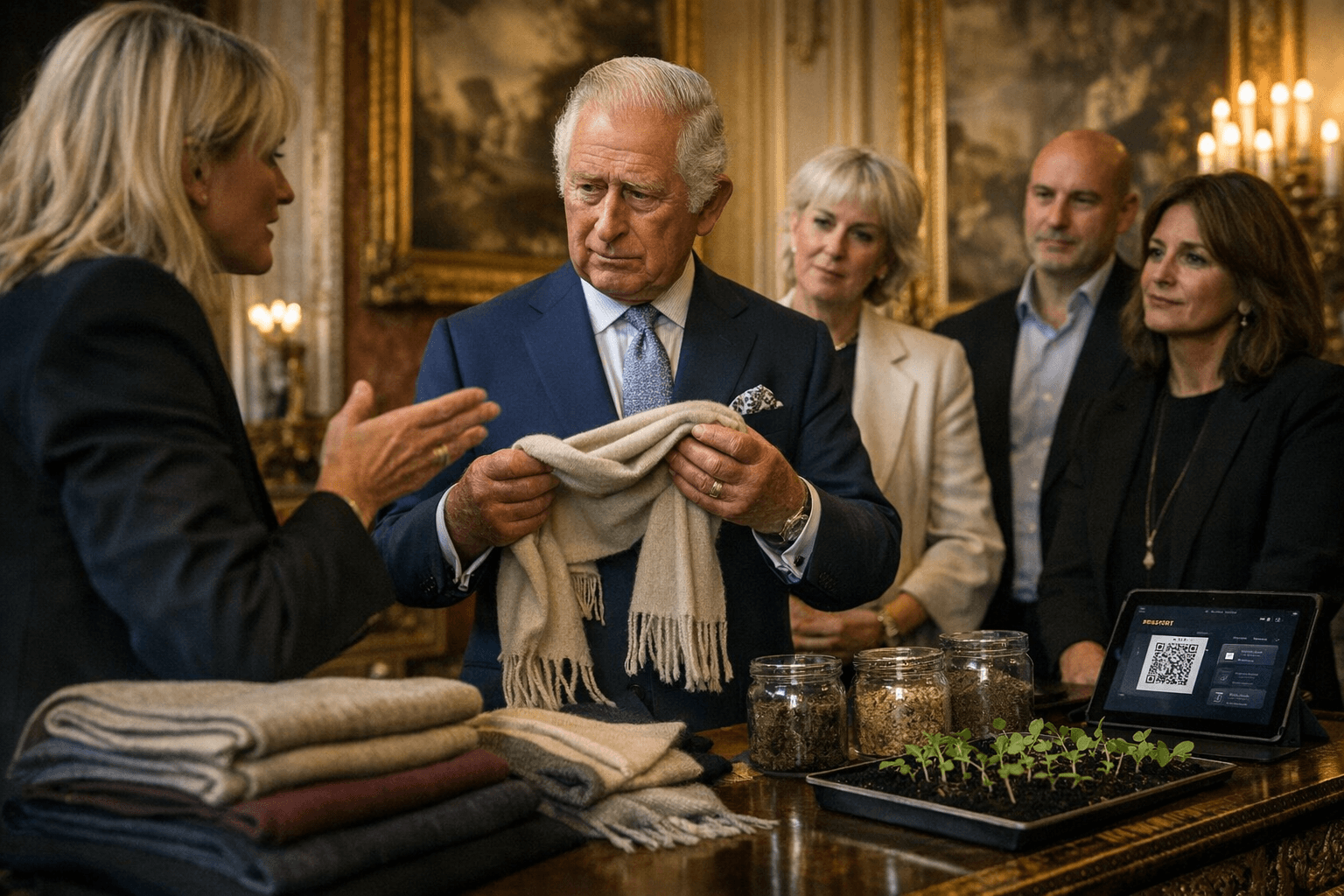
Buckingham Palace hosted an unusual kind of fashion presentation on March 12 when members of the Sustainable Markets Initiative's Fashion Task Force briefed King Charles III on the progress of circular fashion projects he helped set in motion six years ago. The meeting, a private session running parallel to the SMI's two-day Roundtable and Exhibition at Hampton Court Palace, brought together executives from Stella McCartney, Mulberry, the Armani Group, OTB, and HModa to report back on work spanning regenerative cotton fields in southern Italy, Himalayan cashmere supply chains, and digital product authentication technology.
The king founded the SMI in 2020 at the World Economic Forum in Davos, and the Fashion Task Force has been operational since 2021 under the chairmanship of Federico Marchetti. Standing before Charles at Buckingham Palace, Marchetti framed the moment in personal terms. "Their collective efforts have enabled us to achieve remarkable, innovative and measurable results, which we had the honour of presenting today at Buckingham Palace to HM The King, who has always encouraged me to turn ideas into action," he said.
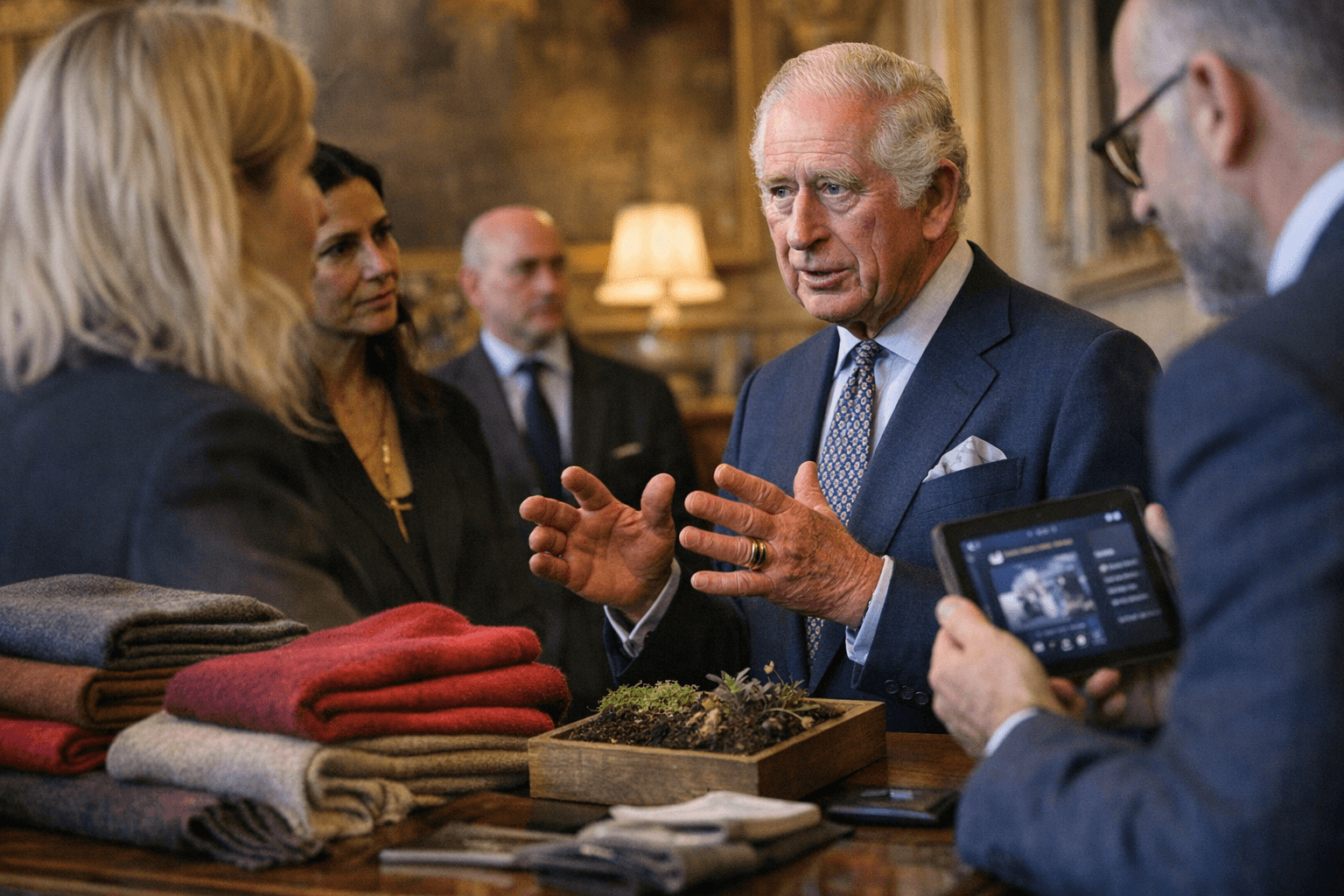
The centrepiece of the royal presentation was the Himalayan Regenerative Fashion Living Lab, with an exhibition of cashmere scarves produced through the programme displayed for the king. Those scarves are now available to clients in select locations. Brunello Cucinelli, whose Solomeo-based house is a Task Force participant, is reported to be personally funding the Himalayan Living Lab, according to Noblemanmagazine.
Also on the agenda: the Apulia Regenerative Cotton Project, launched in 2023, which focuses on introducing agroforestry-based cotton production in Italy. The initiative is said to have delivered measurable gains in soil carbon and biodiversity across the site, though no specific metrics have been published. HModa presented its organic and regenerative cultivation work in Apulia, while the Armani Group presented a Digital Product Passport to demonstrate product authenticity.
Digital Product Passports were a recurring thread throughout both the Hampton Court sessions and the Buckingham Palace briefing. Stella McCartney and Mulberry each showcased DPPs on select products using technology provided by Aura, the platform chosen by SMI members to surface accessible supply-chain data for consumers. Diesel, which joined the Task Force alongside HModa in February 2025 as part of the OTB Group, contributed expertise and recommendations specifically around advancing interoperable DPPs across the textile sector. OTB, whose portfolio spans Diesel, Jil Sander, Maison Margiela, Marni, and Viktor&Rolf, confirmed it was present for the private Buckingham Palace session.
SMI CEO Jennifer Jordan-Saifi called the demonstrations a proof of practical capability. "The progress showcased today demonstrates the commitment and capability of the SMI and its members to deliver practical, scalable solutions for the sustainable transition," she said. "These flagship projects showcase how industry, science and communities can come together to rethink fashion's global impact, highlighting the link between craftsmanship, environmental stewardship and traceability." Marc Palahí, CEO of the Circular Bioeconomy Alliance, described the Living Labs as "early proof of what collaborative models can achieve."
The SMI Roundtable and Exhibition, which ran across two days of keynotes, panel sessions, and working discussions at Hampton Court Palace, wrapped on March 12. The Task Force now enters a phase where the credibility of its results depends on whether the measurable gains cited in Apulia translate into publicly verifiable data, and whether Aura's DPP infrastructure scales beyond select product demonstrations into industry-wide adoption.
This article was produced by Prism’s automated news system from verified source data, official records, and press releases, then run through automated quality and moderation checks before publishing. The system is built and supervised by the people who set the standards it runs under. Read our full AI policy.
Did this article answer your question?