Global Fashion Summit spotlights resale, recommerce collaboration for scalable circular fashion
Resale is getting the plumbing it has always lacked: authentication, logistics, payments and merchant tools. That is what could turn circular fashion from mood into muscle.

The bottlenecks are the point
Resale only becomes scalable when it stops behaving like a side hustle. At the Global Fashion Summit in Copenhagen, the conversation sharpened around the unglamorous pieces that actually make circular fashion work: payments, authentication, logistics, returns and merchant integration. That is the real shift here. Not another feel-good circle of sustainability slogans, but an attempt to wire secondhand fashion into the system that already moves luxury and mass-market goods at speed.

Global Fashion Agenda frames the summit as the leading international forum for sustainability in fashion, and that matters because this is where the industry goes when it wants to test whether an idea can survive contact with operations. The 2026 Copenhagen edition ran from 5 to 7 May at Copenhagen Concert Hall, bringing together leaders across the value chain to talk about sustainability, resilience and systemic transformation. In plain English: the room was full of people asking who does the dirty work, who pays for it, and how it becomes repeatable.
Why eBay’s role is bigger than a logo swap
eBay becoming a Strategic Partner to Global Fashion Agenda on 6 October 2025 was the kind of move that actually changes the conversation. GFA said the partnership would share marketplace data, resale and logistics expertise, and connect brands with Authentication and Digital Product Passports. That is the stuff that turns resale from a consumer habit into an operating model brands can plug into without inventing everything from scratch.
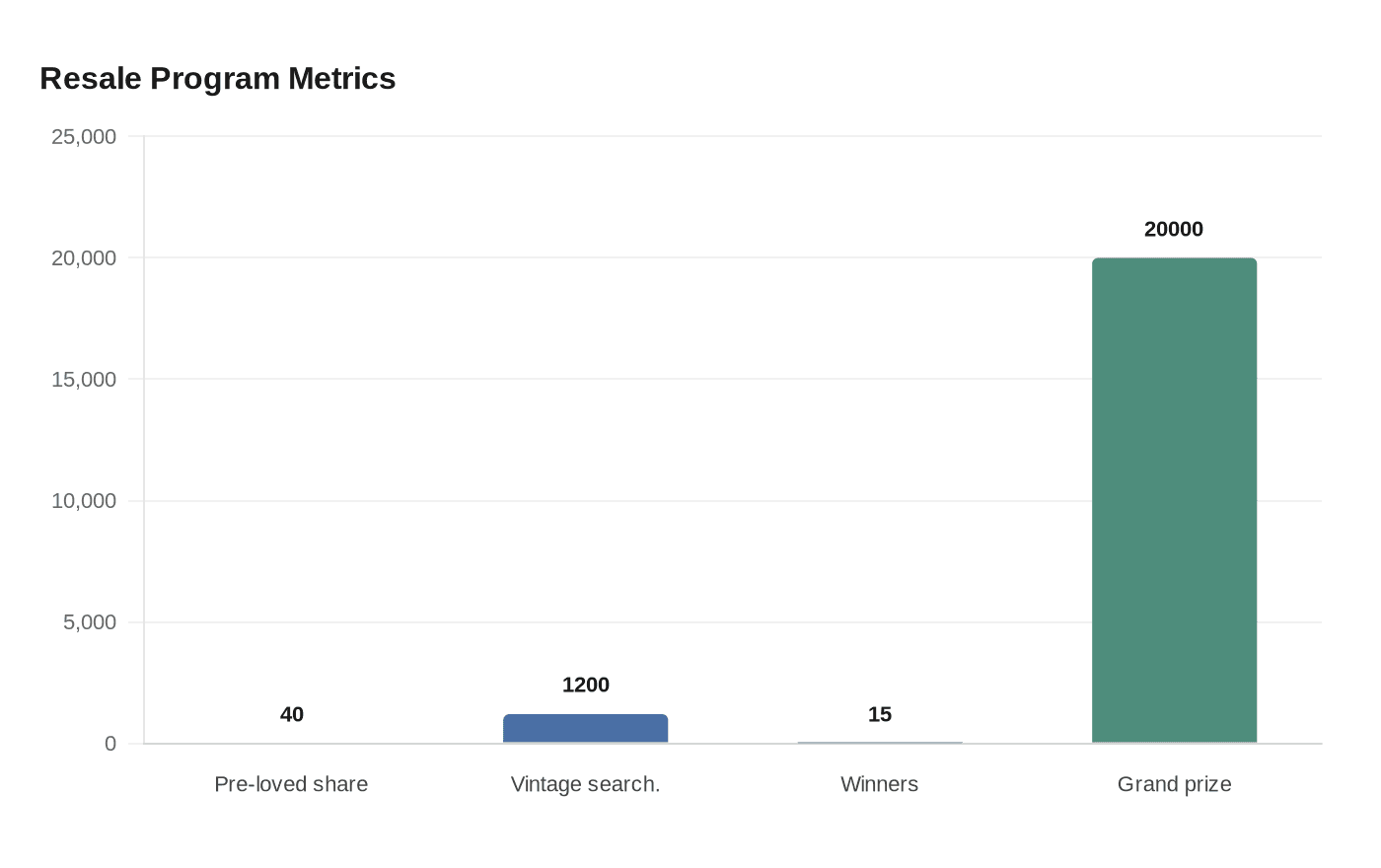
The numbers back up why eBay matters. In 2024, nearly 40 percent of clothing, shoes and accessories sold globally on the platform were listed as pre-loved. That is not a niche corner of the app, that is a live signal that secondhand has already moved far beyond the thrift-store fringe. eBay also says users searched for “vintage” more than 1,200 times per minute globally, which tells you the appetite is not theoretical. People are already hunting for the aesthetic language of resale, they just need the system to catch up.
And that system still needs trust. eBay’s Authenticity Guarantee covers eligible fashion categories including sneakers, handbags, watches, jewelry, streetwear and trading cards. That list is revealing. These are the categories where counterfeit anxiety, condition disputes and buyer hesitation can kill conversion. Authentication is not a bonus feature here. It is the bridge between wanting the item and actually paying for it.
Visa is betting on the payment layer
Visa’s role pushes the story one level deeper. In March 2026, Visa and GFA launched Visa Young Creators: Recycle the Runway, a Europe-focused programme for emerging designers working in circular design. It backs 15 winners, offers mentorship and industry exposure, and includes a grand prize of EUR 20,000. The models in scope are resale, repair, rental, upcycling and redistribution, which is exactly the mix you would expect if the goal is to build fashion businesses that earn revenue without feeding the throwaway cycle.
This is where the partnership becomes more interesting than a summit-stage alliance. Payments are not sexy, but they are the invisible rails that decide whether a recommerce idea survives checkout friction, refund headaches and cross-border complexity. If eBay is the marketplace engine and GFA is the convening force, Visa is staking a claim on the money flow that underwrites the whole thing. That is an infrastructure play, not a branding exercise.
Gemma Styles as ambassador gives the programme cultural reach, but the bigger story is practical: young designers are being nudged toward business models that can survive in the real world, not just on a mood board. The future of circular fashion will not be built by beautiful upcycled pieces alone. It will be built by systems that can invoice, settle, verify and deliver.
The industry already knows circularity has to make money
The broader backdrop has been shifting in this direction for a while. The Ellen MacArthur Foundation has argued that circular business models like resale, rental, repair and remaking can help decouple revenue from resource extraction. That framing matters because it moves circularity out of the “nice to have” column and into the business strategy column. If brands can sell more without extracting more virgin material, the whole economics of fashion starts to look different.
The Foundation launched The Fashion ReModel at the 2024 Global Fashion Summit, gathering fashion frontrunners focused on scaling circular business models. That is an important breadcrumb. It shows this year’s resale conversation did not appear out of nowhere. The industry has been laying track for a while, and the latest summit simply made the track look more visible, more commercial and more urgent.
The real question is not whether resale exists. It does. The question is whether the surrounding infrastructure can make it as routine as selling first-run product. That means authentication that buyers trust, logistics that do not eat the margin, returns that do not turn into a mess, and merchant tools that let brands participate without building an entirely separate business from scratch.
What a scalable circular model actually looks like
A scalable model is not a coalition press release. It is a sequence of systems that remove friction at every step. Marketplace data tells brands what is moving. Authentication reassures the buyer. Digital Product Passports can attach product identity to the item itself. Logistics determine whether the item arrives in a condition that preserves trust. Payments and merchant integration determine whether the transaction feels seamless or awkward.
That is why the eBay, Visa and Global Fashion Agenda triangle matters. Each player touches a different choke point in the resale chain. eBay brings demand and transaction knowledge. Visa brings payment architecture and commercial credibility. GFA brings the industry room, the convening power and the sustainability lens. Put together, they are sketching a blueprint for recommerce that looks less like an ideal and more like an operating system.
It is still early, and this is not the same thing as proving the whole model is solved. But the shape of the work is smarter than the usual sustainability theater. Instead of talking about circular fashion as a distant aspiration, the summit spotlighted the machinery that makes it real. That is the difference between a coalition and a system, and right now the system is finally starting to look buildable.
This article was produced by Prism’s automated news system from verified source data, official records, and press releases, then run through automated quality and moderation checks before publishing. The system is built and supervised by the people who set the standards it runs under. Read our full AI policy.
Did this article answer your question?


