Gucci Opens Tuscan Leather Lab to Pioneer Sustainable and Plant-Based Materials
Gucci's San Miniato lab tests 10–20 new materials at once, including a vegan leather made from 75% plant-based raw materials already used in the Horsebit 1955 bag.
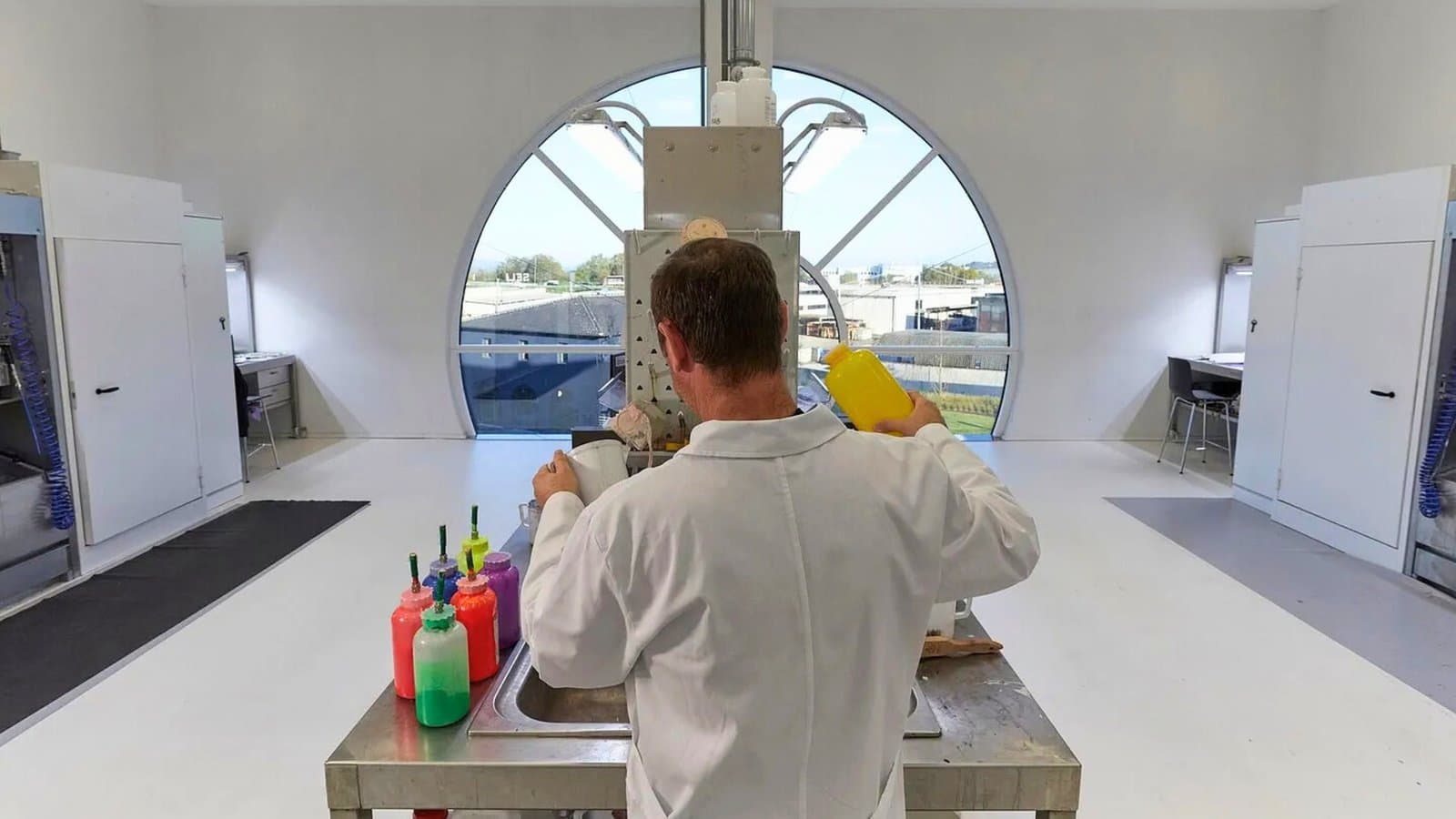
Gucci's research lab in San Miniato sits not in a sterile innovation campus but inside the Marbella tannery, a working facility in the heart of Tuscany's historic leather district. That deliberate siting tells you everything about the house's approach: this is R&D folded directly into the supply chain, not quarantined from it. Opened in 2024, the centre is where artisans and scientists develop the materials that will eventually appear on Gucci's bags, shoes, and ready-to-wear, and where the findings are shared upstream with sister Kering brands including Saint Laurent, Bottega Veneta, Balenciaga, and Alexander McQueen.
"The centre was created for the research, development and testing of all our innovative materials," said Marie-Claire Daveu, Kering's Chief Sustainability and Institutional Affairs Officer. The mandate, as Daveu has framed it across multiple briefings, is to "combine sustainability and superior technical performance, and to be sure that at the end of the day, it will be at the level expected for Gucci and in luxury." For a house whose identity is inseparable from the feel of a well-tanned hide, that bar is not a formality.
Inside, hundreds of leather samples hang from a conveyor belt in colours ranging from classic black to zingy lime green. Scientists are testing between 10 and 20 new materials at any one time, working up formulations in an airy room the team calls the "kitchen," where different material compositions are treated like culinary recipes. Adjacent to the kitchen, machines assess how each material responds to finishing processes, dyeing, and embossing. The most revealing piece of equipment is an impressively high-tech climatic chamber that replicates tropical conditions to simulate long-term aging, the kind of test that tells you whether an innovative alternative will survive a humid Roman summer or a monsoon season in Singapore as convincingly as full-grain calfskin.
The lab's most developed output to date is Demetra, Gucci's vegan leather alternative launched in 2021 and introduced into the Horsebit 1955 bag in 2023. Made from 75% plant-based raw materials, Demetra carries a significantly lower carbon and water footprint than conventional leather, according to the brand. The lab has also produced at least one metal-free leather, visible in Vogue's coverage of the facility, though no product application has been named publicly.
Leather itself remains a central research subject rather than a material the lab is trying to eliminate. Daveu has described the ambition as shaping "the tannery model of the future, one that can process leather and new materials, while being more efficient, more sustainable and more circular." That dual focus, improving animal leather processes while building credible plant-based alternatives in parallel, distinguishes the approach from the wave of leather-alternative start-ups that scaled ambitiously and failed to meet luxury performance standards over the past several years.
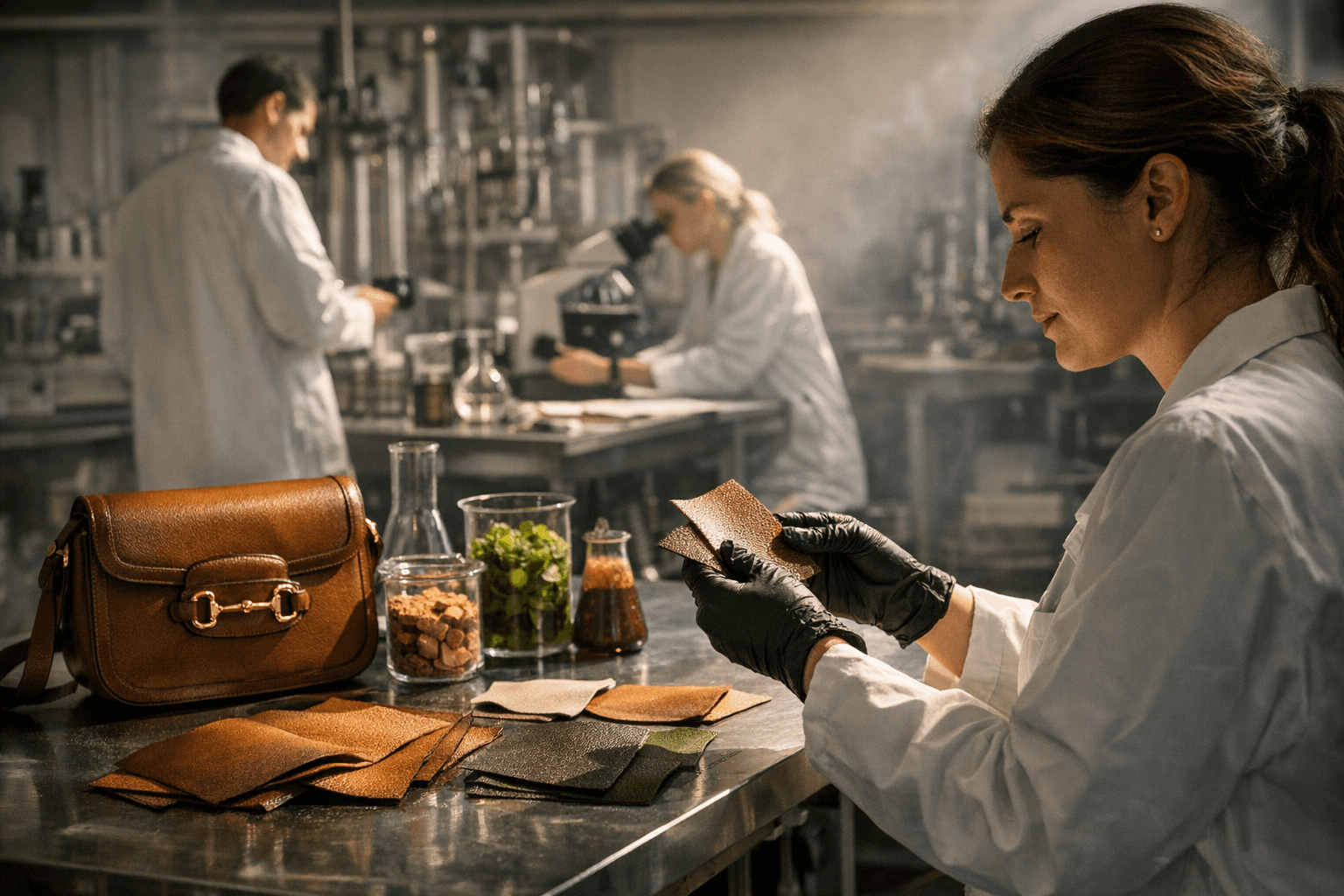
Waste reduction runs alongside materials development. Gucci's Scrap-Less programme cuts hides earlier in the production process so that leftover material can be converted into high-quality fertiliser rather than landfilled. Artificial intelligence is also being deployed to detect defects in hides before production begins, reducing the volume of material that fails downstream.
The San Miniato lab operates in tandem with Gucci's Circular Hub, which launched in 2023. That programme has produced the Denim Evolution fabric, comprising 74% regeneratively grown fibres, and an internal deadstock marketplace allowing unused materials to circulate between brands across the Kering portfolio. The group has committed to reducing its absolute emissions by 40% by 2035, and Gucci's materials-first strategy represents its most direct lever toward that target, given that raw material production accounts for the largest share of fashion's carbon footprint.
What makes the San Miniato facility worth watching is the industrial-scale equipment used to run trials in real production conditions rather than lab-controlled approximations. A formulation that survives embossing, tropical aging, and finishing tests at working-tannery scale has cleared a bar that most alternative-material pilots never reach.
This article was produced by Prism’s automated news system from verified source data, official records, and press releases, then run through automated quality and moderation checks before publishing. The system is built and supervised by the people who set the standards it runs under. Read our full AI policy.
Did this article answer your question?


