H&M Group and EY White Paper Urges New Financing Paths for Supply-Chain Decarbonisation
H&M Group CFO Adam Karlsson says climate inaction costs too much, as a new white paper with EY pushes fashion's finance chiefs to fund supplier decarbonisation now.

H&M Group and EY released a white paper on March 18 calling on fashion's chief financial officers to build financing models that accelerate Scope 3 decarbonisation across global supply chains, framing the move not as corporate altruism but as a hard-nosed calculation about long-term business survival.
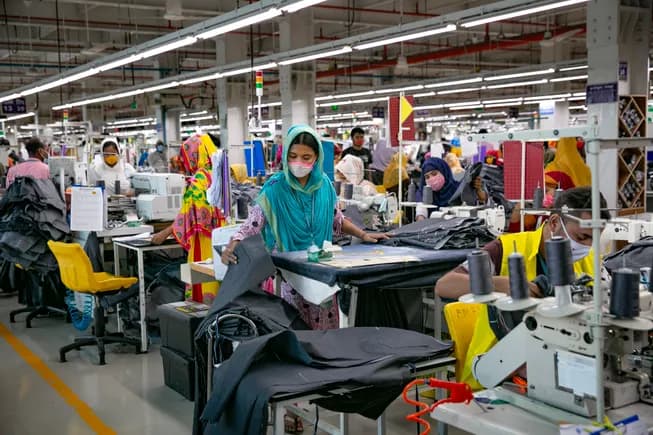
The paper, titled "Accelerating Fashion Decarbonisation: An Efficient Approach to Unlocking Corporate Value and Financing the Supply Chain Transition," draws on insights from HSBC and the Apparel Impact Institute and targets a specific gap: most fashion brands carry the bulk of their emissions not in their own operations but in the factories, logistics networks and materials production that sit upstream. Scope 3 emissions account for the largest share of the sector's climate footprint, yet the suppliers generating those emissions, particularly those in emerging manufacturing hubs, often lack the capital to invest in renewable energy, manufacturing efficiency or low-carbon materials.
Adam Karlsson, CFO of H&M Group, put the stakes plainly. "The cost of inaction on climate change is simply too high, for the planet and for our industry," he said. "CFOs have a fiduciary responsibility to safeguard long-term business resilience, not just short-term profitability. As CFOs, our role is not to debate whether sustainability targets should be met, but to ensure how they are delivered. This requires a conversation combining cost efficiency and value creation: reducing risk, strengthening resilience, and safeguarding long-term corporate value."
The paper's central argument is that sustainability has been misclassified as a cost center when it functions more accurately as a risk management instrument and potential strategic value driver. Climate disasters have cost the global economy nearly US$3 trillion since 1980, a figure the white paper uses to anchor its business case for urgent capital reallocation. The paper argues that brands can play a catalytic role by enabling financing structures that support supplier decarbonisation while delivering measurable financial returns, pointing to case studies of coordinated investment already accelerating renewable energy adoption across supplier networks, though the specific company names and project metrics are not detailed in the publicly available coverage.
Among the practical instruments outlined is supplier financing explicitly linked to emissions reduction targets, alongside structured financing models, coordinated governance frameworks and broader cross-industry collaboration involving brands, NGOs, financial institutions and governments. The paper identifies three interlinked barriers to decarbonisation and three potential pathways to address them, though the full operational text of those frameworks requires reading the white paper directly.
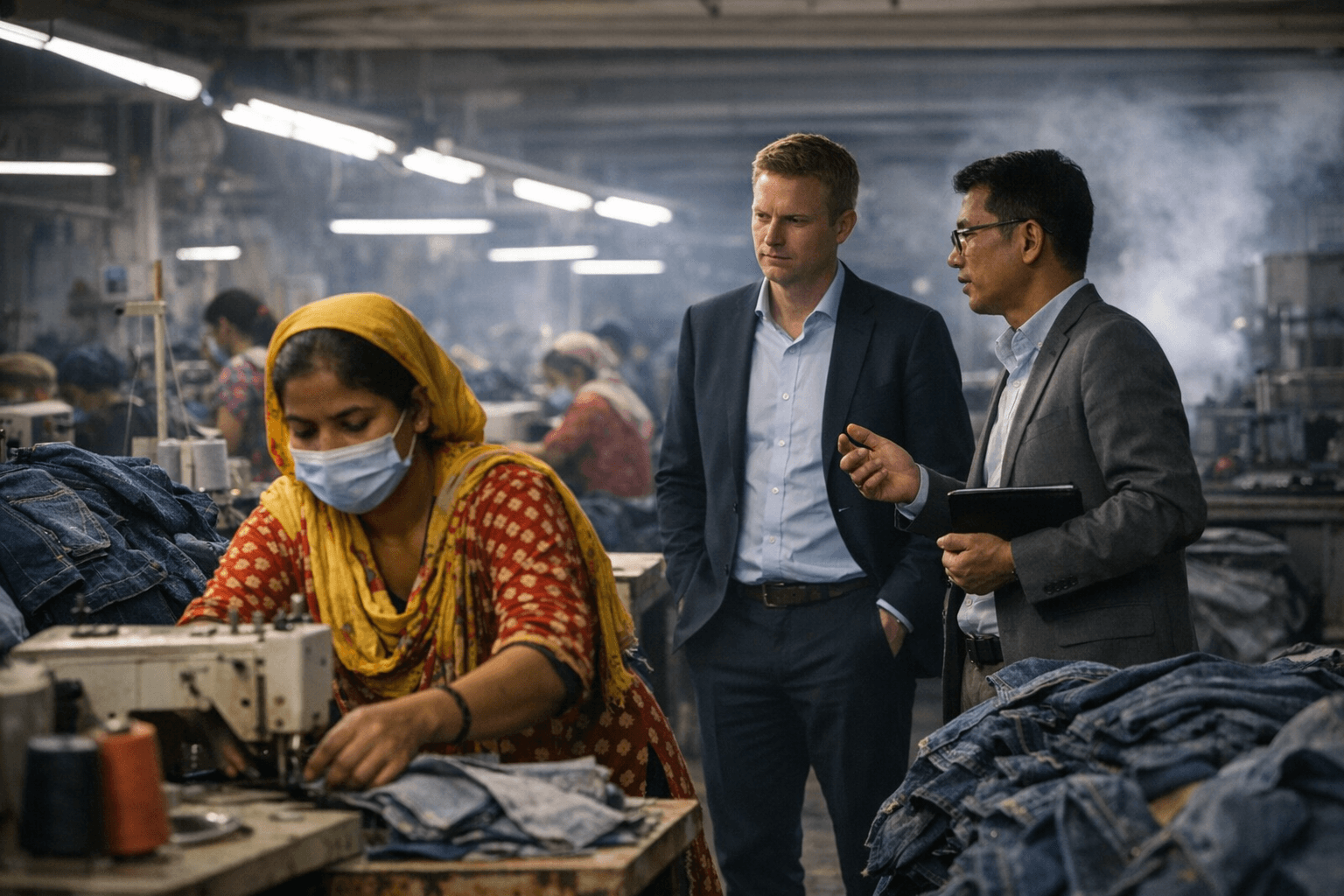
Anna Ryott, Nordic chief impact officer and partner at EY, pointed to the current moment as an opening. "The fashion industry has an opportunity to collectively address these challenges. There is growing momentum for industry-wide collaboration and openness to exploring new financing models to accelerate the green transition," she said.
Clair Smith, Head of Sustainable Trade Solutions at HSBC, which contributed insights to the paper, kept the logic direct: "Investing in climate mitigation today helps reduce long-term costs and business risks."
H&M Group and EY said they hope the paper inspires CFOs and finance leaders across the industry to engage with the financing tools it outlines and to treat capital allocation and climate strategy as inseparable. Whether the broader industry follows through is the harder question, given that fragmented supply chains and uncertain decarbonisation ROI have stalled progress for years. The white paper's argument is that those obstacles are solvable, and that the financial case for solving them is now stronger than the case for waiting.
This article was produced by Prism’s automated news system from verified source data, official records, and press releases, then run through automated quality and moderation checks before publishing. The system is built and supervised by the people who set the standards it runs under. Read our full AI policy.
Did this article answer your question?