How recycled cotton is weathering an uncertain denim market
Recycled cotton is no longer a sustainability side project: the denim mills betting on certified, traceable recycled fiber today are the ones insulating themselves against volatile demand tomorrow.

The 12,000-ton proof point
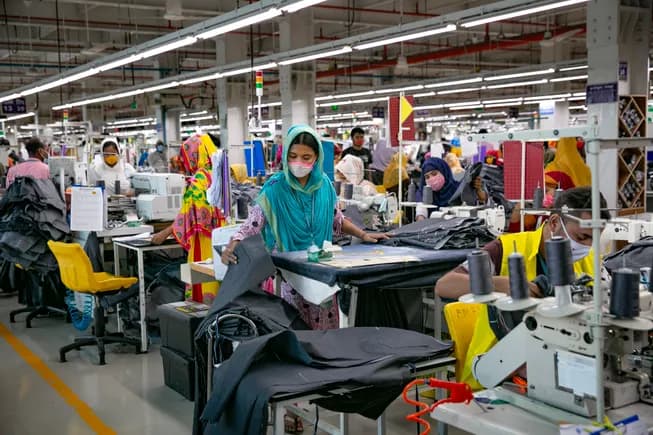
Artistic Denim Mills ran the numbers, and they were hard to argue with. The Karachi-based vertical mill was producing 12,000 tons of Recover recycled cotton fiber per year at a facility located just ten minutes from its main spinning hub, a setup that made certified, traceable post-consumer fiber about as frictionless as a raw-material swap could get. That the partnership between ADM and Spain's Recover Textile Systems quietly ended in early 2026 is less a story of failure than a lesson in how the recycled cotton market actually works: infrastructure can be built, volumes can be reached, but demand from brands still needs to catch up to supply.
What the ADM-Recover model proved, during its five-year run, was that commercial-scale mechanically recycled cotton is entirely achievable. The question now is which mills have built equivalent foundations, and which brands are willing to anchor their sourcing to them.
Why uncertainty is making recycled cotton more, not less, attractive
The conventional logic holds that sustainability investment dries up when the market softens. In denim right now, the opposite is happening. With brands pulling back on experimental trend-driven styles and tightening their sourcing rosters, the appeal of recycled cotton is less about environmental virtue signaling and more about supply-chain hedging. Mills that can supply consistent, certified volumes of recycled fiber are proving resilient precisely because they offer something volatile commodity markets cannot: predictability.
Denim Deal, the industry coalition driving circularity in the category, has codified this logic in its Approved Fabric Collection. Fabrics from member mills must contain a minimum of 20 percent post-consumer recycled cotton and must meet the group's own quality and durability standards. That floor, modest as it sounds, has become a credibility threshold: it signals to brands that PCR cotton can hold its own structurally alongside conventional fiber. The collection exists because brand confidence was the missing ingredient, not the fiber itself.
The biology of the problem: fiber length, strength, and blend ratios
The reason recycled cotton cannot simply replace virgin fiber one-for-one comes down to physics. Mechanical recycling, which is how the vast majority of post-consumer denim is broken down, involves shredding fabric into fiber. That shredding shortens staple length dramatically: research from a 2025 analysis of post-consumer denim recycling found that virgin cotton staple length of around 26mm can drop to approximately 15mm at just 30 percent recycled content. Tensile strength takes a similar hit, falling up to 30 percent weaker than an equivalent virgin cotton yarn.
The practical consequence is that recycled cotton in denim rarely operates alone. Blending is not a compromise; it is the engineering solution. Neela by Sapphire Fiber, the Pakistani mill's materials innovation arm, demonstrated this clearly in its latest collection: three fabrics blending Recover's RCotton and RDenim fibers with conventional cotton and modal. The addition of modal does double duty here, compensating for the shorter fiber profile while also enabling rich indigo blues and deep blacks without traditional rope dyeing, a process that itself carries significant water and chemical overhead.
Italy's Candiani takes a different approach, preferring pre-consumer fibers from its own cutting-floor scraps over post-consumer waste, which carries higher contamination risk. Its Re-Gen fabric blends recycled cotton 50/50 with Refibra, Lenzing's lyocell variant made from post-industrial cotton cellulose. The closed-loop chemistry of Refibra, Lenzing argues, does not compromise fiber strength or cap the percentage of recycled content the way mechanical recycling does. The result is a fabric with a noticeably softer hand than conventional denim, closer to a brushed twill in feel, with the structural integrity that lets it function as a proper jeans cloth.
The blend-ratio ceiling in purely mechanical recycling remains a real constraint. Lindex's then-corporate sustainability manager Anna-Karin Dahlberg noted the 20 percent post-consumer recycled cotton cap as a live limitation in mill conversations, and research on ring-spun yarn corroborates it: yarn irregularity and hairiness increase sharply above that threshold without compensating fiber inputs.
The certification scorecard: who has the receipts
Certified recycled content is where the supply chain separates winners from everyone else, and the standard that matters most in denim right now is the Recycled Claim Standard, administered by Textile Exchange. RCS functions as a chain-of-custody tool, tracking recycled raw material from point of origin through each manufacturing step. It does not verify environmental impact claims independently, but it does give buyers documentation they can present to regulators and auditors.
Cone Denim, the North Carolina-originated mill now operating under Elevated Textiles, has done the work. Both of its Mexico-based mills carry RCS certification for fabrics, and the company took the additional step of certifying its fiber supplier in Mexico, completing a closed-loop RCS chain from recycling facility through to finished fabric. "The demand for recycled cotton continues to grow," Cone Denim president Steve Maggard said of the move. "With this increased demand, we recognize the value for our customers to have third-party verification of the recycled content used in denim." That fiber-level certification is what closes the gap between a brand's marketing claim and a legally defensible sourcing statement.
Recover, for its part, built its commercial proposition on the certifiability of its RCotton fiber, positioning the traceable supply chain as the value-add rather than the fiber alone. Its recently launched Essential Denim Collection, produced with Spanish weaving partner Textil Santanderina, offers 12 denim fabrics ranging from 9 to 14 oz, designed for jeans and jackets with RCotton as the certified recycled content layer.
Denim Deal's data bet: Green Story and the digital product passport
The traceability conversation is shifting from audit documents to live data, and Denim Deal's partnership with Green Story signals where infrastructure investment is heading. Green Story is an AI-powered platform that handles product impact measurement, supplier engagement, and regulatory readiness through what it describes as a semi-autonomous model. The goal, per the partnership announcement, is to serve as the data foundation for Denim Deal's upcoming annual report due in Q4 2026, while simultaneously building out a framework for Digital Product Passports across member brands.
DPPs are not optional for much longer. The EU's Ecodesign for Sustainable Products Regulation mandates them for textiles, with requirements expected to be finalized in 2026 and enforcement beginning mid-2027. A central EU DPP registry is set to launch in June 2026. For denim brands selling into Europe, a fabric that cannot produce a verified DPP will increasingly be a liability, not just a missed opportunity.
The Green Story collaboration addresses something the industry has been reluctant to name directly: most brands do not have the internal bandwidth to build DPP compliance systems from scratch. The "bolt-on" model Denim Deal is piloting allows smaller brands to conduct circularity assessments, identify sourcing gaps, and develop PCR cotton adoption roadmaps without hiring dedicated sustainability teams. Sapphire Mills, which partnered with Green Story separately to create QR-code-linked digital product passports at Kingpins New York, demonstrated what that consumer-facing transparency layer actually looks like in practice: scan the label, see the fiber origin, the water savings, the carbon footprint.
What lands in the store
For anyone buying denim in 2026, the supply chain story above translates to a few concrete realities. Jeans made with mechanically recycled cotton at blends of 20 to 30 percent will feel marginally softer and slightly less structured than all-virgin alternatives, a quality that reads as premium in a worn-in, relaxed silhouette but can feel slightly limp in a high-structure trouser. Fabrics using Refibra or modal to compensate for short fiber recover that structure while adding a subtle sheen and drape.
Price premiums for certified recycled content are compressing. As ADM's five-year run with Recover demonstrated, scale changes the economics. Mills that built their recycling infrastructure early, when volumes were small and costs were high, are now positioned to offer certified fiber at prices that are approaching, if not yet matching, conventional cotton equivalents. EU regulatory pressure is accelerating that compression further: a brand that does not move toward PCR cotton now will pay more to comply in 2027 than a brand that sources it today.
The mills that can hand a buyer a certified fiber chain, a verified DPP, and a fabric that holds its shape after fifty washes are not simply the sustainable choice anymore. They are the lower-risk choice. In a market where brands are shrinking their supplier lists and demanding proof rather than promises, that distinction is what will determine who gets the next season's orders.
This article was produced by Prism’s automated news system from verified source data, official records, and press releases, then run through automated quality and moderation checks before publishing. The system is built and supervised by the people who set the standards it runs under. Read our full AI policy.
Did this article answer your question?