How to Mend Clothes at Home and Make Them Last Longer
Mending removes the biggest barrier to a sustainable wardrobe: the assumption that worn clothes are done. One needle, some thread, and a mindset shift is all it takes.

Fast fashion trained us to treat a loose button as a death sentence for a garment. A small tear in your favorite jeans? Donate pile. A broken zipper on dress pants? Trash. But here's the reality: your shirt is not worthless if buttons are missing, and your dress pants aren't done if the zipper is broken. These are fixable issues, and fixing them is one of the most direct, low-cost interventions available to anyone who wants a more sustainable wardrobe. As the principle goes, the most sustainable wardrobe is the one you already own.
The visible mending trend has accelerated this conversation significantly. More people are now taking pride in expressing their individuality and sustainable values through what can only be described as a quietly revolutionary act. Canadian fiber artist Arounna Khounnoraj, author of the 2020 book *Visible Mending: A Modern Guide to Darning, Stitching and Patching the Clothes You Love*, represents that shift precisely. Growing up, her mother, a seamstress, made and mended her clothes but tried to make the stitches as invisible as possible. "There was this association that wearing mended clothes was shameful," Khounnoraj has said. Today, she sews in a style called visible mending, using noticeable threads, fabrics, and decorative techniques as a creative and expressive way to show off the repair rather than hide it.
Why mending matters beyond the aesthetic
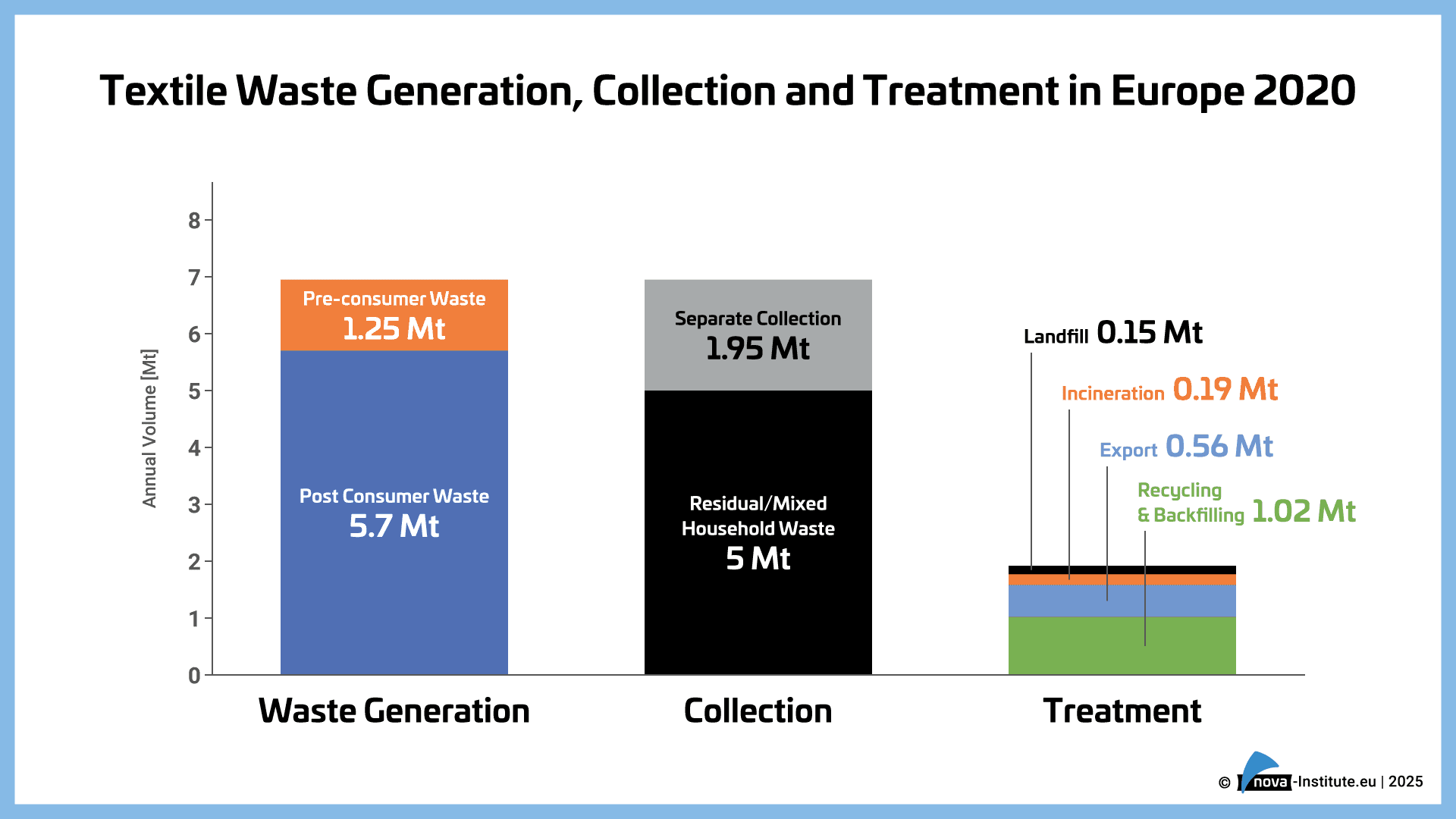
The environmental logic of repair is straightforward but worth stating clearly. When you extend the lifespan of a garment through mending, you minimize the demand for new production, which saves water, energy, and raw materials. You also divert textiles from landfills, which matters more than most people realize: landfilled clothes contain toxic chemicals and dyes that pollute land, air, and water. The slow fashion movement, which advocates for thoughtful consumption and the ethical production of garments, treats repair not as a workaround but as a design philosophy.
The financial case is equally direct. New clothing is expensive, and learning basic sewing skills combined with a modest investment in a repair kit can save a considerable amount of money over time. A repaired garment costs you thread and twenty minutes. Its replacement costs you full retail.
Then there is the personal dimension, which is harder to quantify but no less real. Mending creates clothing with genuine meaning. As Allison Stroman puts it: "As clothes gain more wear, they can develop holes, worn areas, rips, and broken seams among other signs of wear and tear. Instead of throwing these clothes away, mending your own clothes restores them to wearable items that you can add personal touches to. These one-of-a-kind touches allow your favorite pieces to stay in your closet for longer or they can give new life to a piece that might get thrown out otherwise."
The mindset shift comes first
Before any stitch is placed, the hardest hurdle is mental. The shift required is from seeing worn clothing as a problem to be discarded, to seeing it as an opportunity. Mending is low stakes and you do not have to aim for perfection. That framing matters enormously for beginners who worry their stitches won't be neat or that they'll make things worse. With patience and determination, the results will surprise you.
A practical mindset check before starting any project: determine how the damage happened. Did the garment catch on a door? Is the worn area at an elbow or knee, a high-friction zone that will keep experiencing stress? Answering these questions makes it significantly easier to choose the right repair technique for the specific item. A hole from a snag behaves differently than a worn-through patch at the knee, and each calls for a different approach.
Types of repairs and when to use them
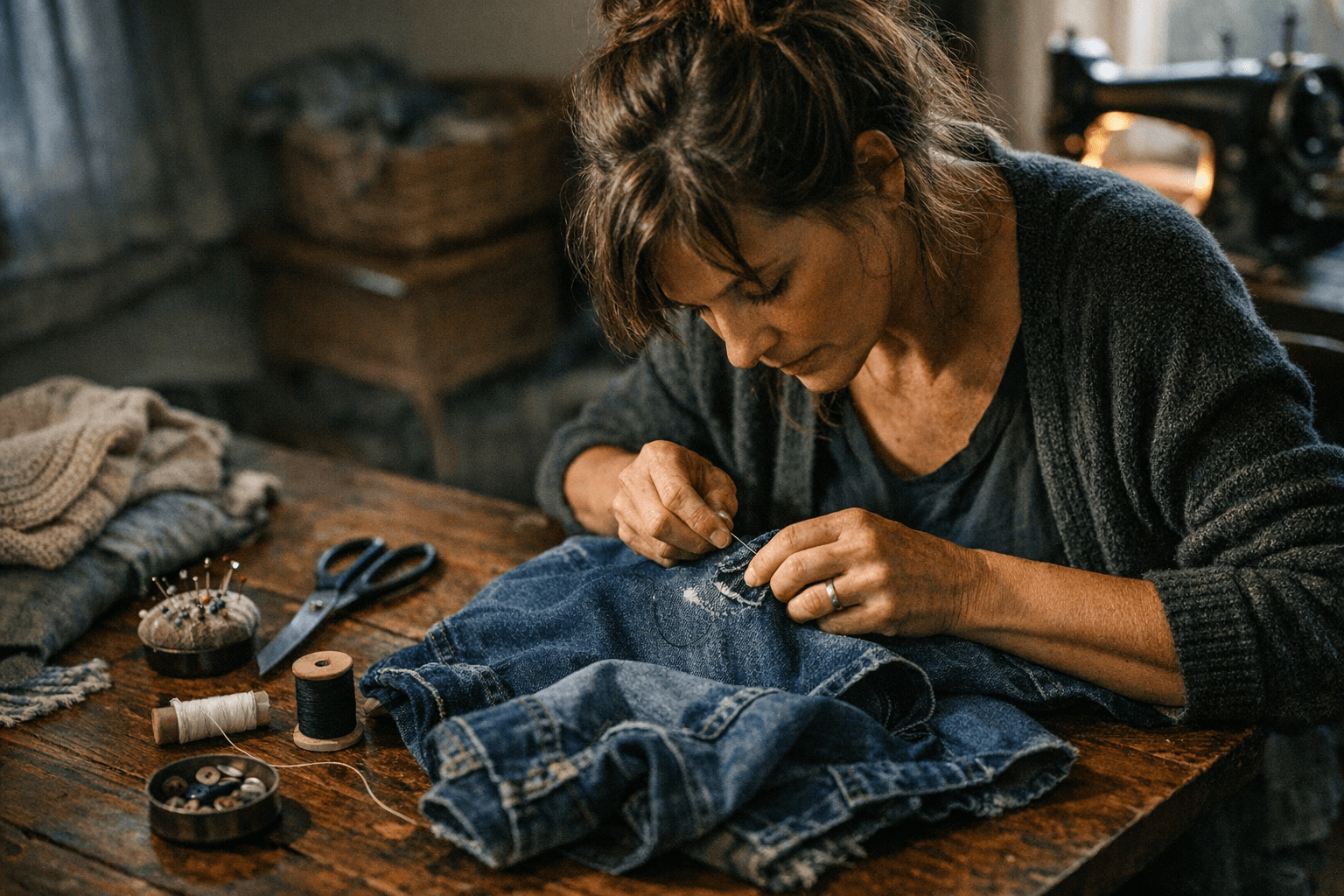
Mending covers a wide range of techniques, and knowing which to apply is most of the skill. Basic hand-sewing repairs, such as replacing buttons and repairing open seams, are the entry point and they go further than most people expect. Darning, the technique of weaving thread across a hole to reconstruct fabric structure, is the standard repair for socks and thin knitwear. Patching works for larger worn or torn areas, particularly on denim knees or jacket elbows, and can be done either invisibly, blending the patch into the surrounding fabric, or visibly, as a deliberate design choice.
Visible mending, as practiced by Khounnoraj and a growing community of textile artists, uses embroidery thread, decorative stitches, contrasting fabrics, and yarn to make the repair a feature rather than a flaw. It transforms the evidence of wear into something that communicates care and creativity. Invisible mending, by contrast, aims to restore the garment as close to its original appearance as possible, using matched thread and careful technique. Neither approach is superior; the choice depends on the garment, the damage, and what you want the finished piece to look like.
Beyond structural repairs, mending includes alterations that refresh a garment entirely: changing hemlines, adding trims, applying patches as decoration rather than concealment. These techniques extend garment life not by fixing damage but by renewing the wearer's relationship with the piece.
Building your starter kit
The barrier to entry is genuinely low. A functional mending kit requires four things: thread, needles, scrap fabric, and sewing pins. That's it.
For thread, use a mixture of regular thread and embroidery thread, and consider yarn for certain projects. The goal is to roughly match the thread to the fabric of the item so the whole piece reacts to washing in the same way, which directly increases the lifespan of your repair. The same principle applies to patch fabric: match the weight and fiber content as closely as possible. Scrap fabric can come from bins at fabric stores, old garments you already own, or thrifted pieces bought specifically for their material.
For needles, three covers most situations:
1. One embroidery needle for thicker thread
2. One sewing needle for thinner thread
3. One tapestry needle for yarn
Basic hand-sewing techniques form a skill set that can carry you through the majority of home repair projects. You do not need a machine to start. You do not need formal training. A willingness to practice on low-stakes items first, an old t-shirt or a worn sock, builds confidence quickly.
Visible mending as self-expression
The cultural reversal around mending is worth pausing on. For decades, visibly repaired clothing carried a social stigma, the mark of someone who couldn't afford new. That association has flipped. The visible mending trend represents a deliberate inversion of fast fashion values: where fast fashion rewards novelty and disposability, visible mending rewards longevity and craft. Wearing a sweater with an embroidered darn over a worn elbow communicates something specific about how you relate to objects, to consumption, and to the labor involved in making clothes.
Old clothes that are beyond mending entirely don't have to become waste either. They can be cut into scrap fabric for patches, which closes the loop further and adds another layer of meaning to the repair. A patch cut from a garment you wore for years carries a different weight than one bought off a roll.
The rise of circular fashion has given this practice institutional support, but the act itself predates every trend cycle. A needle, some thread, and the decision to fix rather than replace: that's the whole framework. The most sustainable wardrobe is the one you already own, and mending is how you keep owning it.
This article was produced by Prism’s automated news system from verified source data, official records, and press releases, then run through automated quality and moderation checks before publishing. The system is built and supervised by the people who set the standards it runs under. Read our full AI policy.
Did this article answer your question?