Huntsville Releases Tips for Durable Purchases, Repair, Resale and Recycling
Huntsville’s Feb. 20 explainer tells residents to buy smarter, mend more, resell what they don’t wear, donate thoughtfully and use municipal textile recycling to cut wardrobe waste.
Huntsville released a practical explainer on Feb. 20 aimed at residents, and its message is brisk and useful: to shrink textile waste you don’t need to overhaul your style, you need better buying, smarter mending, sensible resale and clear plans for donation or municipal recycling. Below is a hands-on guide that turns those four directives into actions you can take this weekend.
1. Durable purchases
Huntsville’s explainer starts at the point of purchase: prioritize durable pieces so you buy less often. Look for construction details, reinforced seams, lined pockets and sturdy zippers, and fabrics that feel substantial in the hand; a weighty denim, dense wool or tightly woven shirting will outlast flimsy blends. Think in terms of cost per wear: a well-made coat or a pair of shoes that cost more up front can become cheaper over time if they last for years. The city frames this as prevention, fewer purchases now mean less textile waste later, so treat new buys as investments in garment longevity, not fast wardrobe fixes.
2. Repair and alterations
Huntsville explicitly recommends using repair and alteration services to extend the life of garments. Instead of tossing a jacket with a torn seam or a dress with a stuck zipper, bring it to a tailor or learn simple mending techniques yourself: reattach buttons, restitch hems, and patch holes with visible or invisible repairs depending on the piece. Simple seasonal rituals, spend an hour in spring or fall repairing items you wore last season, are lower-effort than replacing pieces and keep the clothes you love in rotation. The city’s guidance makes clear that mending is a practical, everyday step residents can take to cut waste immediately.
3. Resale
The explainer urges choosing resale when garments no longer fit your life: consign, list, or trade rather than throwing pieces in the trash. Prepare items for resale the way a shop would, clean them, mend visible flaws, and present sharp photos that show fabric texture and fit; those small investments raise sale value and speed turnover. Timing matters: list seasonal items when buyers are hunting for them, and be realistic with pricing, fast-moving pieces at fair prices keep clothes circulating instead of languishing. Huntsville frames resale as part of a circular wardrobe economy: you reclaim value and keep textiles in use for longer.
4. Textile donation
Huntsville includes textile donation as a key pathway for usable garments you no longer want. Donation remains the right call for clean, wearable items that don’t suit your style anymore; check local drop-off options and charity guidelines so donations actually reach someone who can use them. The explainer encourages residents to donate thoughtfully, sort garments by condition, wash or launder when possible, and bundle items to make processing easier for receiving organizations. Donation keeps wearable textiles in use and diverts them from waste streams that municipal programs may treat differently.
5. Municipal textile recycling options
Where donation isn’t possible, Huntsville points residents toward municipal textile recycling options as the alternative. The city’s guidance outlines that municipal programs accept textiles that are too worn for donation; these textiles can be diverted from landfill by using designated drop-off sites or municipal collection services. Before you go, check Huntsville’s specific guidelines so you know which items are accepted, typical best practices: separate by category, remove non-textile debris, and bag or box items as instructed. The explainer emphasizes municipal recycling as the final step in a responsible disposal chain, not the first resort.
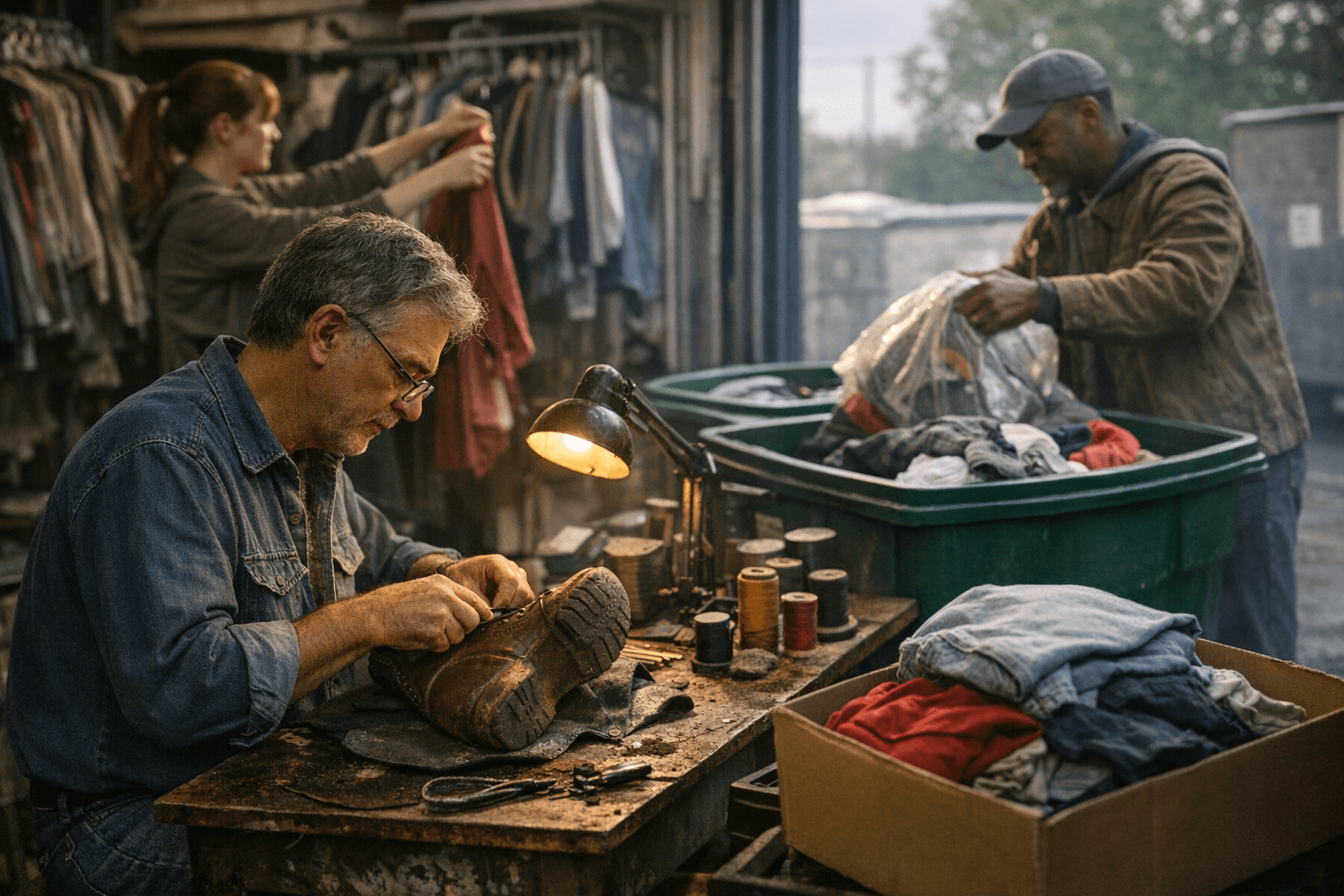
Practical styling and storage moves Huntsville’s explainer pairs practical buying and disposal advice with small styling and storage habits that preserve garments: store knits folded to prevent shoulder stretch, rotate shoes with shoe trees to maintain shape, and keep a simple repair kit (needle, thread, spare buttons) on hand. These everyday rituals are the quiet work behind a wardrobe that lasts.
- Audit: Pull everything out of a closet and decide what you’ll keep, mend, resell, donate or recycle, Huntsville’s approach begins with clarity.
- Mend first: Prioritize repair for items that need small fixes; it’s cheaper and faster than replacement.
- Resell what’s in good shape: Photograph and list seasonal, on-trend, or designer pieces that retain resale value.
- Donate thoughtfully: Clean and sort donations so they’re actually usable by recipient organizations.
- Recycle last: Use municipal textile recycling for items that are truly worn out and can’t be donated.
A simple, staged five-step plan
Why this matters for your wardrobe (and your wallet) Huntsville’s explainer frames these steps as practical interventions rather than moral imperatives. Buy less but better, fix what you own, keep garments moving through resale and donation, and use municipal recycling as a safety net. The result is a clearer closet, fewer impulse purchases, and, crucially, a long-term reduction in the textile waste that too often ends up in landfill.
Huntsville’s public-facing guidance is refreshingly practical: it gives residents a pathway from purchase decision to disposal, and it treats mending and resale as stylish, sensible acts rather than chores. Follow the city’s sequence, durable buys, repair, resale, donation, municipal recycling, and your wardrobe will feel steadier, look more considered, and do far less harm to the planet.
This article was produced by Prism’s automated news system from verified source data, official records, and press releases, then run through automated quality and moderation checks before publishing. The system is built and supervised by the people who set the standards it runs under. Read our full AI policy.
Did this article answer your question?