IIT Gandhinagar hydrogel removes textile dye pollution with biodegradable material
A biodegradable cellulose hydrogel from IIT Gandhinagar stripped 99.6% of methylene blue in lab tests. It also trapped mixed dyes, pointing to cleaner textile wastewater treatment.
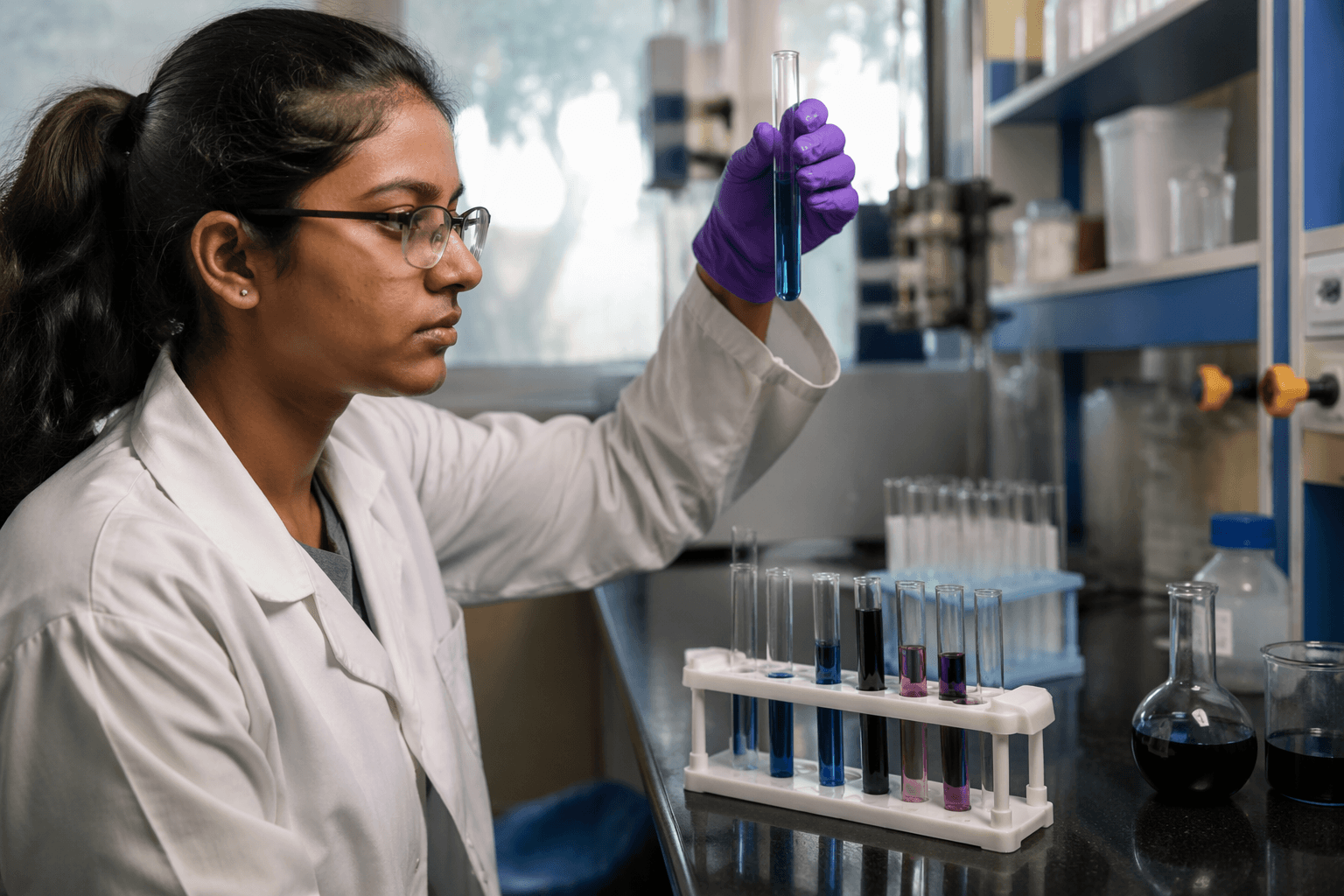
Textile dye wastewater has long been the ugly seam behind vivid fabric. At IIT Gandhinagar, researchers have turned a biodegradable cellulose hydrogel into a possible cleaner, pulling 99.6% of methylene blue from lab water and catching other dyes too. For mills and wastewater operators, the real question is whether a lab win can survive the mess of real effluent, repeated reuse and industrial scale.
The material, first described as CAPA and later referred to as CAPA-2, was built from carboxymethyl cellulose and acrylic acid. IIT Gandhinagar said Hitarth Patel and Bhaskar Datta published the work in ACS Applied Polymer Materials on June 5, 2026. The gel’s structure is the point of the design: it carries tiny pores with an average diameter of about 25 nanometres, small enough to trap dye molecules before they keep moving through a treatment system.
This was not a one-dye trick. The hydrogel also captured crystal violet and rhodamine B, including when multiple dyes were present in the same solution. Media reports said adjusting the acrylic acid content fine-tuned the gel’s structure and adsorption behaviour, while CAPA-2 held its performance across acidic, neutral and alkaline conditions and kept working after four reuse cycles. That kind of flexibility matters in textile processing, where wastewater rarely arrives as a clean single-colour sample and often leaves the factory floor with a shifting chemical profile.
The backdrop is severe. IIT Gandhinagar cites research showing billions of tons of dye-containing wastewater enter water systems every year. University of Bath-linked reporting says up to 80% of dye-containing industrial wastewater in low- and middle-income countries is released untreated or used directly for irrigation. The World Bank has said 80% of the world’s wastewater is discharged without adequate treatment, a scale that turns dye pollution from a niche manufacturing problem into a public-health and water-supply issue.
That is why CAPA-2 is being positioned as an adsorption alternative to membrane filtration, coagulation and electrochemical treatment. Those methods are already familiar to dye-using sectors, but they can be costly, create unwanted byproducts and struggle with mixed dyes. The next test is the one that decides whether this material belongs in a pilot plant or just in a paper: performance in real industrial wastewater, the cost of making it at scale, what happens across reuse cycles, and how the spent hydrogel is disposed of once it has done its job.
This article was produced by Prism’s automated news system from verified source data, official records, and press releases, then run through automated quality and moderation checks before publishing. The system is built and supervised by the people who set the standards it runs under. Read our full AI policy.
Know something we missed? Have a correction or additional information?
Submit a Tip