India Eyes Circular Fashion Leadership, But Infrastructure Gaps Remain a Major Hurdle
A government report finds India's textile recycling systems "underdeveloped, informal, and unevenly distributed" — even as the market races toward $3.5 billion by 2030.
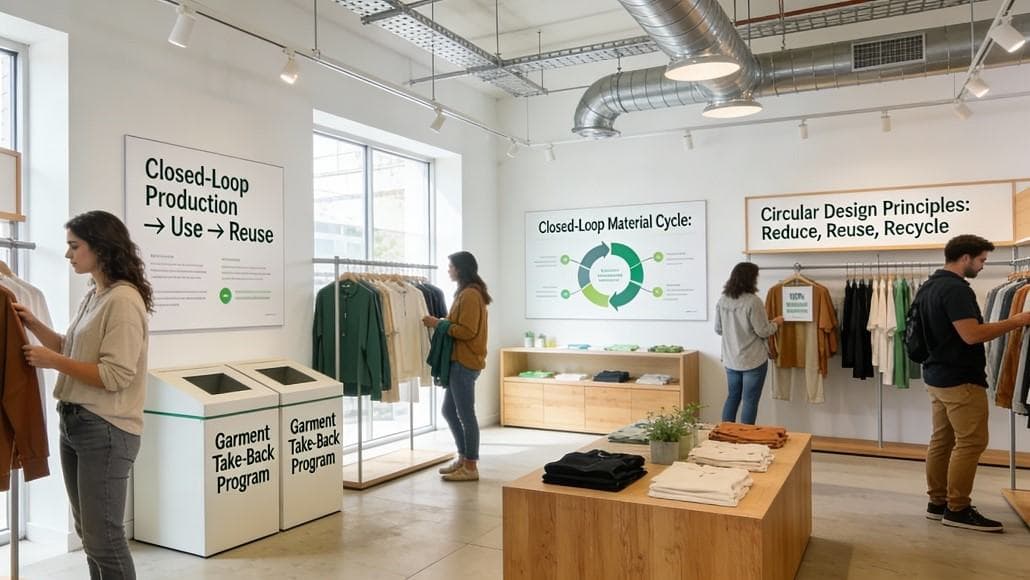
A government-commissioned report has punctured some of the optimism surrounding India's circular fashion ambitions, finding that the systems required to capture value from the country's vast textile waste streams remain underdeveloped, informal, and unevenly distributed across the country — even as projections place the textile recycling market at $3.5 billion by 2030.
The numbers are striking on their face. Nearly one lakh green jobs could emerge from a scaled recycling sector. Discarded fabric is increasingly being treated as recoverable capital. And yet, as the report makes plain, an active recycling economy is not the same thing as a circular one.
"The emergence of a recycling economy within India's textile sector does not, by itself, indicate that a circular transition is underway," the reporting found. "What it more precisely reflects is the sheer weight of a production system whose scale makes enormous material volumes inevitable — and the growing commercial logic of capturing value from those volumes before they are lost to landfill or incineration."
That tension is encoded in the data itself. Around 97% of pre-consumer textile waste — the offcuts, yarn remnants, and process scrap generated before garments reach consumers — is already recovered within industrial systems. That figure sounds like progress, and in one sense it is: it points to a well-worn, if largely informal, recovery infrastructure that has been built into the manufacturing process over decades. But recovery is not the same as recycling, and recycling is not the same as circularity. The infrastructure that handles this volume was not designed for a closed loop; it evolved to extract whatever residual value it could from a linear system of enormous scale.
The scale itself is not in question. Cutting waste alone — the cotton, polyester, viscose, and blended fabric remnants left on cutting room floors at the garmenting stage — accounts for an estimated 1,850 kilotonnes per annum, making it the single largest pre-consumer waste category in the country. Every part of the supply chain generates its own stream: yarn ends in spinning units, fabric offcuts in processing facilities, and pattern scraps at the garmenting stage where volume is highest.
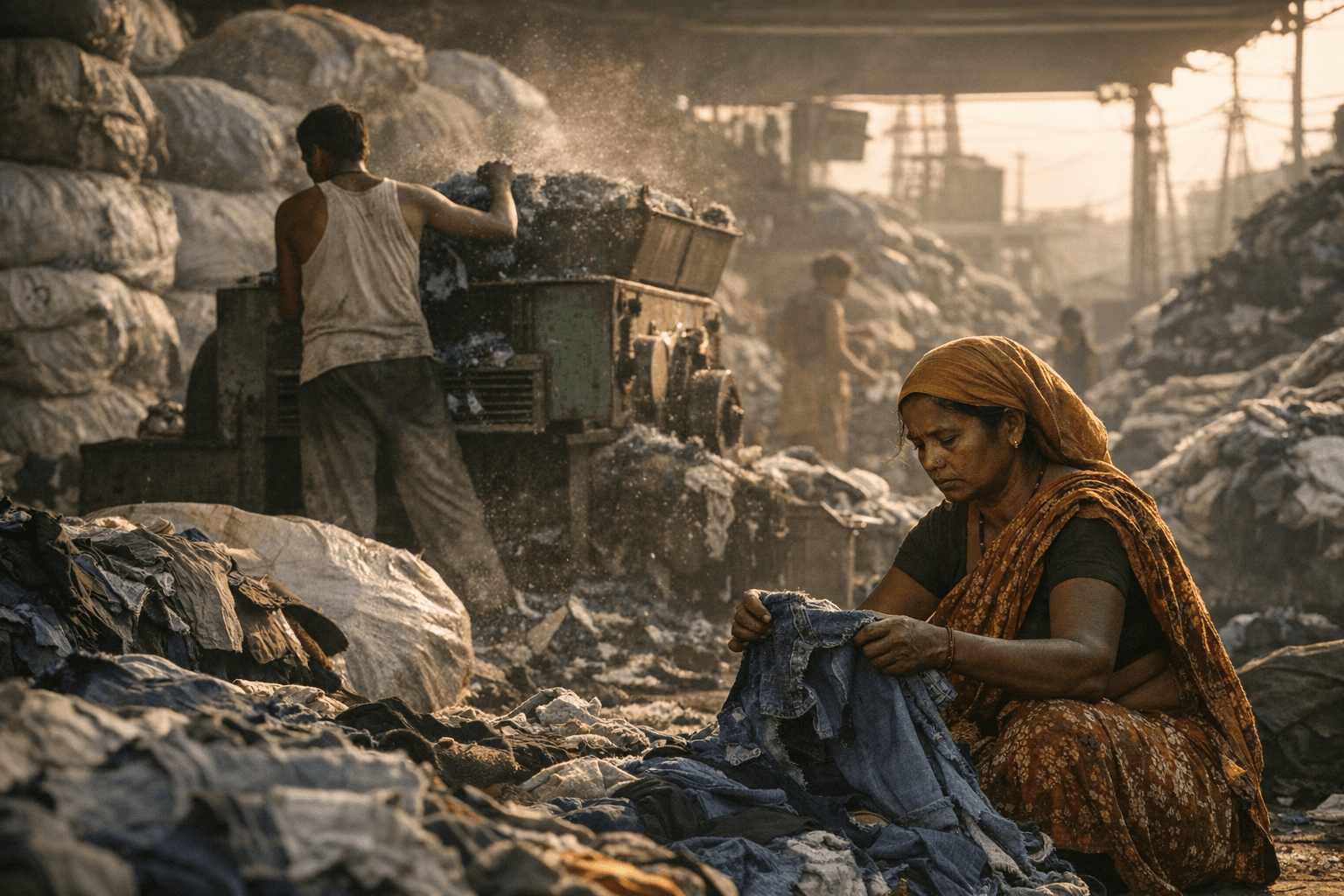
That supply chain is also one of the most geographically fragmented in the world. Composite mills, spinning units, power looms, knitting and hosiery facilities, independent processing houses, and garment manufacturing clusters are spread across the length of India, having evolved over decades into geographically dispersed industrial concentrations. Stitching them into a coherent circular system — with standardized collection, consistent processing capacity, and traceable material flows — is a logistics challenge that the existing infrastructure has not been built to meet.
The honest read of the moment is this: India is economically well-positioned to lead on textile recycling, and the commercial logic for doing so grows stronger every year. But "the numbers that frame this moment carry their own internal tensions," as the reporting puts it. A 97% pre-consumer recovery rate, impressive as it sounds, was not engineered by circular design. It was produced by the sheer pressure of industrial scale and the commercial incentive to recover any material before it becomes a sunk cost.
Whether India can convert that informal, fragmented recovery habit into a genuine circular infrastructure — one that closes loops rather than simply extracting residual value from them — is the question the $3.5 billion projection does not answer. The government report identifies the gap clearly. Closing it will require something the market alone has not yet supplied.
This article was produced by Prism’s automated news system from verified source data, official records, and press releases, then run through automated quality and moderation checks before publishing. The system is built and supervised by the people who set the standards it runs under. Read our full AI policy.
Did this article answer your question?


