India Infrastructure Conclave Endorses PM MITRA Parks and Sustainable Textile Ecosystems
Rohit Kansal said seven PM MITRA parks of roughly 1,000 acres each will house fibre-to-garment chains, backed by state works of ₹2,160.17 crore and bids totalling Rs 21,500 crore in MP.
Rohit Kansal, Additional Secretary at the Union Ministry of Textiles, told the India Today Infrastructure Conclave in New Delhi that India is shifting its textile-infrastructure strategy toward large-format integrated ecosystems. Speaking in the session “Infrastructure for Textile Exports” on February 25, 2026, Kansal warned that “the traditional textile industry in India has developed in organic clusters, dominated by MSMEs. Organic clusters are not outdated, but they need to be modernised and upgraded,” and added, “It is no longer confined to highways and ports; the focus is on integrated ecosystems: large-format industrial parks, cluster upgrades and sustainability systems.”
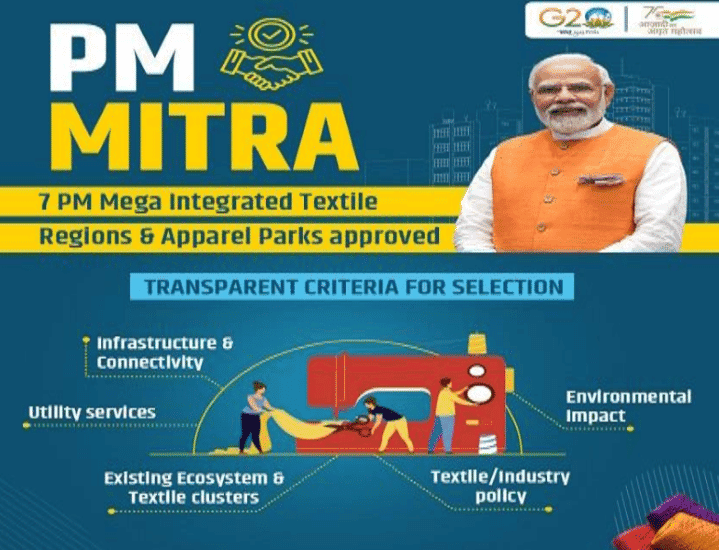
The central plank of that policy is the PM Mega Integrated Textile Region and Apparel scheme, known as PM MITRA, established by a Ministry of Textiles notification dated 20 October 2021 (Gazette notification CG-DL-E-21102021-230585; F.No.20/1/2019-SITP). Ministry documents and industry reporting describe seven approved PM MITRA parks, each roughly 1,000 acres, designed to integrate “the entire textile value chain - from spinning and weaving to processing, apparel manufacturing, design and exports - within world-class industrial parks.” The Ministry issued 1st Revised Guidelines for release of grants under the scheme on 28 August 2025 to operationalise that blueprint.
Policy urgency has a market battery behind it. India’s textile and apparel exports currently hover around US$40 billion while the domestic market is estimated at US$135-140 billion; policymakers now want to scale the industry to US$350 billion. Conclave reporting flagged global trade politics as an accelerant: “The urgency is sharpened by global trade politics. The back-and-forth over US tariff policies in recent years has altered sourcing decisions. Even incremental tariff disadvantages can shift large-volume garment orders,” a line that underscored Kansal’s remarks.

Practical steps are already visible at state level. The Ministry informed Parliament that state governments have initiated external infrastructure works worth ₹2,160.17 crore to improve access up to park entrances. Ministry of Textiles documents describe a transparent “challenge method” used for preliminary site selection and allow limited commercial land use within parks as part of land‑use planning.
Madhya Pradesh’s Dhar district has emerged as a visible test case. Times of India coverage called the MP PM MITRA Park “the frontrunner,” reporting that a second-phase allotment allocated 320 acres to 13 companies proposing about Rs 7,500 crore of investment and generating more than 16,000 jobs. MPIDC managing director Chandramauli Shukla told the paper that “so far, 38 firms submitted proposals with cumulative investment commitments crossing Rs 21,500 crore, which are expected to generate nearly 55,000 jobs,” and listed faster approvals, social infrastructure planning and competitive power tariffs as reasons for investor traction.

Industry players are pitching integrated projects inside the parks: Sanjay Agrawal, managing director of NASAS Fibre to Fashion, said his company is “developing a 30-acre integrated project inside the PM MITRA park in Madhya Pradesh, covering knitting, dyeing, and garmenting on one campus,” adding that “the EU tariff advantage, combined with plug-and-play infrastructure and state garment and labour incentives, makes integrated manufacturing cost-effective and globally compliant, exactly what European buyers are now seeking.”
Ministry and industry forecasts see the parks delivering scale and jobs: HomeTextiles reported the PM MITRA parks are “projected to generate lakhs of jobs - both directly within the parks and indirectly through associated logistics, services and ancillary industries.” If the seven roughly 1,000-acre sites, backed by the 28-08-2025 revised grants framework and the ₹2,160.17 crore of external works, move from allotment to anchor-unit commissioning as MP aims to, the parks will test whether integrated, plug-and-play textile regions can convert tariff pressure and buyer preferences into the scale required to reach a US$350 billion industry.
This article was produced by Prism’s automated news system from verified source data, official records, and press releases, then run through automated quality and moderation checks before publishing. The system is built and supervised by the people who set the standards it runs under. Read our full AI policy.
Did this article answer your question?


