India-UK trade deal cuts tariffs, reshaping fashion sourcing economics
A 12 percent duty has vanished from Indian apparel and home textiles, giving UK buyers new room to cut costs, fund compliance and rethink sourcing.
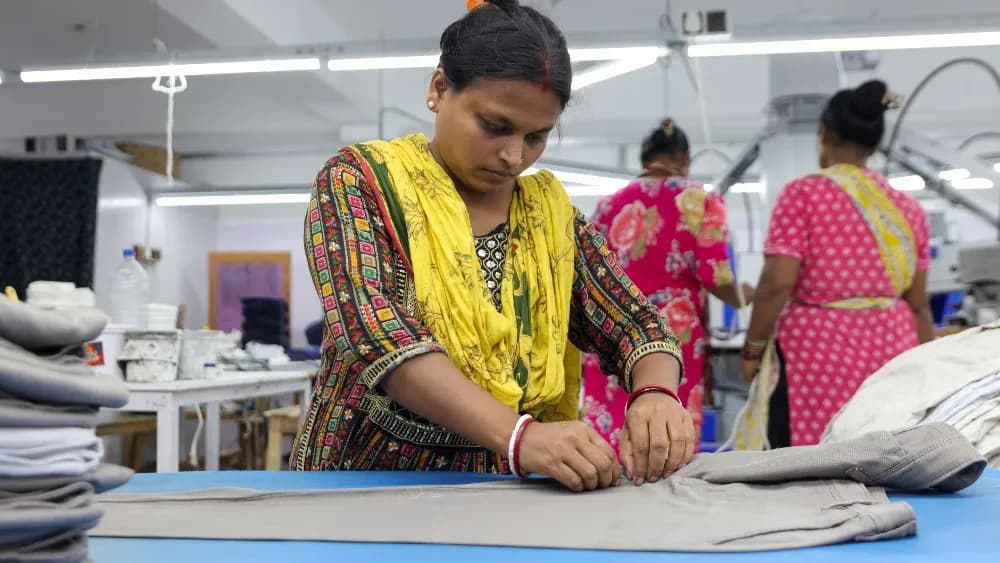
On 15 July 2026, the India-UK Comprehensive Economic and Trade Agreement took effect, and UK tariff notices put duties on Indian clothing, textiles, footwear and leather products at zero after the pact was signed on 24 July 2025. For buyers, that can turn a £100 landed order into a £12 saving before freight and margins, which is enough to change where a collection is sourced and how much room is left for traceability, audit and sustainability costs.
The first shift is in landed cost
When a tariff of up to 12 percent disappears, the savings hit fastest in product lines that already live and die by the penny: jersey basics, woven shirts, outerwear components, bedding, towels and other home textiles where fabric weight and order volume quickly magnify duty costs. A buyer moving a £50,000 shipment of Indian goods from the full UK Global Tariff back to zero duty is not making a symbolic move; it is reclaiming as much as £6,000 before the rest of the supply chain is even negotiated.
Indian clothing and textiles had lost preferential access on 1 January 2026 and dropped back to the full UK Global Tariff before CETA kicked in, so the change is not theoretical. It reverses a short but costly stretch in which Indian suppliers were less attractive on paper, even when their quality, handfeel or production capability remained strong.
Where the new orders are most likely to land
The earliest winners are the categories with the least room for tariff drag and the least tolerance for delay. Volume-driven apparel, private-label homeware and replenishment basics are the obvious candidates, because a 12 percent duty swing can decide whether a line clears a margin hurdle. Indian mills and factories that already have established UK relationships should also benefit first, because they can move quickly while buyers are still updating cost sheets and sourcing calendars.

The tariff gap has narrowed enough that India no longer has to compete as the “special case” sourcing market. It can compete as a normal option. In practice, UK brands and retailers compare India more aggressively against their other sourcing markets, especially for lower-complexity products where the landed cost equation is decisive.
Rules of origin still decide who actually wins
Zero duty is not automatic. Companies must meet rules of origin to claim the preference, which means the right paperwork, the right production history and the right customs preparation now matter as much as the price ticket. UKFT and Moore Kingston Smith LLP have warned buyers not to treat the deal like a blanket discount.
The fashion supply chain is built on mixed inputs, subcontracting and multi-country production. If a garment or home textile does not qualify under the agreement, the tariff relief evaporates and the buyer is back where it started, paying the duty and losing the competitive edge.
What brands may do with the margin relief
The question is not whether Indian goods get cheaper, but what brands do with the savings. In fast fashion, the temptation will be to pass the relief through to the shelf price or to use it to pad margin on high-turn lines. In premium and luxury, the smarter move is to absorb some of the gain into the costs that now define responsible sourcing: traceability, social compliance audits, better testing, lower-impact logistics and more durable construction.
If a label suddenly has 12 percent more room in the budget, it can spend that space on better documentation, smaller but cleaner production runs, or materials and finishing that hold up longer in wear. The danger is that some of the gain will simply disappear into expansion, encouraging higher volumes instead of better products.
Why this matters beyond one bilateral deal
In the UK government’s impact assessment, the agreement is designed to lower India’s high tariffs, expand market access and increase certainty for traders, and the House of Commons Business and Trade Committee has treated the India pact as a serious trade reset. Nearly 99 percent of Indian exports to the UK now enter at zero duty, making it the UK’s biggest bilateral trade pact since Brexit.
India has landed its 16th free trade agreement overall and is not just an export base, but a deep textile ecosystem with scale, craft and industrial depth. British brands also gain a better route into India’s expanding affluent consumer base.
This article was produced by Prism’s automated news system from verified source data, official records, and press releases, then run through automated quality and moderation checks before publishing. The system is built and supervised by the people who set the standards it runs under. Read our full AI policy.
Did this article answer your question?