India’s sustainable fashion shift turns to recycled PET and circular textiles
India’s Earth Day sustainability talk is moving past recycled-fabric hype. The real test is whether collection, sorting and fibre-to-fibre recycling can finally scale.

Earth Day talk is easy; building the system that can pull a worn-out shirt back into the loop is the hard part. That is where Jay Deivasigamani and Kapil Bhatia land in the conversation now, pushing recycled PET, circular textiles and better material choices as the next serious move in Indian sustainable fashion. The shift matters because shoppers are no longer buying into style alone. They want clothes that perform, last and still feel current.
On April 16, Earth Day 2026, the pressure point is obvious: India is trying to move from being seen as a raw-material supplier to a place where fashion innovation actually happens. The Ministry of Commerce and Industry says the domestic apparel and textile industry contributes about 2% to GDP, about 7% of industry output in value terms, and roughly 4% of global textile-and-apparel trade. Those numbers are not small. They are leverage. If India gets circularity right, the country is not just cleaning up its closet. It is reshaping a huge industrial engine.
The scale of the waste problem makes the opportunity look even sharper. A 2026 industry report says India’s textile recycling market could reach US$3.5 billion by 2030 and create nearly one lakh green jobs over the next five years. The same report estimates annual textile waste at 70.73 lakh tonnes, split between 42% pre-consumer waste and 58% post-consumer waste. More than 70% is already being recovered through reuse, recycling and downcycling, but that still leaves the industry with the messy, unglamorous work that circular fashion actually depends on: collection systems that catch more garments before landfill, sorting that can separate usable blends from dead-end scraps, and recycling processes that can move beyond downcycling into true fibre-to-fibre recovery.
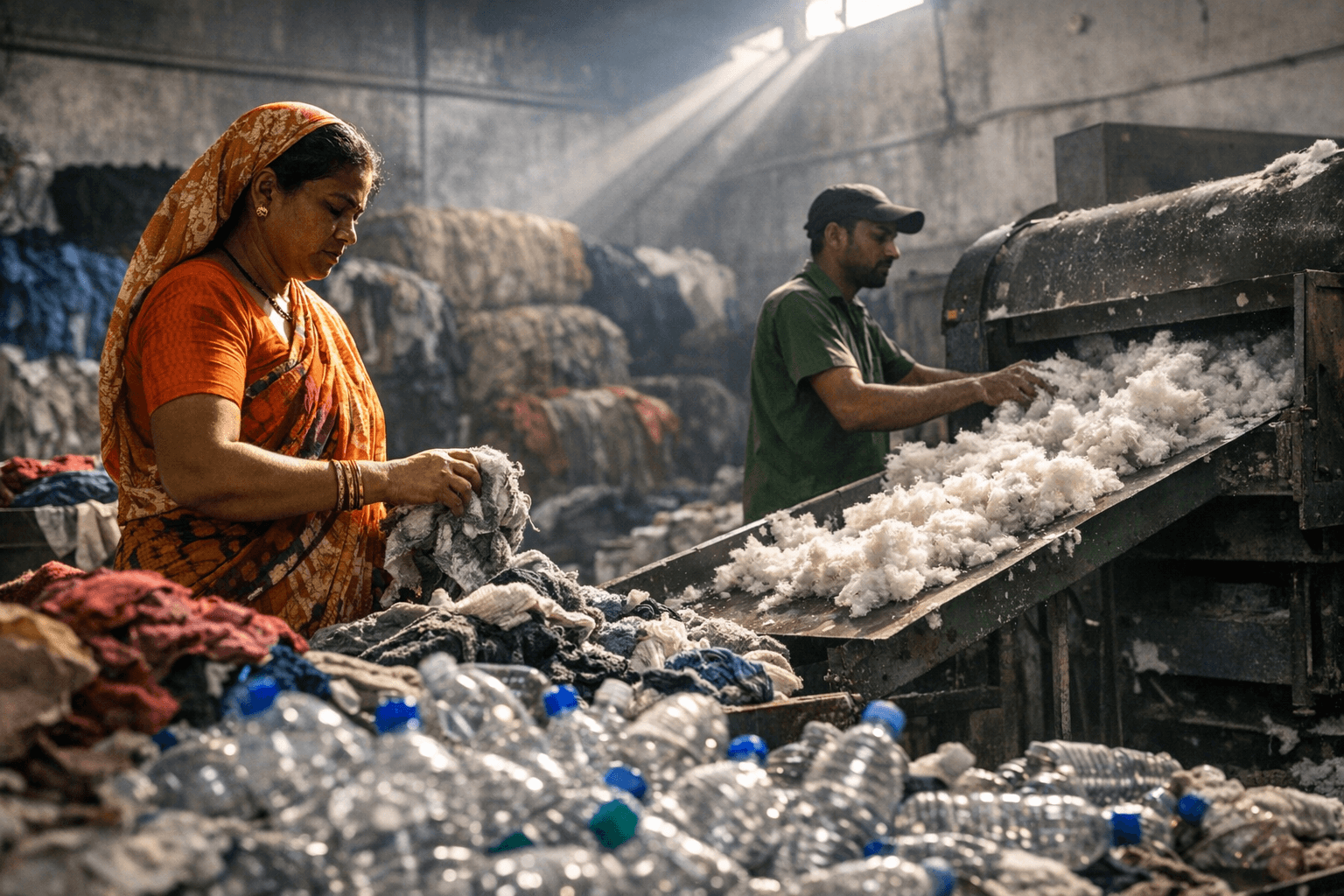
That is why the conversation has shifted from slogan to infrastructure. The R|Elan Circular Design Challenge, described by its organizers and the United Nations in India as India’s largest award for circular fashion, has become a useful signpost for how serious the ecosystem wants to look. Its 2025 finalists came from India, the UK, the EU and APAC & Beyond, which tells you the idea is no longer niche or local. In Mumbai on April 3, 2026, CMAI and SU.RE held the first ECO-STITCH Sustainability Conclave, with the focus squarely on moving circular textiles from ambition to implementation.
India’s next fashion story will not be decided by recycled-fabric buzzwords alone. It will be decided by whether labels are clear, traceability is real, consumers understand what they are buying, and the industry builds a loop sturdy enough to carry its own waste back into the next season.
This article was produced by Prism’s automated news system from verified source data, official records, and press releases, then run through automated quality and moderation checks before publishing. The system is built and supervised by the people who set the standards it runs under. Read our full AI policy.
Did this article answer your question?


