Iseyin weavers keep aso-oke alive as global demand surges
In Iseyin, handwoven aso-oke is becoming more valuable because it resists speed: diaspora demand and young apprentices are reviving the cloth’s slow rhythm.
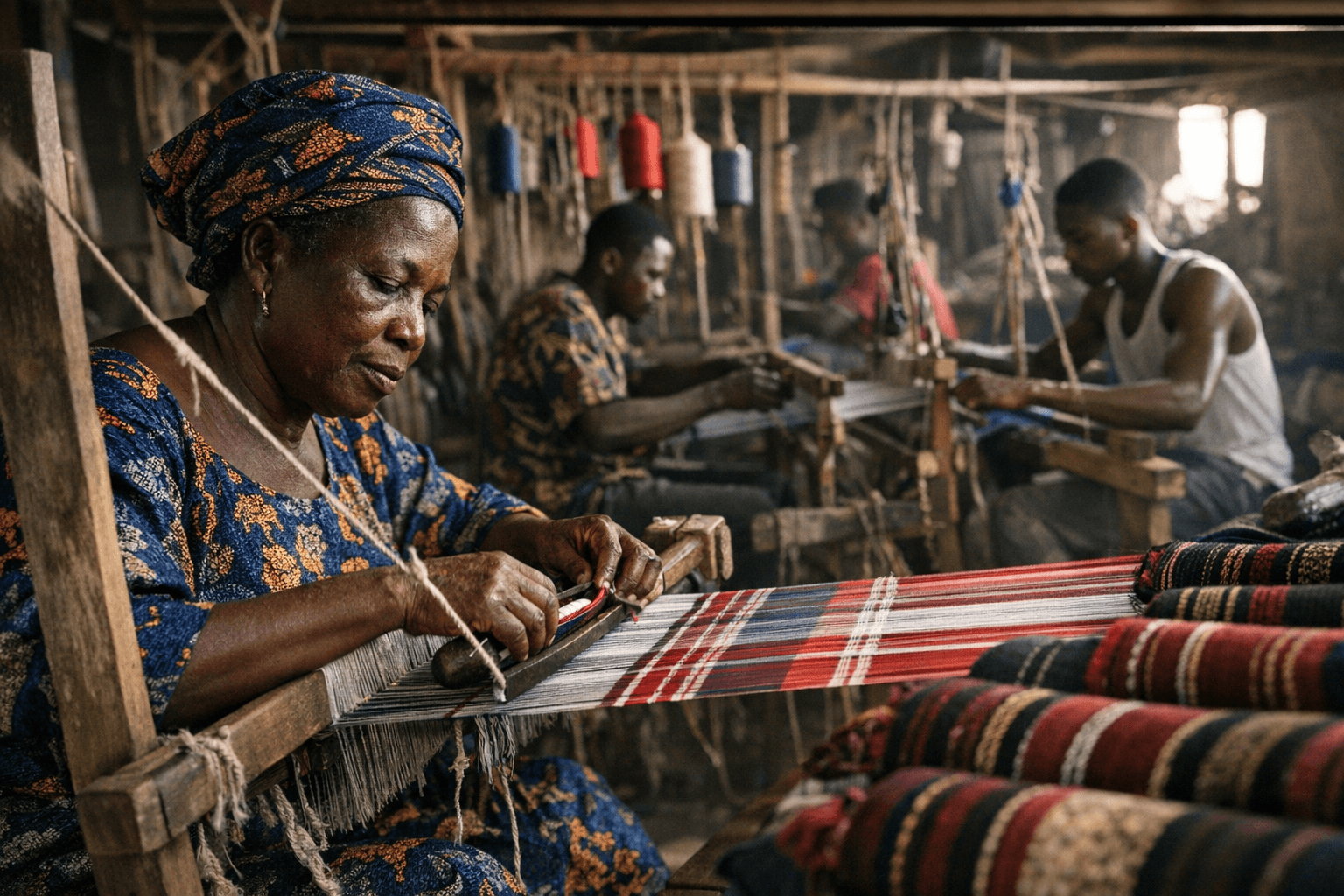
In Iseyin, the value of aso-oke is rising precisely because it is not easy to scale. The town, about 200 kilometres from Lagos and widely regarded as the cradle of the handwoven textile, has become a working argument for slow fashion: a craft whose identity depends on the human hand is now drawing fresh demand from buyers who want something that feels rooted, not factory-made.
Aso-oke is indigenous to the Yoruba people, and the fabric’s cultural weight is part of its commercial strength. Artisans in Iseyin have resisted mechanisation because handweaving is central to the cloth’s authenticity, a position that fits the logic of sustainable fashion far better than mass production ever could. The looms produce more than cloth. They preserve a living practice, the kind UNESCO describes as intangible cultural heritage: the practices, knowledge and expressions communities recognize as part of their identity.
That identity matters on a national and international scale. Demand for aso-oke has risen across Nigeria and abroad, fuelled by the Nigerian diaspora and the wider popularity of Nigerian fashion and music. The cloth’s visibility reached a global audience when Meghan Markle wore an aso-oke wrapper and shawl during a visit to Nigeria with Prince Harry two years ago, a cameo that confirmed what Iseyin’s weavers already knew: this is no museum relic, but a contemporary textile with real cultural force.
The craft is also pulling in a younger generation. Some of the new learners arriving in Iseyin include university graduates, a telling sign that handweaving is no longer being treated as the fallback of the old guard. Francisco Waliu, 34, left nightclub performance to weave aso-oke, and says he now makes a good living from it. That shift says as much about the economics of craft as it does about taste. In a market increasingly hungry for provenance, patience and texture, the slow churn of the loom can command a premium that speed cannot.
The broader heritage case is equally strong. Nigeria ratified the Convention for the Safeguarding of the Intangible Cultural Heritage on 21 October 2005, and the country now has eight inscribed intangible heritage elements. The Yoruba, one of West Africa’s largest ethnic groups with a sizeable diaspora worldwide, have a historical arc that scholars place across centuries, from roughly 300 BC to 1840. Aso-oke sits inside that long continuum, but it is being renewed in real time, in shaded alleys and makeshift sheds in Iseyin, where cultural survival and livelihood are still woven on the same loom.
This article was produced by Prism’s automated news system from verified source data, official records, and press releases, then run through automated quality and moderation checks before publishing. The system is built and supervised by the people who set the standards it runs under. Read our full AI policy.
Did this article answer your question?


