Monte-Carlo Fashion Week puts sustainability at the center of luxury runway shows
Monte-Carlo Fashion Week turned sustainability into the main event, but the real test is whether the talk changes what luxury brands source, buy, and make.

Monte-Carlo Fashion Week made the runway do the talking
Monte-Carlo Fashion Week opened with the kind of message luxury can no longer keep at arm’s length: environmental responsibility is not a side dish, it is the main course. The 2026 edition runs from April 14 to April 18, with five days of runway shows, conferences, networking, and gala nights spread across Monaco, and the mood is very clear. This is the official fashion event of the Principality of Monaco, and in its 12th edition, it is using the full machinery of a fashion week to ask whether sustainability is becoming part of luxury’s business culture, not just its branding.
The opening at Monaco Town Hall, led by Mayor Georges Marsan, set the tone with the kind of civic polish that makes the whole thing feel bigger than a seasonal calendar stop. NEWS.MC described the program as a mix of creativity, innovation, and sustainability, and that framing matters. When a fashion week stops treating sustainability like a panel topic tucked between the parties and starts making it part of the architecture of the event, the message shifts from aspiration to expectation.
The clothes were doing the heavy lifting
What made this edition feel sharper than a standard feel-good sustainability showcase was the way the collections themselves were presented. Runway Magazine said many designers leaned on traceable, deadstock, and upcycled materials, which is where the conversation gets real. Luxury has spent years talking about sustainability in soft-focus language, but deadstock and upcycling are not abstract values. They are sourcing decisions, fabric decisions, and, in some cases, a direct challenge to the old habit of over-ordering and overproducing.
That is the important distinction here: sustainability was being framed not as a compromise, but as part of design value. A garment cut from rescued fabric, or a look built from traceable material, tells a different story than one wrapped in generic green messaging. It says the idea, the finish, and the provenance all matter. In luxury, where craft and rarity are supposed to carry weight, that feels less like a trend and more like a correction.
Panels, showcases, and the business talk behind the sparkle
Monte-Carlo did not stop at the catwalk. The schedule brought in panels, material-innovation showcases, and conversations about circular business models, which is exactly where sustainability needs to live if it is going to change anything beyond social feeds. Monaco Life and NEWS.MC both reported a sustainability roundtable in the 2026 program, and that is the kind of detail that gives the week some teeth. A runway can sell the mood; a roundtable can expose the mechanics.
That broader programming also makes the event feel less like a showcase and more like a pressure test. If designers are presenting traceable fabrics while speakers are discussing circularity, then the question becomes whether anyone is actually changing how they source, how they plan collections, and how they think about the afterlife of a garment. The fashion crowd loves a beautiful statement piece, but the real shift happens when the conversation reaches the buyer’s desk and the production calendar.
Why Monaco keeps putting sustainability in the room
This did not come out of nowhere. The 2025 edition already highlighted ethics, inclusivity, and sustainability, so the 2026 focus feels like an escalation rather than a one-off theme. In 2023, Monaco’s Mission for Energy Transition hosted a conference at Monaco Fashion Week under the banner of curbing fast fashion and collective responsibility. That is a smart bit of continuity. Monaco is not simply decorating the event with green language. It has been building sustainability into the fashion week’s identity for years.
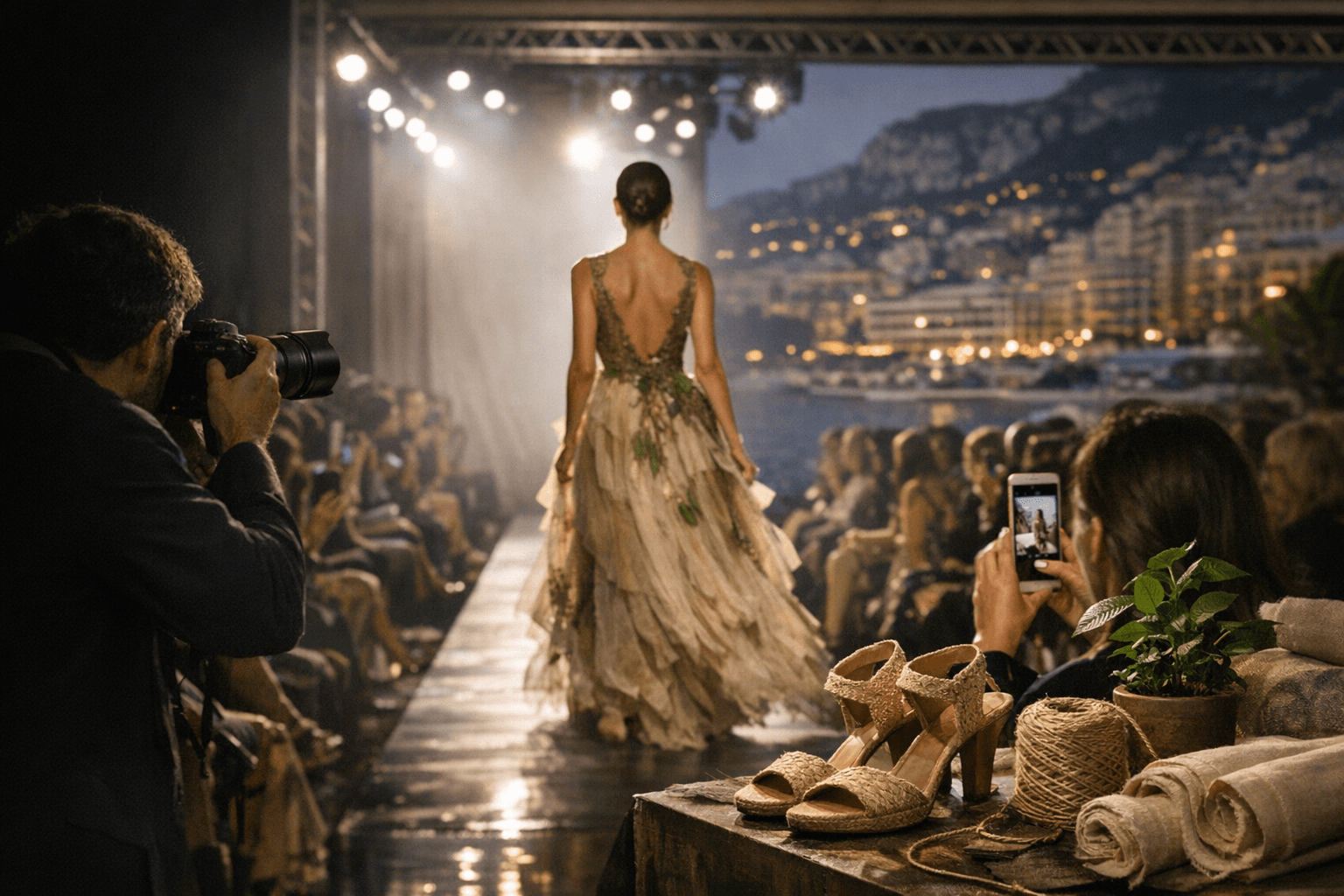
That consistency matters because fashion still has a reputation for treating sustainability like a campaign season. Monaco’s approach is different: it keeps returning to the issue, year after year, and folding it into the official structure of the event. When a fashion week keeps putting ethics, materials, and waste into the same room as the runway, it starts to look less like branding and more like policy culture in miniature.
The stakes are huge, and luxury is not exempt
The reason this conversation cuts deeper than a nice panel quote is simple: the industry’s footprint is enormous. The United Nations Environment Programme says the textile industry produces 2 to 8 percent of global greenhouse-gas emissions and uses the equivalent of 86 million Olympic-sized swimming pools of water each year. That is not a niche problem. That is a planetary one, and fashion is right in the middle of it.
The pressure is building elsewhere too. In March 2025, the European Environment Agency said Europeans are buying and discarding more clothing, footwear, and other textiles than ever before. McKinsey has also warned that fashion companies face pressure to reduce overproduction and expand circular business models, and its 2024 analysis said the industry emits about as much greenhouse gas as France, Germany, and the UK combined. Put those numbers next to a luxury runway in Monaco and the disconnect is obvious. A polished show can look effortless; the supply chain almost never is.
What would count as real change
If Monte-Carlo Fashion Week is serious about moving sustainability from messaging into business culture, the evidence has to show up in places that are less glamorous than the front row. Look for three things:
- More traceable fibers and certified inputs, not just one-off capsule gestures.
- More deadstock, upcycled, and circular production choices carried into main collections.
- More buying decisions shaped by material innovation, lower waste, and smaller, smarter production runs.
That is the real test hiding beneath the champagne and the seaside glow. A sustainability roundtable is useful only if it feeds into sourcing, production, and retail decisions. A runway built on traceable or upcycled materials is meaningful only if it changes what gets ordered next season, not just what gets photographed this season.
Monte-Carlo Fashion Week is showing that luxury no longer gets to treat sustainability as a soft halo around the product. In Monaco, it is being placed under the lights, in the conference room, and inside the business conversation itself. The next step is simple to say and hard to fake: prove it in the fabric, prove it in the cut, and prove it in what gets made after the applause dies down.
This article was produced by Prism’s automated news system from verified source data, official records, and press releases, then run through automated quality and moderation checks before publishing. The system is built and supervised by the people who set the standards it runs under. Read our full AI policy.
Did this article answer your question?


