Japan Trial Pushes Polyester Textile Recycling Closer to Commercial Scale
Japan’s 1,000-ton-a-year Rewind unit just turned several tons of used textiles into BHET, a real-world test of polyester-to-polyester recycling at industrial scale.
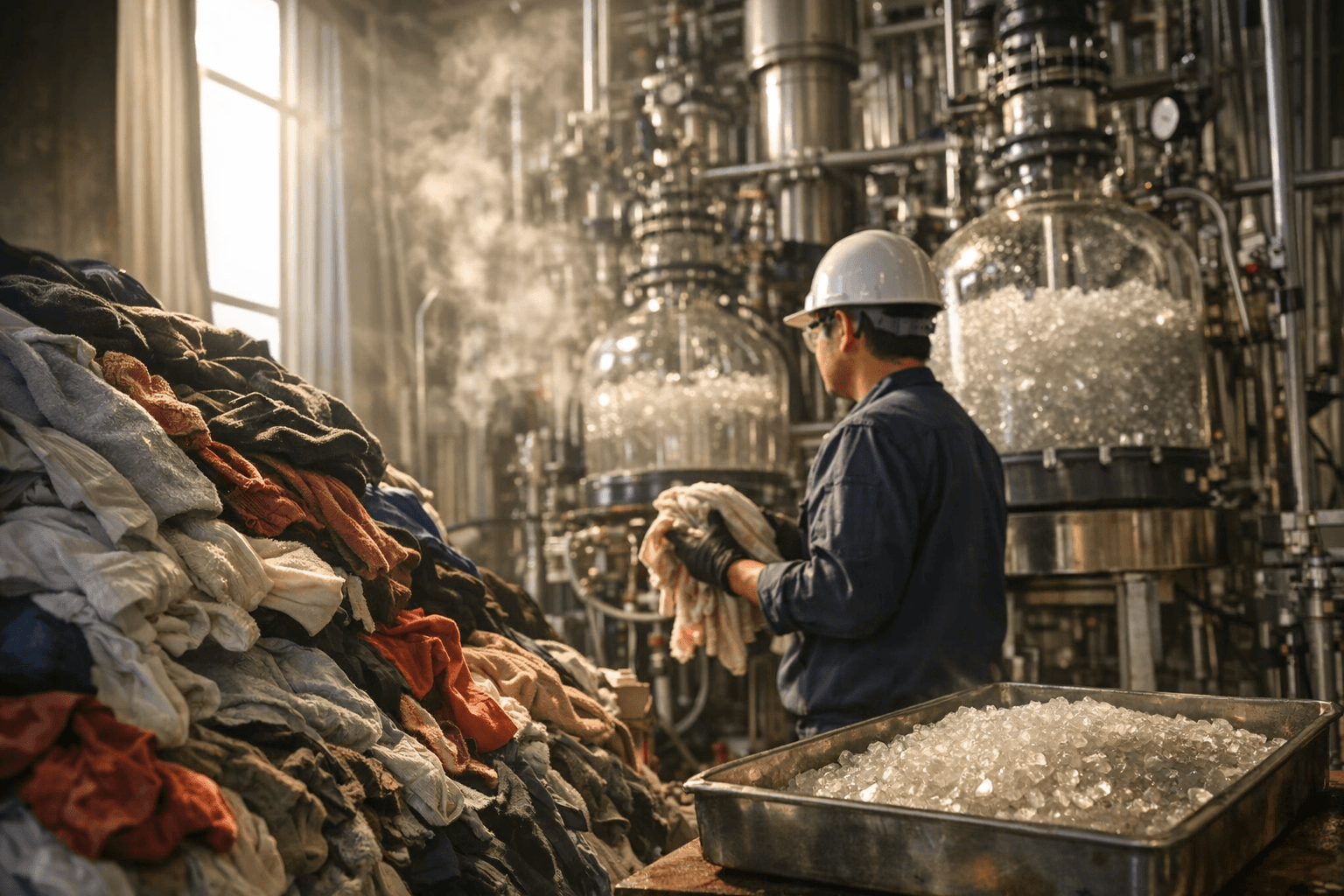
The breakthrough is not a glossy lab sample. It is a 1,000-ton-a-year demonstration unit in Kitakyushu, Japan, that processed several tens of tons of post-consumer, polyester-rich European textile waste and turned it into BHET, the base monomer for recycled polyester. For a sector long crowded with pilot projects and promises, that is the hard proof point brands have been waiting for: the chemistry worked in an industrial setting, not just on a whiteboard.
Axens, IFP Energies nouvelles and JEPLAN ran the trial through their Rewind® PET technology, using textiles collected through French public systems and prepared by Nouvelles Fibres Textile and Mapea before the material was shipped to Japan. The output is meant to flow back into polyester yarns, fabrics and garments, with the partners positioning the process for sportswear, home furnishings and the luxury sector. That matters because polyester is still the backbone of modern wardrobes, from slick training layers to crisp upholstery, and every closed loop that reduces demand for virgin feedstock changes the economics of the material itself.
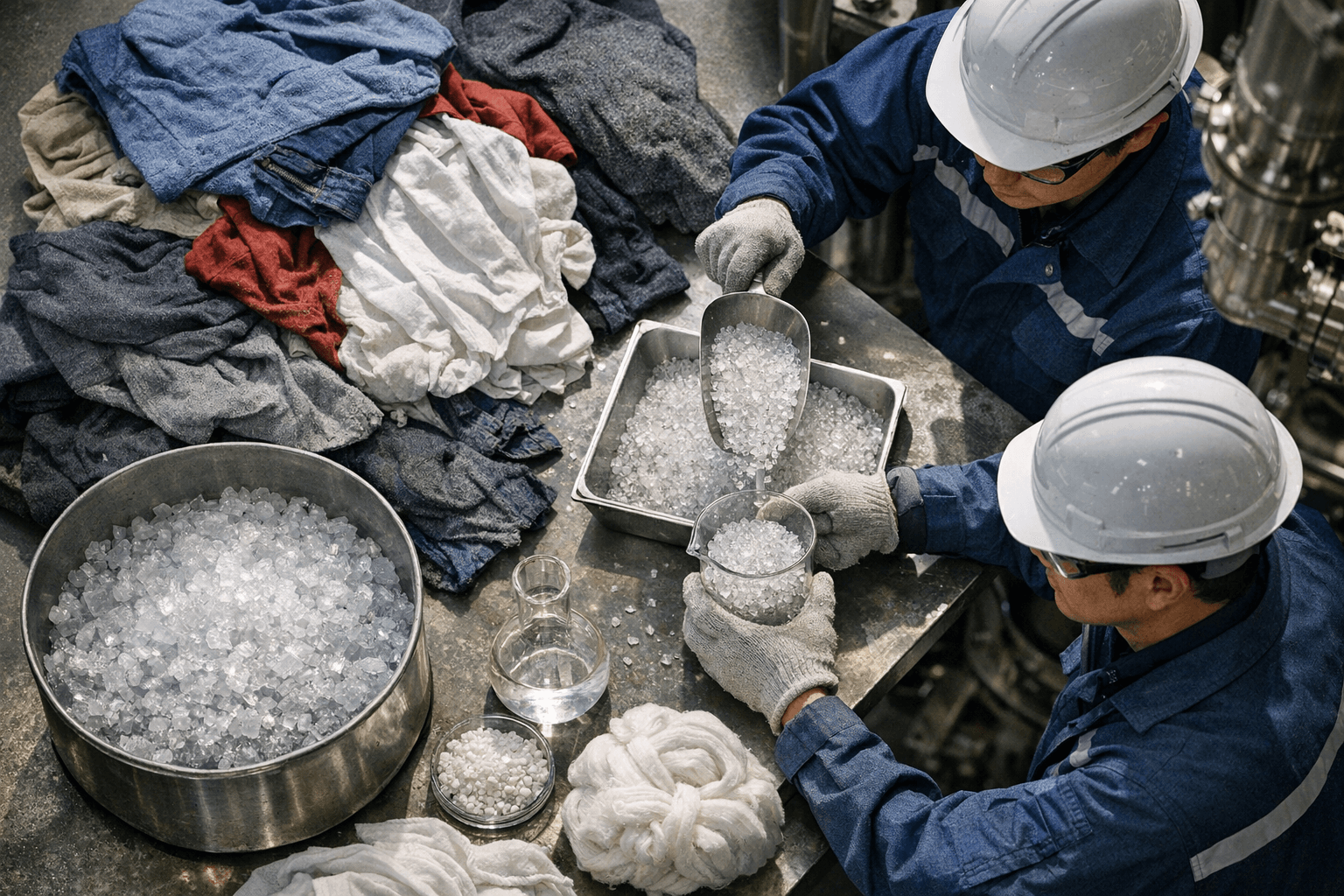
The project has been building for years. Axens, IFPEN and JEPLAN formed their partnership in 2020. The semi-industrial unit was commissioned and started up in September 2023 with support from ADEME, and Axens announced commercialization and licensing of Rewind® PET in October 2024 after a year-long test period. IFPEN has described the technology as the result of ten years of research and development, which is exactly the kind of long runway this part of the market has needed. Polyester recycling is not new in fashion. Making it work at meaningful scale, with consistent output and a repeatable supply chain, is the real prize.
The policy backdrop is pushing in the same direction. The European Commission’s 2030 textiles vision calls for textile products placed on the EU market to be durable, repairable, recyclable and largely made from recycled fibers. The European Environment Agency says the average EU citizen bought 19 kilograms of clothing, footwear and household textiles in 2022, a reminder that the waste stream is vast and still growing. Separate textile waste collection is expected to expand from 2025 under EU rules, but the industry still has to solve the unglamorous problems that decide whether this becomes mainstream: cleaner feedstock, fewer contaminants, dependable collection and a cost structure that can compete with virgin polyester. This trial shows the loop can be closed. The next test is whether it can be closed often enough, cheaply enough and cleanly enough to change what ends up in the wardrobe.
This article was produced by Prism’s automated news system from verified source data, official records, and press releases, then run through automated quality and moderation checks before publishing. The system is built and supervised by the people who set the standards it runs under. Read our full AI policy.
Did this article answer your question?


