Jeans finishing cuts microfiber shedding by up to 93% in wash tests
Factory finishing can cut denim microfiber shedding by up to 93%, putting the pollution fix in the design room, not just the laundry room.
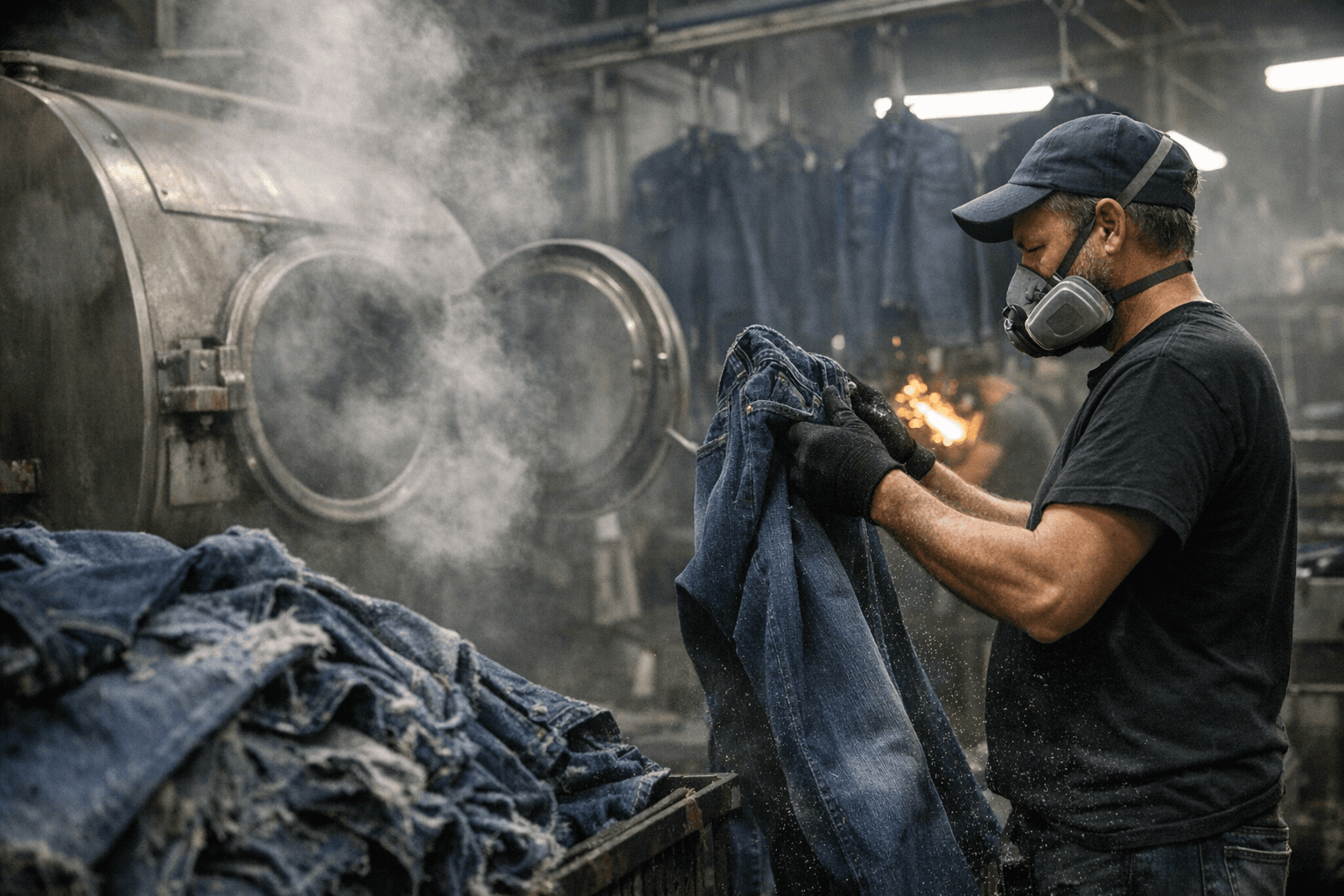
Jeans can be engineered to shed far less microfiber before they ever hit your wash cycle. FashionUnited reported that mercerised yarn paired with specific factory washes cut fibre release by 77% to 93% per wash cycle, a striking result that shifts the pollution conversation upstream, to the choices made on the production line.
That matters because denim is not just a fabric, it is a finish. The surface, handfeel and worn-in fade that make jeans desirable are all shaped in the factory, and the new findings suggest those decisions can determine how much material escapes later in the laundry. FashionUnited also said two popular denim finishes proved the most problematic, underscoring that the most familiar looks are not always the cleanest ones to make.
The Microfibre Consortium has spent years pushing that point. The science-led non-profit says it focuses on reducing fibre fragmentation from textile design, development and manufacturing, and its Microfibre 2030 Commitment aims for zero impact from fibre fragmentation by 2030. A 2025 root-cause analysis from the group, based on testing more than 1,000 fabrics, was described as the first large-scale global study to examine which fabric characteristics influence fibre loss in the first domestic wash cycle.
Denim-specific research has only sharpened the case. A 2021 study found that jeans type, washing temperature, washing duration, spin speed, detergent type and conditioner all strongly influence microfiber generation. More recent work has examined mercerized and non-mercerized yarns alongside rinse, enzyme, heavy bleach, stone, towel and ice treatments, showing just how much the final texture of a jean is tied to its environmental cost.
The industry is starting to treat that cost as a design problem, not a consumer guilt trip. Behind the Break, launched on March 4, 2025, brought together Adidas, Kering, Inditex, Levi’s, The Microfibre Consortium and Fashion for Good in a signal that major brands see microfiber pollution as a source issue. The catch is that some of the lower-shedding treatments may carry other environmental trade-offs during production, which means the next generation of denim standards will have to reward not only less lint in the wash, but cleaner finishing from the start.
This article was produced by Prism’s automated news system from verified source data, official records, and press releases, then run through automated quality and moderation checks before publishing. The system is built and supervised by the people who set the standards it runs under. Read our full AI policy.
Did this article answer your question?


