Kraig Biocraft boosts spider-silk output, eyes bigger June expansion
Kraig Biocraft says its newest spider-silk run is 20 percent above target, with a bigger June-July expansion already lined up.

The real story is not that spider silk exists. It is whether Kraig Biocraft Laboratories can turn a 20 percent beat on its current production cycle into predictable cost, repeatable quality and enough volume to replace conventional silk or synthetics in a real fashion supply chain. On May 26, the company said cocoon collection had begun for its latest recombinant spider-silk run, early output was running about 20 percent ahead of target, and the batch was on track to be its largest to date.
That matters because Kraig has spent years trying to move spider silk out of the lab and into clothes that actually have to survive wear, washing and pricing scrutiny. The company uses genetically engineered silkworms to produce recombinant spider silk, and it says the fiber can serve technical textiles, performance apparel, luxury fashion, sportswear, medical gear and protective applications. Independent reviews keep circling the same reasons: tensile strength, elasticity, toughness, biocompatibility and biodegradability. A 2024 review in Biomimetics said recombinant spider silk is being studied for reconstructive and regenerative medicine, including skin regeneration, bone and cartilage repair, ligaments, muscle tissue, peripheral nerves and artificial blood vessels.

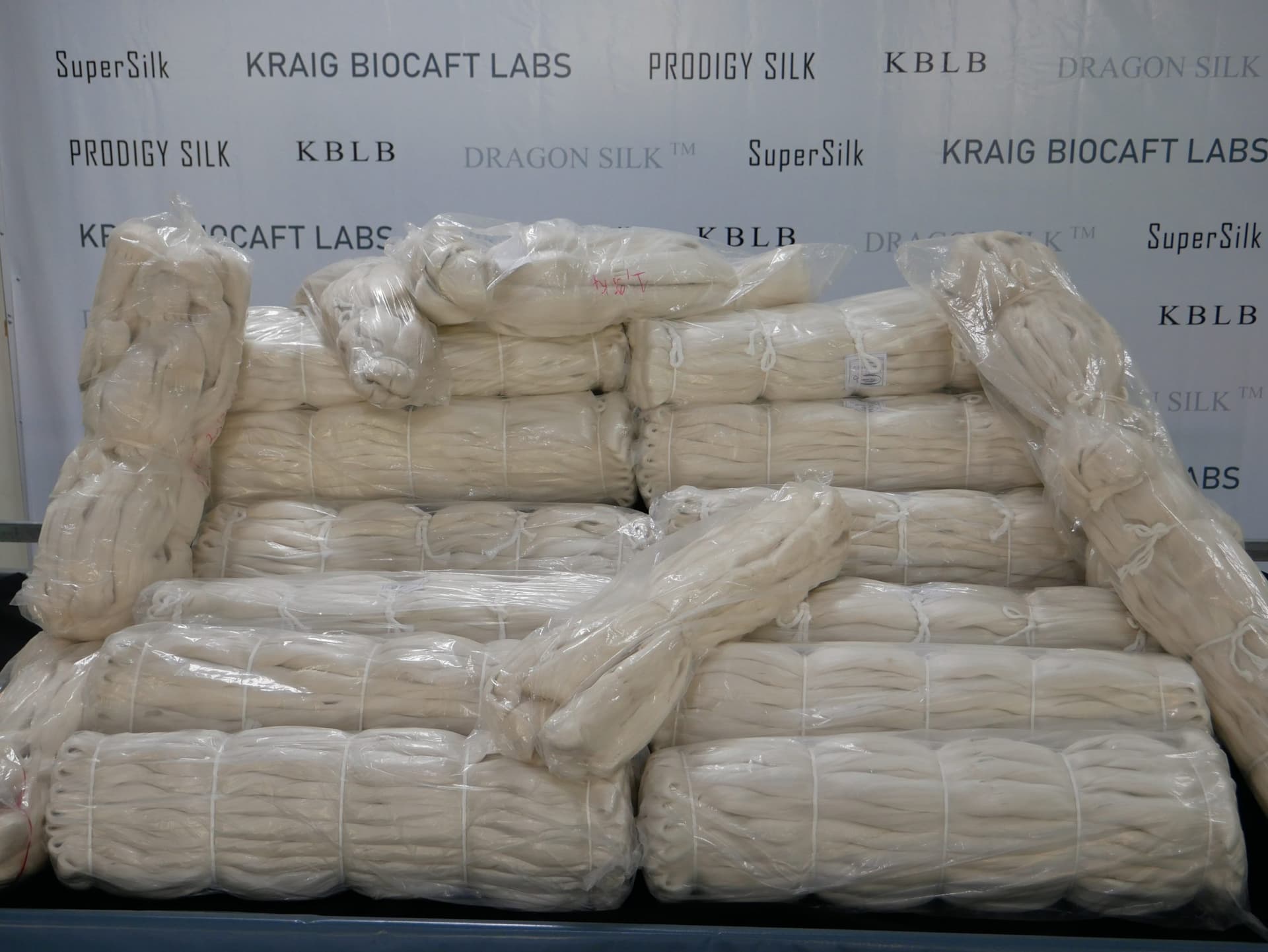
The manufacturing signal is the part worth watching. Kraig said the current cycle is its largest recombinant spider-silk batch so far, and it is already preparing a June/July 2026 expansion it expects to be even larger. On Feb. 9, the company set a 2026 production plan aimed at a record 10 metric tons of recombinant spider-silk cocoon production per month. That is the real scaling question: not whether spider silk sounds futuristic, but whether Kraig can keep beating targets without the rearing process getting flaky, the costs getting ugly or the quality drifting batch to batch. In 2025, the company said it launched its sixth spider-silk production cycle and that the transition required no changes to rearing infrastructure while delivering more spider silk per cycle.
Founder and CEO Kim K. Thompson has been pushing that bet since Kraig was founded in 2006. The company says Thompson holds a B.A. in applied economics from Michigan State University and a J.D. from the University of Michigan Law School, and it says Kraig holds patent rights to the spider-silk gene sequences used in silkworms. For fashion, the likely first landing spots are not fantasy gowns but technical textiles, sportswear and protective gear, where performance specs matter more than romance. If Kraig can make the numbers hold through the June and July expansion, spider silk stops being a beautiful idea and starts looking like a material buyers can actually place on a sourcing sheet.
This article was produced by Prism’s automated news system from verified source data, official records, and press releases, then run through automated quality and moderation checks before publishing. The system is built and supervised by the people who set the standards it runs under. Read our full AI policy.
Know something we missed? Have a correction or additional information?
Submit a Tip