Luxury fashion remains hooked on polyester as fiber emissions rise
Polyester still made up 59% of global fiber production in 2024, and luxury labels have not found a clean substitute that matches its cost and performance.
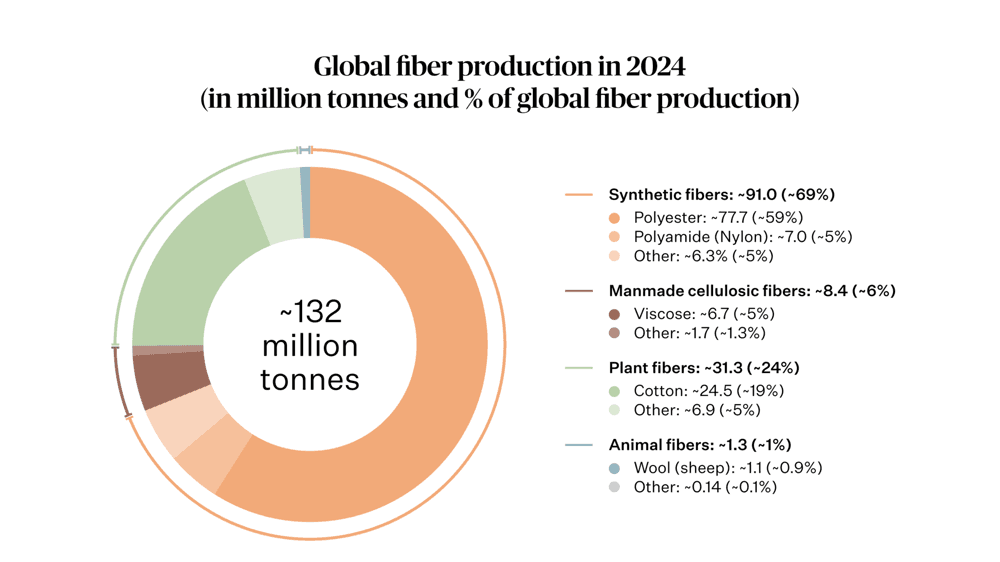
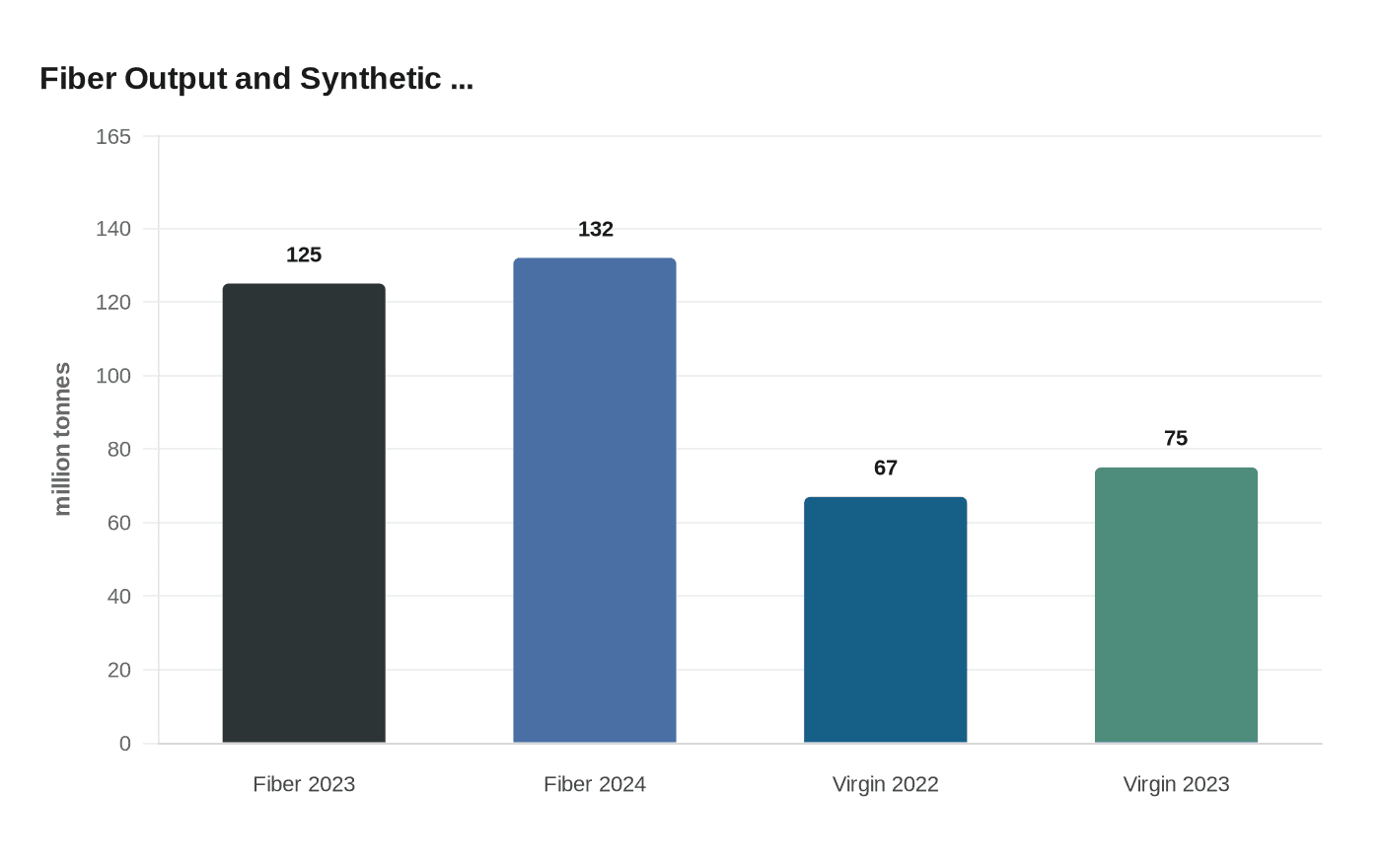
Luxury’s sustainability story still runs straight into polyester. Textile Exchange said the fiber accounted for 59% of global production in 2024, or 78 million tonnes, even as total fiber output climbed from 125 million tonnes in 2023 to 132 million tonnes last year. For the top end of fashion, that number is not a nuisance statistic. It is the material reality behind sleek jersey gowns, sculpted tailoring, fluid linings and the kind of performance fabrics designers keep reaching for when a garment has to move, hold shape and survive production at scale.
The dependence looks even more stubborn when the broader synthetic market is added in. Virgin fossil-based synthetic fiber production rose from 67 million tonnes in 2022 to 75 million tonnes in 2023, while recycled polyester’s global market share slipped from 13.6% to 12.5%. That is the credibility gap in plain view: luxury can speak fluently about responsibility, but the industry still leans on a petroleum-derived fiber because it is versatile, widely available and financially efficient. At the high end, material substitution is never just a moral decision. It is a question of drape, durability, supply continuity and margins.

The climate cost is moving in the wrong direction. Textile Exchange said greenhouse-gas emissions tied to raw-material production for apparel, home textiles and footwear rose 20% over the past five years, and its 2025 benchmark says the sector remains off track from a 1.5°C pathway. Fashion already accounts for about 8% of global carbon emissions, so the persistence of polyester is not a niche materials debate. It is part of the sector’s larger emissions problem, one that stretches from fiber production through dyeing, finishing and shipping.
Polyester also carries a pollution burden that high-fashion brands can no longer dismiss as a downstream issue. The European Environment Agency says wearing and washing textiles made from synthetic fibers is a recognized source of microplastics in the environment. That puts pressure on brands just as regulators and consumers scrutinize fossil-fuel-based materials more closely. The challenge is not simply to make polyester less visible, but to reduce dependence on it without sacrificing the technical properties that luxury collections still demand.
Some brands are pushing harder than others. Stella McCartney has built its sustainability identity around materials, saying they are the foundation of its work and that the brand aims to combine nature’s gifts with cutting-edge innovation. That is the right instinct, and it shows how serious labels are trying to move beyond conventional synthetics. But until scalable alternatives can match polyester on performance, availability and price, luxury will keep making the same compromise in better lighting.
This article was produced by Prism’s automated news system from verified source data, official records, and press releases, then run through automated quality and moderation checks before publishing. The system is built and supervised by the people who set the standards it runs under. Read our full AI policy.
Know something we missed? Have a correction or additional information?
Submit a Tip

