Lenzing Brussels Roundtable Positions Bio-Based Fibres as Europe's Clean Industry Future
Lenzing brought EU policymakers to Brussels to argue wood-pulp fibres, not future tech, are already a scalable fix for Europe's fossil-material dependency.

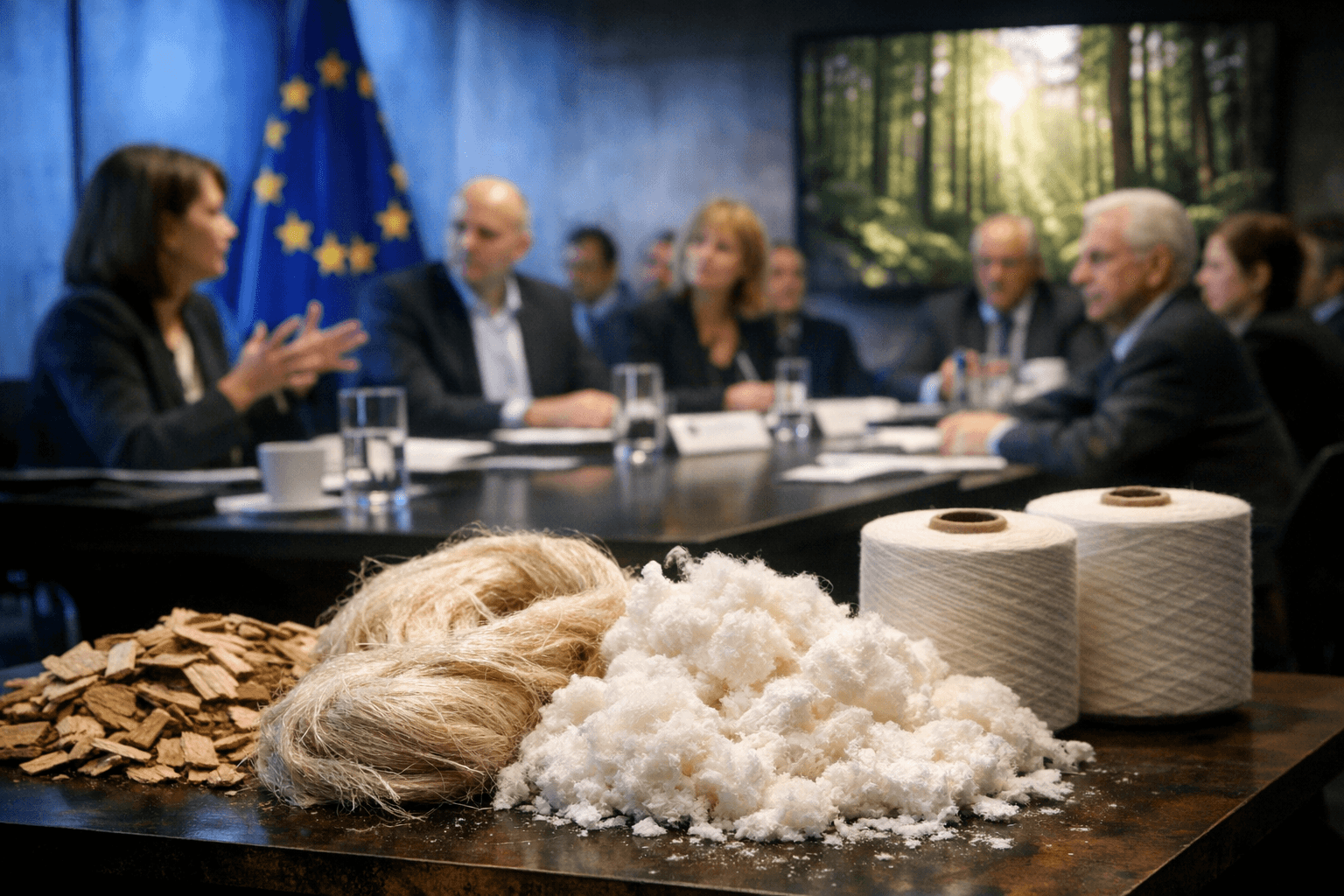
When Lenzing Group convened policymakers, academics, and industry leaders in Brussels on March 10, the Austrian regenerated cellulose producer made a pointed argument: bio-based fibres are not a speculative bet on future technology but a working industrial solution that Europe is failing to scale fast enough. Organised in cooperation with Euractiv, the roundtable drew representatives from the European Commission's DG Environment, the UK Mission to the EU, civil society, and industry to make that case directly to the people who control the regulatory levers.
Georg Kasperkovitz, a member of Lenzing's Management Board, set the terms plainly: "Europe has set ambitious goals for a clean-industry transition. Our roundtable in Brussels showed that bio-based materials are not a future vision; they are a practical, scalable reality today. As an integrated cellulosic fiber producer with deep European roots, Lenzing helps strengthen industrial resilience while accelerating the shift away from fossil-based synthetic fibers."
The speakers Lenzing brought to the table carried institutional weight. Aurel Ciobanu-Dordea, Director for Competitive Circular Economy and Clean Industrial Policy at DG Environment, and Dr. Daniel Bradley, Deputy Counsellor and Head of Climate and Environment at the UK Mission to the EU, both participated, lending the gathering a policy credibility that corporate-only events rarely achieve. Neither provided quotes captured in the available record, which is itself notable: the Commission has not yet formally committed to the regulatory direction Lenzing is pushing.
That direction centres on a specific legislative ask. Discussion at the roundtable focused heavily on potential revisions to the Single Use Plastics Directive, which participants identified as essential to unlocking the investment certainty required for broader market adoption of cellulosic alternatives. Patricia A. Sargeant, Lenzing's Executive Vice President for Nonwovens Commercial, connected the regulatory argument to a supply-chain one: "Maintaining and expanding European production capacity is essential for supply-chain resilience and strategic autonomy." She also pointed to single-use hygiene products as an immediate application area, arguing that cellulosic fibres, derived from renewable wood pulp, could replace fossil-based synthetics in those items while simultaneously addressing microplastics concerns tied to the SUPD framework.
The microplastics angle is where Lenzing's commercial interests and genuine environmental urgency converge most visibly. Single-use hygiene products represent a significant and underregulated source of synthetic microfibre pollution, and the case for biodegradable cellulosic substitutes in that category is technically coherent. The harder question, flagged in commentary from observers covering the event, is cost and regulatory complexity. Investment in scaling bio-based cellulosic capacity requires policy certainty that Europe has not yet delivered, and the gap between Lenzing's "scalable reality today" framing and the barriers that still constrain adoption is one the Brussels conversation exposed rather than resolved.
What the roundtable did accomplish is a sharper strategic repositioning of cellulosic fibres within the EU's industrial policy vocabulary. Framing wood-pulp-derived regenerated fibres as an asset for European economic security and supply-chain autonomy, rather than simply a greener textile input, aligns Lenzing's pitch with the political priorities driving the Clean Industrial Deal. Whether DG Environment translates that framing into concrete SUPD revisions or procurement preferences remains the open question that the next phase of this lobbying effort will need to answer.
This article was produced by Prism’s automated news system from verified source data, official records, and press releases, then run through automated quality and moderation checks before publishing. The system is built and supervised by the people who set the standards it runs under. Read our full AI policy.
Did this article answer your question?


