LYCRA and Texhong Partner to Scale Plant-Based Spandex in China
Plant-based spandex derived from dent corn could cut carbon emissions by 32%. Texhong, one of China's largest yarn suppliers, will now scale it commercially.
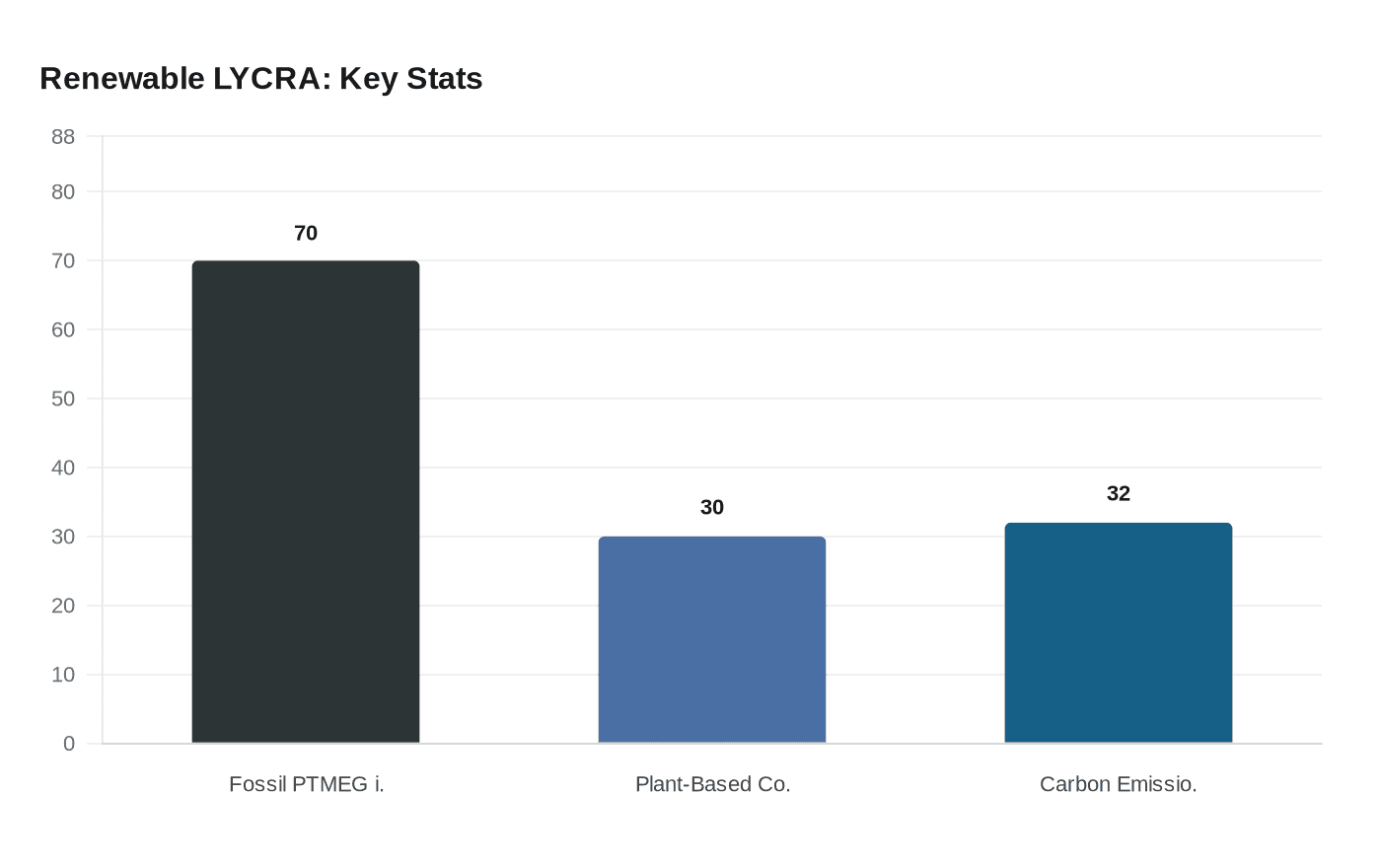
Spandex accounts for as little as 2 percent of a garment's fiber weight, yet it is structurally the reason stretch fabric exists. Every pair of stretch jeans, every sports bra, every seamless brief depends on it. Almost all of the world's spandex is made from fossil-derived PTMEG, a petroleum-based compound that represents roughly 70 percent of LYCRA fiber by weight. A signing ceremony in Shanghai on April 2 set in motion an effort to change that, at least in China's core-spun yarn sector, which is where most stretch fabric begins its life.
Under an exclusive agreement, Texhong International Group will produce core-spun yarn using Renewable LYCRA® fiber, a spandex variant carrying 30 percent plant-based content. That content is derived from dent corn: corn sugars are fermented to produce bio-based butanediol, which is then converted into PTMEG to replace its fossil equivalent in the fiber's production. The resulting material carries the same chemical structure as conventional LYCRA; The LYCRA Company describes it as a 1:1 drop-in, meaning brands and mills can adopt it without re-engineering fabrics, patterns, or existing processes. The 30 percent plant-based figure is pending confirmation via third-party testing, a caveat brands will need to factor into any product-level carbon claims.
The carbon math, however, looks significant. A Cradle-to-Gate Life Cycle Assessment conducted by engineering consultancy Ramboll in 2026 found up to a 32 percent reduction in carbon emissions compared to conventional fossil-derived LYCRA fiber. For a raw material that appears in virtually every category of performance and stretch apparel, from denim to lingerie to activewear, that number carries supply chain-wide implications if it can be delivered at volume.

That is where Texhong's involvement changes the conversation. Founded in 1997, the group ranks among the top three most competitive enterprises in China's cotton textile industry and holds a place on the China Top 500 Enterprises list. As one of the world's largest suppliers of core-spun cotton textiles, Texhong brings the manufacturing infrastructure to turn a fiber innovation into commercial-scale yarn supply. The two companies also share close to two decades of prior collaboration, including the jointly developed patented LYCRA® dualFX® fabric technology, meaning the technical foundation required to integrate a new fiber input across Texhong's production lines is already established.
Zhou Xia, Texhong's chief operating officer, signed the agreement alongside Jason Wang, The LYCRA Company's vice president for Asia, and said the deal would "jointly accelerate the innovation and market penetration of bio-derived core-spun yarn solutions."
The price premium for Renewable LYCRA fiber will track market pricing for the petroleum-based raw materials it displaces, which means the cost gap narrows when fossil energy prices rise. For brands sourcing stretch denim, intimates, or performance fabrics in China, the deal offers a defined supply chain pathway to lower-carbon spandex without specification changes at the garment level. The two companies plan to extend the collaboration into brand end-use applications, suggesting the next phase will connect yarn availability to specific product categories and sourcing commitments. For denim and intimates manufacturers in particular, the ability to claim a traceable, LCA-verified carbon reduction from a known feedstock is a more defensible sustainability position than offset-based accounting.
This article was produced by Prism’s automated news system from verified source data, official records, and press releases, then run through automated quality and moderation checks before publishing. The system is built and supervised by the people who set the standards it runs under. Read our full AI policy.
Did this article answer your question?


