Mizoram's Silk Runway Blends Cultural Heritage With Sustainable Economic Strategy
At Aijal Club Park in Aizawl, the Tlangro runway fused eri and muga silks with a bold policy pitch: Mizoram as India's capital of all kinds of silk.

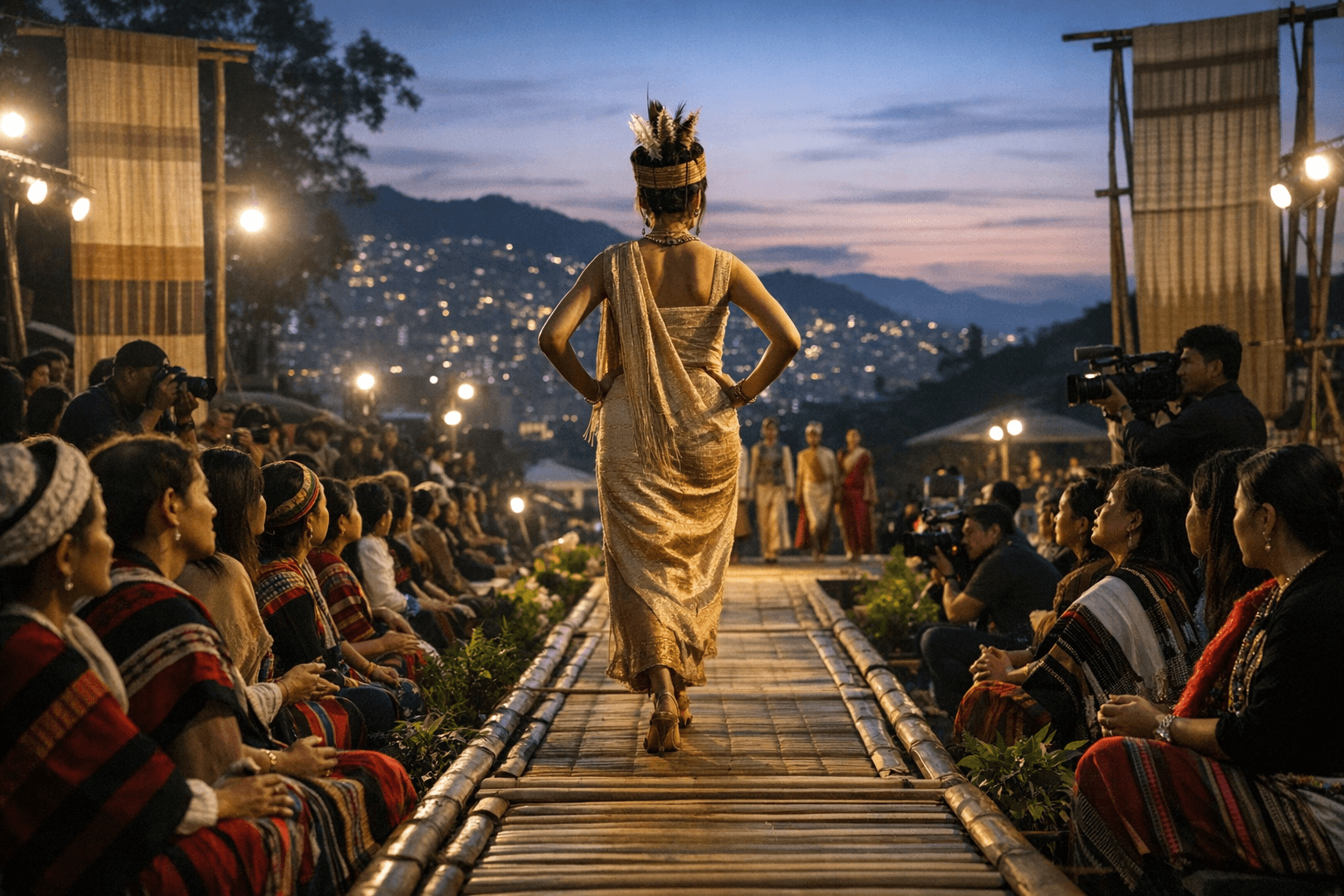
When a state governor takes his seat at a fashion show, you know the runway is carrying more than aesthetic weight. "Tlangro: The Mizoram Silk Runway," held on March 25 at Aijal Club Park in Aizawl, was precisely that kind of event: part haute showcase, part industrial strategy pitch, with the state's sericulture sector taking centre stage as both subject and argument.
The show was jointly organised by the Development Commissioner (Handlooms) under India's Ministry of Textiles, the Mizoram Sericulture Department, and the National Handloom Development Corporation. Governor General (Dr) Vijay Kumar Singh inaugurated the evening, joined by Chief Secretary Khilli Ram Meena and Dr. Naresh Babu N, CEO of the Silk Mark Organisation of India under the Central Silk Board. The guest list alone signalled that this was less a regional fashion moment than a coordinated pitch at the national level.
The collections by Aizawl-based designers Tluangpuii Hmar and Violeta by Sangzuali did the visual work of translating that pitch into fabric. Mizoram is one of the few states capable of producing all four commercially significant silk varieties: mulberry, eri, muga, and oak tasar. The runway made that point emphatically, drawing on the state's distinctive fibre palette to build garments in which handcraft and contemporary silhouette were in close, deliberate conversation.
Governor Singh used his address to frame the evening's ambition plainly, describing sericulture as a sector with enormous economic potential that remains largely untapped. He positioned Mizoram's climate and ecological conditions as structural advantages, arguing the state could become the "capital of all kinds of silk" in the country. His emphasis on eri silk was pointed: as global demand for naturally processed, low-intervention fibres accelerates, eri's ahimsa properties and minimal chemical footprint make it a credible candidate for international markets rather than just domestic craft circuits.
The policy scaffolding outlined at the event covered multiple pressure points in the silk supply chain. Training programmes, quality inputs, technology adoption, infrastructure, market linkages, R&D, and youth participation were all named as priorities. For muga, the golden-hued variety associated with Northeast India, the Governor proposed host plant cultivation expansion, regional brand identity, and integration with e-commerce and tourism. Sericulture Secretary Florence Zotluangpuii, who delivered the welcome address, underscored the importance of coordinated action across government, research institutions, and community stakeholders.
The framework placed women's economic participation and rural livelihoods at its centre, framing sericulture as supplementary income that works alongside farming rather than displacing it. Whether mechanisms like Silk Mark certification, cooperative formation, and dedicated financing will develop at the pace the vision demands is the harder question. What Tlangro established clearly is that Mizoram is no longer content to supply raw fibre and remain invisible in the value chain. The state wants its silk to carry a label, a story, and a price that reflects what the hands behind it are actually worth.
This article was produced by Prism’s automated news system from verified source data, official records, and press releases, then run through automated quality and moderation checks before publishing. The system is built and supervised by the people who set the standards it runs under. Read our full AI policy.
Did this article answer your question?


