New Isotope Analysis Method Enables Precise PFAS Source Tracking in Textiles
A new method using just 0.04% of the sample material can now fingerprint exactly where PFAS "forever chemicals" in your clothes came from.
For years, tracing PFAS contamination to its source has been one of the more stubborn forensic problems in environmental science. Isotopic analysis offered a theoretical path forward, but the instrumentation simply could not do it for these specific compounds. A joint research team from Shibaura Institute of Technology and AIST has now closed that gap, developing a method that measures stable carbon isotope ratios in perfluorooctanoic acid with an accuracy that matches the gold-standard technique while requiring a fraction of the material.
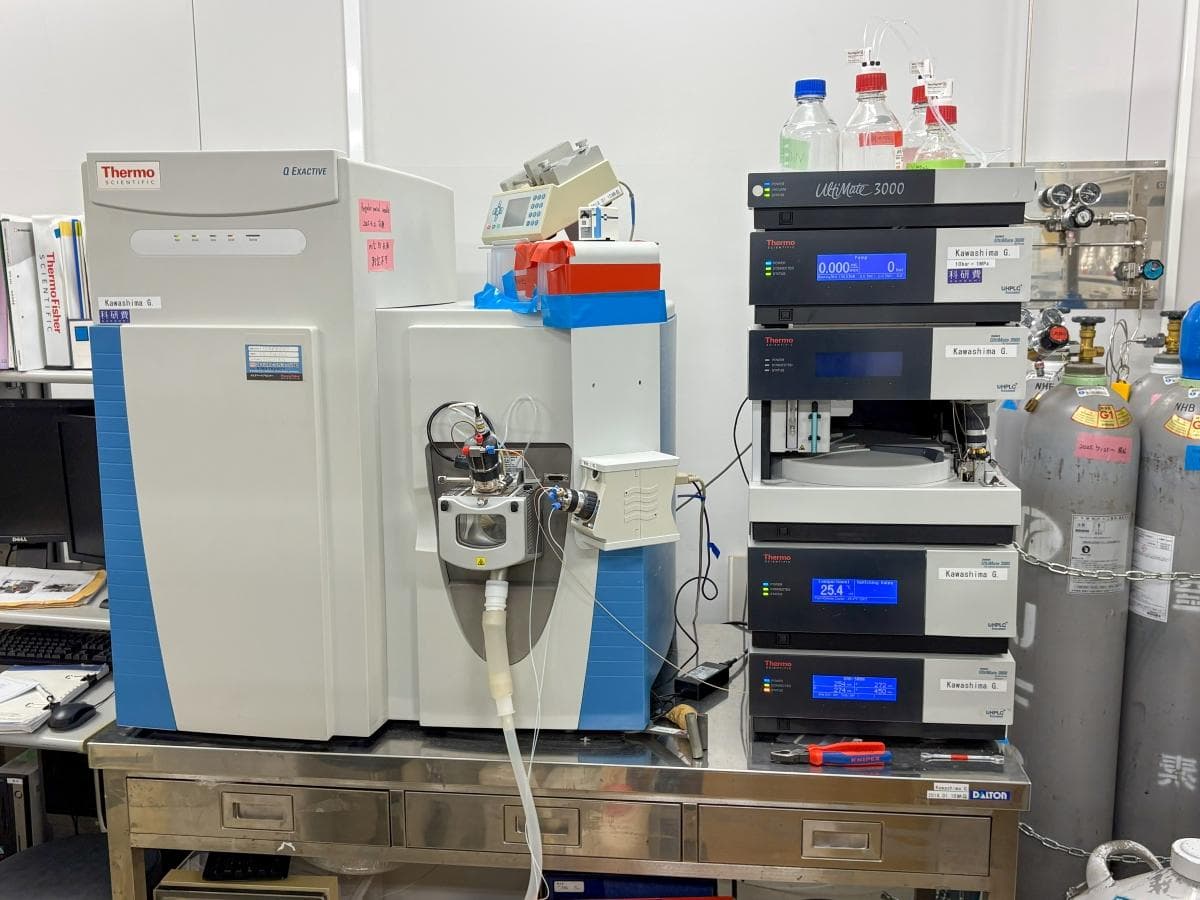
The approach pairs high-performance liquid chromatography with Orbitrap high-resolution mass spectrometry through electrospray ionization, a configuration specifically deployed here as microflow-HPLC-ESI-Orbitrap MS. The technique falls under compound-specific stable isotopic analysis, or CSIA, which has a longer forensic track record in other fields: it has been used to identify counterfeit food and wine, and to determine whether testosterone in an athlete's blood is naturally produced or the result of doping. Its application to PFAS had remained out of reach until now.
The team validated the method against the conventional benchmark, elemental analyzer-isotope ratio mass spectrometry, using six separate supplier-procured PFOA powders. The Orbitrap method replicated the EA-IRMS carbon isotope values within analytical error across all six samples. Measured offsets from EA-IRMS values ranged between 0.2 and 1.1 parts per thousand; reported error ranged between 0.8 and 1.5 parts per thousand. The practical advantage that will matter most to researchers working with environmental samples: the Orbitrap method requires approximately 0.04% of the material needed to run an EA-IRMS measurement.
The researchers stated their conclusions directly in the paper: "We developed a method capable of measuring the carbon isotopic composition of PFOA, using HPLC-Orbitrap MS, with high precision and accuracy. This will allow future research to expand analytical capabilities for additional isotopologues of PFOA and other PFAS compounds."
This builds on a body of work that has demonstrated isotopic differences between identical PFAS compounds sourced from different suppliers, research that Dombrowski et al. helped establish. Earlier fingerprinting attempts focused on the relative abundance of branched isomers in PFOA and PFOS molecules, where the presence of branched isomers signals that the compound was produced via electrochemical fluorination, one of the two primary synthesis pathways for perfluoroalkyl substances. That approach provided a useful manufacturing signal but not a precise origin fingerprint. Carbon isotope ratios offer something more granular: a chemical signature tied to the specific starting material and its processing history, even when that history is proprietary and undisclosed.
For the fashion and textile industry, where PFAS have been widely used in water-resistant finishes and technical performance fabrics, this kind of source attribution matters more than it once did. Regulatory pressure across Europe and North America has pushed brands to map their supply chains for these substances, and the question of which supplier or which synthesis route introduced contamination into a specific garment or fiber has been essentially unanswerable with existing tools.
The Orbitrap CSIA method does not yet have a validated track record in environmental matrices such as water, soil, or textile fibers; the published validation concerns neat PFOA powders from commercial suppliers. Extending the technique to complex real-world samples will be the critical next step. Still, the combination of accuracy comparable to EA-IRMS and a sample-size requirement that is nearly negligible by comparison positions this method as the most viable path yet toward knowing, with chemical certainty, where a forever chemical began.
This article was produced by Prism’s automated news system from verified source data, official records, and press releases, then run through automated quality and moderation checks before publishing. The system is built and supervised by the people who set the standards it runs under. Read our full AI policy.
Did this article answer your question?