Next, H&M warn of consumer impact if Middle East war persists
Next absorbed a £15m war-cost hit and flagged potential 4-10% price rises on some clothes; H&M warned prolonged conflict could deliver a "significant impact" on consumers.
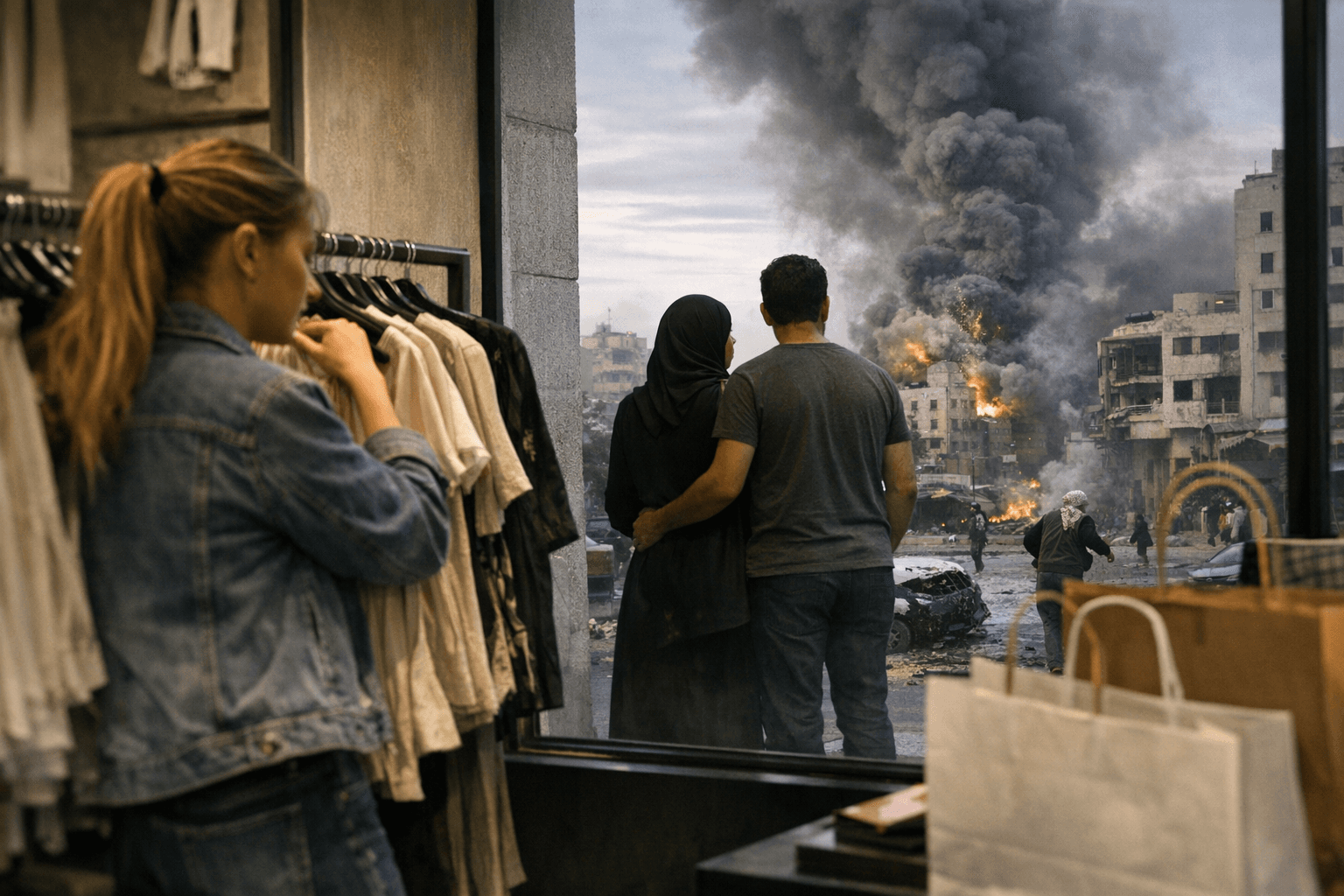
The Middle East conflict has delivered fashion retail a double reckoning: a cost shock arriving now and a carbon shock that builds in its wake. Next and H&M, two of Europe's largest clothing groups, laid out their exposure this week with unusual candor, and the arithmetic is sobering on both counts.
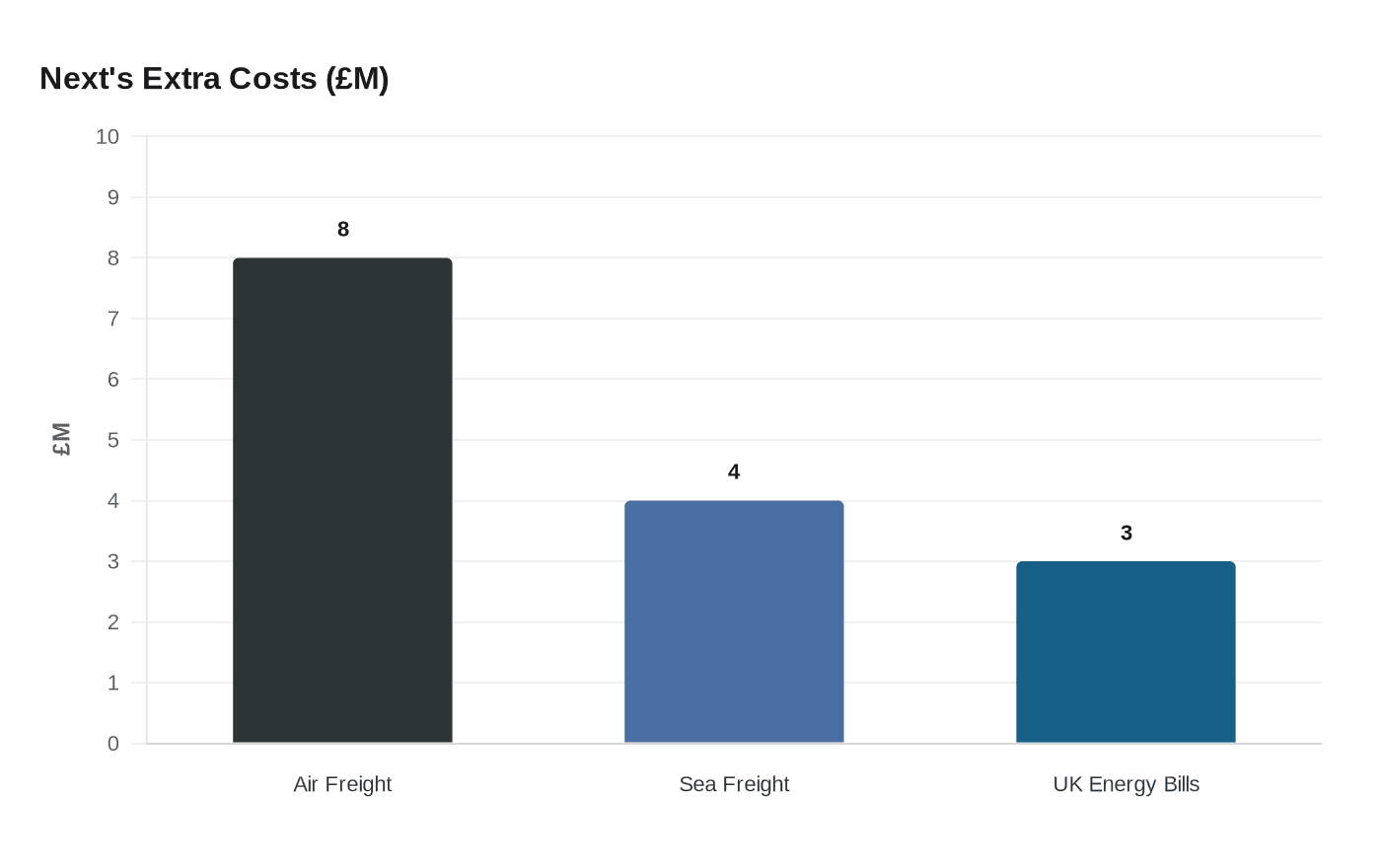
Next put a figure on it: £15 million in additional short-term costs, assuming three months of disruption, carved into £8 million for air freight, £4 million in sea freight surcharges, and £3 million in higher UK energy bills. For now, savings elsewhere are absorbing the hit, but chief executive Lord Simon Wolfson was unsparing about the uncertainty ahead. "As yet, we have no feel for the medium-term effects on supply chain resilience, freight rates, factory gate prices and consumer demand," he said. If the conflict extends beyond three months, Wolfson said prices would rise 1% to 2% from as early as June, with certain lines seeing increases of 4% to 10% by September.
H&M, with roughly 3% of its stores in the Middle East, where operations are run by franchisees, and a supply chain weighted toward sea and land freight, carries less immediate exposure to soaring airspace costs. Chief executive Daniel Ervér acknowledged a limited direct impact so far, but was careful to flag what lies beyond it. "On a global scale, we don't see any significant impact on the consumer behavior at this point in time, although we are very aware of that the consumer has been on a high inflationary pressure for a long period of time and increasing energy prices will have a spillover effect," he told analysts following the company's fiscal first-quarter earnings. A sustained conflict, he added, could produce a "significant impact" on consumer behavior. H&M's shares fell 2.2% to 170.75 kronor on the day.
The carbon dimension is where the business story converges with the sustainability one, and where the feedback loops are most troubling. Fashion's default response to disrupted sea lanes is to shift freight to air: faster, more flexible, and far more carbon-intensive per tonne-kilometer. Emirates, Qatar Airways, and Etihad between them handle 13% of global air cargo and a quarter of all China-to-Europe freight, and their effective grounding has already pushed air freight rates sharply higher across corridors well beyond the Gulf. Retailers forced onto alternative air routes to protect lead times are simultaneously inflating costs and emissions, with fast-fashion reorders and trend-reactive pieces carrying the greatest exposure.
Oxford Economics traced the inflationary sequencing: energy costs feed through to retail prices faster, while shipping cost increases take approximately 12 months to peak in consumer prices. That delay means the most acute consumer pressure likely hasn't arrived yet, and it will land precisely when brands need shoppers willing to spend on circular economy programs, premium sustainable lines, and extended warranty services.
The WTO's March trade outlook forecast global merchandise trade growth of just 1.9% in 2026, down from 4.6% in 2025, with high energy prices compressing that figure further. For fashion, the mitigation choices are clear even where the costs are real: nearshoring production to Turkey, Eastern Europe, and Morocco shortens supply lines and reduces air freight dependency; forward inventory planning on core pieces cuts reactive shipments; sustainable aviation fuel partnerships protect emissions credentials when the freight mix shifts involuntarily. None of it is painless, but waiting for the conflict to resolve while costs and carbon both climb is a strategy neither Next nor H&M can afford.
Know something we missed? Have a correction or additional information?
Submit a Tip