Nike Earns Mixed Sustainability Rating as Labor and Product Life Cycle Issues Persist
Good On You rates Nike "It's a Start" overall, but a "Not Good Enough" on labor — a pattern decades in the making that compensation for 3,300 Thai workers can't fully offset.
Good On You's January 2026 re-assessment of Nike lands the sportswear giant with an overall rating of "It's a Start," a verdict that sounds measured until you examine the subcategories underneath it. Nike's labor rating has declined since Good On You last rated the brand, and it now sits at "Not Good Enough." On the planet front, Nike has set a science-based target to reduce greenhouse gas emissions in both its direct operations and supply chain, but there is no evidence it is on track. And on animal welfare, the brand rates "Not Good Enough," something that has not changed for years.
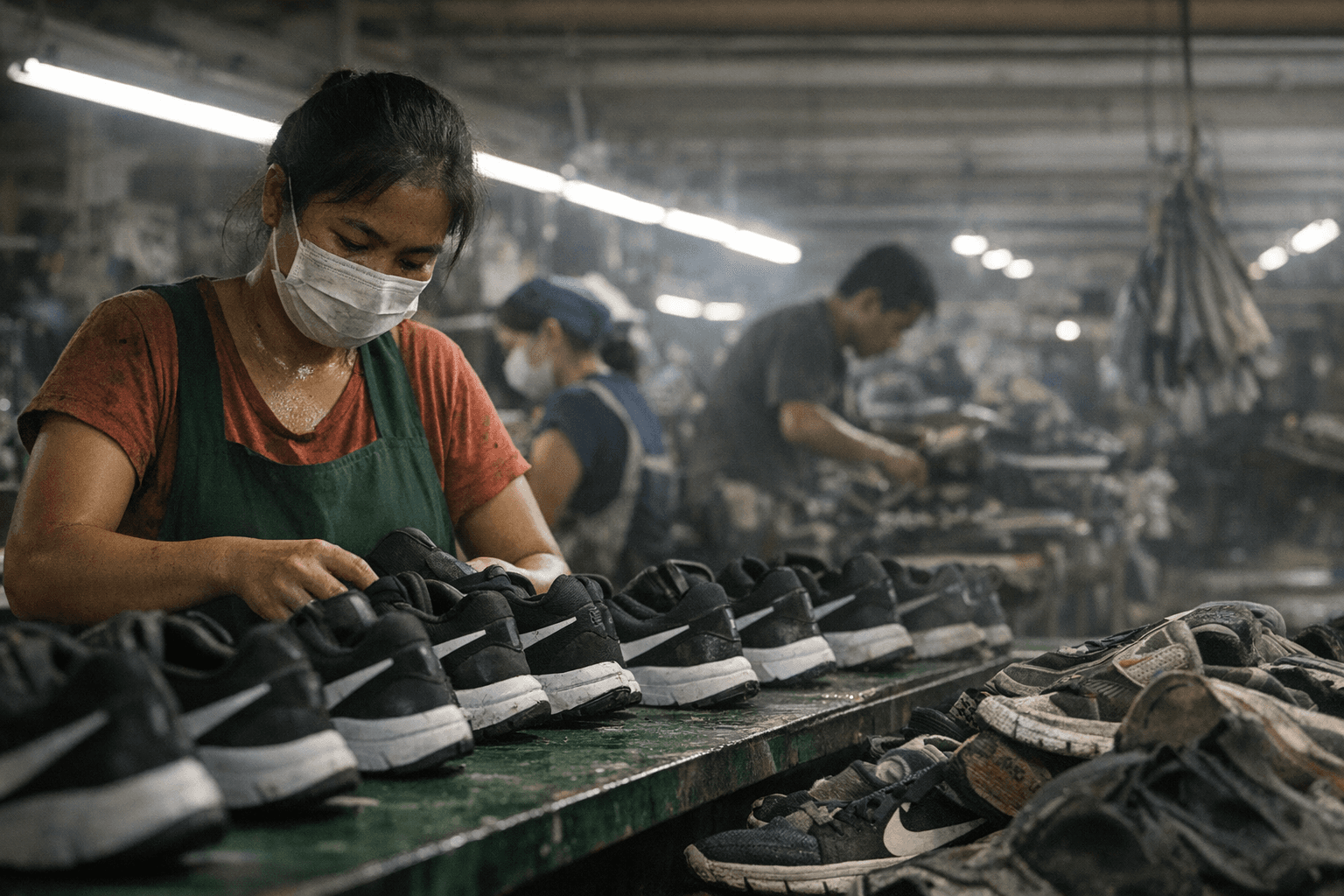
The labor picture is where the rating carries its sharpest edge. Labour exploitation has been Nike's most consistent point of controversy for more than 35 years. In the early 1990s, a report in Harper's Magazine by activist Jeffrey Ballinger detailed the low wages and poor working conditions in Nike's Indonesian factories. Nike was initially slow to respond, but under increasing pressure, it made some changes by improving its monitoring efforts, raising the minimum age of workers, and increasing factory audits. The brand's slow response back then was, unfortunately, an indicator of things to come: Nike has shown over and over again that it must be pushed before it responds to ethical issues meaningfully.
The most recent example of that reluctance is a case that took half a decade to resolve. In January 2026, Nike finally agreed to compensate approximately 3,300 workers at Thai supplier factory Hong Seng Knitting, who were allegedly pressured into taking unpaid leave during the Covid-19 pandemic. It took five long years of pressure from organisations including the Clean Clothes Campaign, Fair Labor Association, Worker Rights Consortium, and Partners for Dignity and Rights before Nike acted. Nike has also not taken sufficient steps to remediate its links to cotton sourced from Xinjiang, a region in China at risk of Uyghur forced labour.
Transparency remains a persistent sticking point. From 2021 to 2023, Nike's score on the Fashion Transparency Index fluctuated between the 41–50% and 51–60% brackets. For one of the world's biggest brands, that just isn't good enough. The brand markets itself as a leader in sportswear and innovation, so the question is why it isn't leading in transparency, too.
On the product life cycle front, Nike does have some circularity initiatives to help reduce waste, including its Re-Creation product upcycling programme and another that works to refresh unsold "imperfect" sneakers and sell them as "Refurbished." But the scale of these efforts isn't clear, and if there's no data on the implementation of such initiatives, it's hard to say whether they're meaningfully contributing to reducing the brand's overall impact. To minimise waste, Nike recycles some of its textile offcuts, and it has set an absolute reduction target to decrease overall water use in its supply chain.
The diversity picture adds another layer of complexity. Nike has a basic policy to support diversity and inclusion in both its direct operations and supply chain, but the brand backtracked recently by not publishing a 2025 impact report and walking back its Black History Month and Pride collections.
Good On You's overall verdict is "It's a Start," acknowledging that Nike has a few promising measures in place. But this massive global company is a leader in consumer and popular culture, and therefore carries a responsibility to lead by example. Half a century of sweatshop controversies, a five-year battle to compensate workers in Thailand, and circularity programs without public metrics all point to the same pattern: Nike moves when cornered, not when it chooses to.
This article was produced by Prism’s automated news system from verified source data, official records, and press releases, then run through automated quality and moderation checks before publishing. The system is built and supervised by the people who set the standards it runs under. Read our full AI policy.
Did this article answer your question?


