Northshore Apparel Picks Coats Digital to Power Ghana's First Zero-Waste Manufacturing Hub
A former refuse dump in Savelugu is becoming Ghana's first zero-waste apparel hub, backed by both the Ghanaian and German governments.
On land that was once a refuse dump in Savelugu Municipality, a factory is taking shape that its backers say could reshape Northern Ghana's economic future. Northshore Apparel Ghana Ltd has selected Coats Digital's full software suite, GSDCost, FastReactPlan and FastReactFabric, as the digital backbone for what is being positioned as the region's first purpose-built, zero-waste apparel manufacturing hub. The announcement, dateline Northern Ghana and London, was carried across multiple trade outlets on March 11, 2026.
The three-product stack from Coats Digital, part of the global Coats Group, covers the full operational arc of a modern garment factory: GSDCost handles precise costing, FastReactPlan drives production scheduling, and FastReactFabric manages fabric optimisation and quality assurance. Coats Digital's Managing Director, Kunal Kapur, called the partnership a defining moment for the industry. "Northshore Apparel represents a bold new model for apparel manufacturing, one where technology, sustainability, and social impact are designed in from the very beginning," he said. "We are incredibly proud that Coats Digital's full suite of solutions has been chosen as the digital backbone of this landmark project." The company's software is currently deployed across more than 3,000 factories worldwide.
Laurena McKenna, Coats Digital's Public Relations and Communications Manager, told the Ghanaian Times that the adoption of the tools would ensure "operational excellence, sustainability, and social impact from design to delivery," describing the integrated stack as the facility's "digital backbone" from its first stitch.
The facility itself is conceived as a zero-waste, renewable energy-powered operation specialising in knitted and woven garments: T-shirts, polos, fleece hoodies, children's wear, sportswear, underwear, leggings and trousers, a range deliberately calibrated for the mid-market volume that global ethical sourcing programmes demand. Northshore describes its mission as proving that apparel manufacturing can be "both ethically crafted and globally competitive," with a gender-balanced board overseeing ESG commitments across all areas of operation.
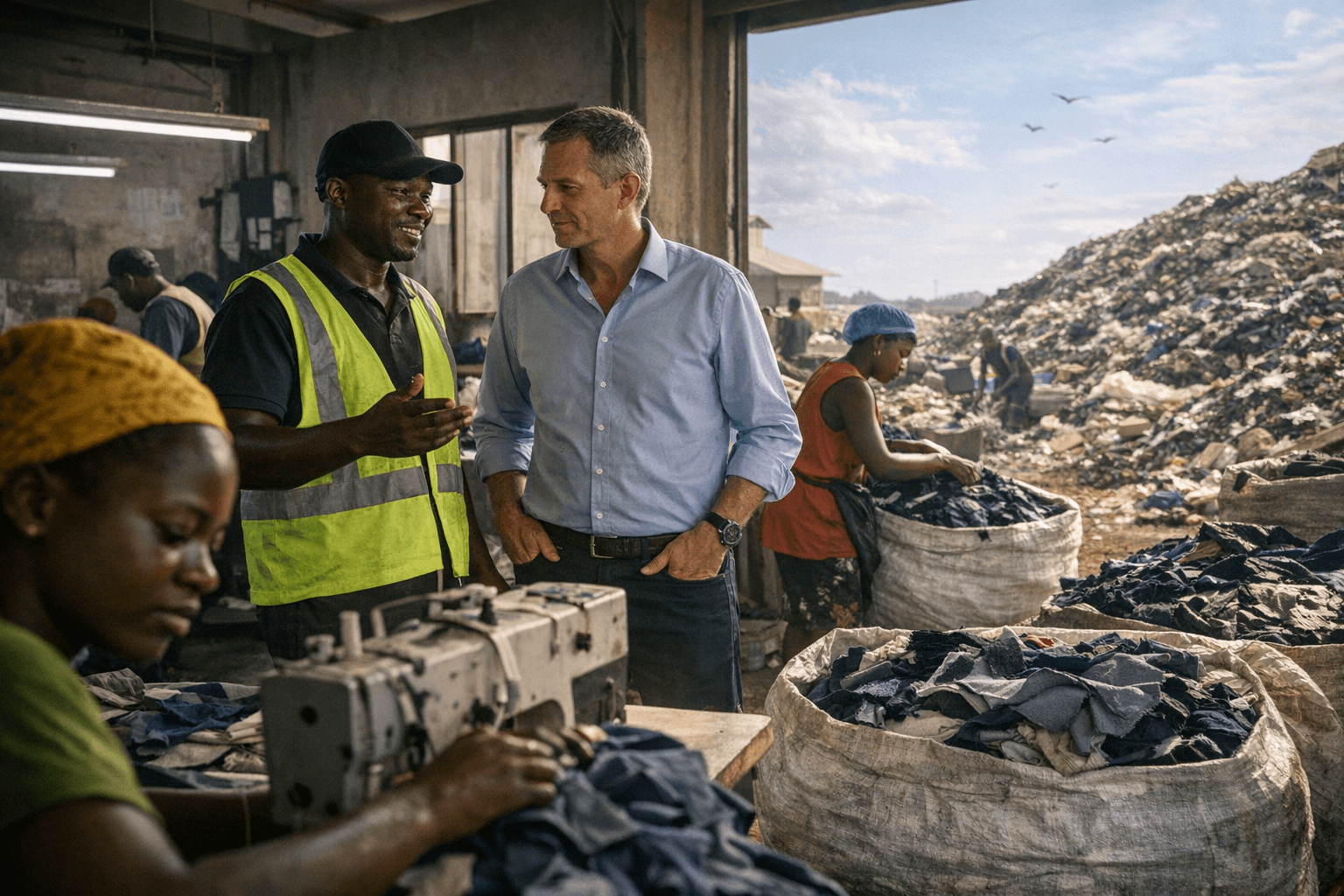
The project carries ambitions that extend well beyond factory output. Backed by both the Ghanaian and German governments, it sits at the centre of a wider regeneration programme targeting chronic unemployment in Northern Ghana, a region the project's backers describe as one of the country's most underserved. The goal, as reported by The Interline and Fibre2fashion, is to create decent, dignified jobs at scale, reduce internal migration southward, and help stem dangerous and often illegal migration routes to Europe. Textile Focus characterised the job creation potential as "thousands of jobs in Northern Ghana," though no specific phased headcount or hiring timeline has been publicly confirmed.
What makes Northshore's model editorially significant for the fashion industry is the integration of ethics at the infrastructure level rather than as an afterthought. The facility is not retrofitting sustainability onto an existing production model; it is building digital traceability, fabric waste reduction and social governance into its foundation before a single garment ships. For brands under mounting pressure to verify supply chain claims, a factory born with its compliance architecture already embedded represents a genuinely different proposition. Whether the job creation numbers, zero-waste credentials and government backing translate into contracted buyers and measurable output will be the story to watch as Northshore moves from announcement to production.
This article was produced by Prism’s automated news system from verified source data, official records, and press releases, then run through automated quality and moderation checks before publishing. The system is built and supervised by the people who set the standards it runs under. Read our full AI policy.
Did this article answer your question?


