OnceMore and AVAVAV Debut Recycled Viscose Shirts at Milan Fashion Week
AVAVAV's cutout ribcage shirt, made from viscose blended with post-consumer textile waste, just made the case for guilt-free drape at Milan Fashion Week.
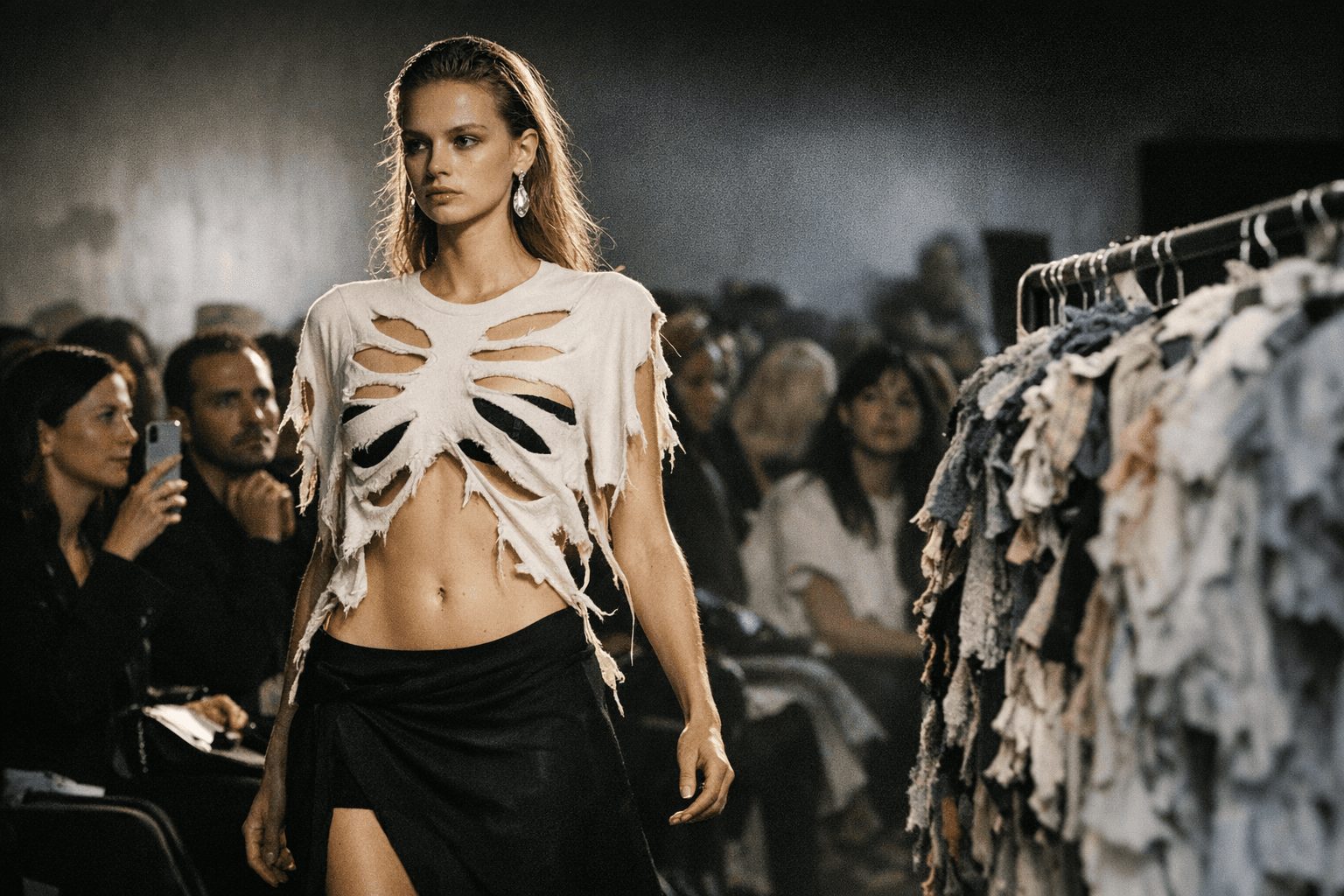
Four shirt styles. One quietly radical material. When AVAVAV stepped into Milan Fashion Week's AW26 calendar earlier this month, the clothes themselves carried the argument: that viscose spun from post-consumer textile waste can hold a bias cut, command a silhouette, and belong on a runway without apology.
The presentation marked the second phase of AVAVAV's collaboration with OnceMore®, the dissolving-pulp program run by Swedish forestry cooperative Södra, following a first outing tied to the SS26 season. This round introduced four new shirt styles for Fall/Winter 2026, developed with fabrics crafted by New Focus Textiles, a OnceMore Together® partner working in close collaboration with the label. The viscose in question is produced from dissolving pulp that blends RCS-certified post-consumer textile waste with wood from responsibly managed Swedish forests, with the pulp capable of containing up to 50 percent recycled textile fibers.
The environmental math, as presented by OnceMore, is worth stating plainly: the pulp has the potential to reduce carbon emissions by as much as 30 percent compared with conventional viscose production, based on Higg MSI benchmarks. Södra also reports that incorporating OnceMore textile waste into the process diverts 0.75 kilograms of material from landfill for every kilogram of textile pulp produced.
None of that would matter if the clothes didn't work. They do. AVAVAV's signature cutout ribcage button-up shirt appeared among the pieces made with OnceMore fabrics, a deliberately pointed choice. That style, with its structural precision and body-conscious tension, is exactly the kind of garment that exposes a fabric's limitations. That it held its character here is the collaboration's most persuasive argument. The season's broader creative thread, an exploration of the female gaze, demanded fabric with presence and drape rather than compromise, and Södra's copy notes the engineered viscose delivered both.
Ida Fager Stark, Communications Manager at OnceMore, framed the collaboration's intent without hedging: "Through this creative exchange, we want to make a bold statement: viscose, even viscose made with textile waste, belongs in high-fashion pieces without compromise. Design and quality can thrive alongside innovation. Working with Avavav is an honor because they don't just embrace this vision, they bring it to life and show that the possibilities are endless."
For AVAVAV's creative director Beate Skonare Karlsson, the partnership solves a problem that rarely surfaces in sustainability conversations: access. "As a young brand, access to innovative and more sustainable materials often comes with challenges, from higher costs to minimum volumes," she said following the presentation. "With the backing of OnceMore, Avavav has been able to work with these fabrics in several of its core styles and continue pushing its creative vision with more responsible material choices."
The supply chain here is worth mapping: Södra produces the OnceMore dissolving pulp from traceable, consistently sourced textile waste; New Focus Textiles converts that into the viscose fabric; AVAVAV designs the garments. The presentation reportedly drew strong interest from both press and industry stakeholders, suggesting the three-way model is being watched as a template. Whether it scales beyond four shirt styles into full commercial runs remains the next question for a collaboration that has already moved faster than most.
This article was produced by Prism’s automated news system from verified source data, official records, and press releases, then run through automated quality and moderation checks before publishing. The system is built and supervised by the people who set the standards it runs under. Read our full AI policy.
Did this article answer your question?


