Panjab University Students Turn Thrifted Finds Into Sustainable Runway Gold
Panjab University's UIFT students raided thrift stores and their own wardrobes to build "The Green Edit Runway 26," a show where worn jeans and old ties became aspirational fashion.
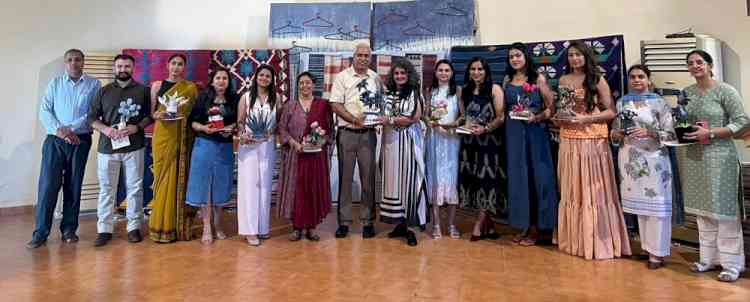
The runway smelled like craft glue and possibility. On April 9, 2026, the University Institute of Fashion Technology and Vocational Development (UIFT) at Panjab University staged "The Green Edit Runway 26," a student showcase that treated thrift stores as fabric suppliers and visible stitching as a design statement. Worn denim, discarded ties, and secondhand jewellery didn't just appear as accents here; they were the raw material, centre stage.
The show organized its design thinking around three distinct pillars. The first, Upcycled Innovation, was the most visceral: students transformed thrifted clothing, worn jeans, old jewellery, and vintage ties into finished garments and wearable art objects. Nothing was treated as waste. The second pillar, Artisanal Surface Ornamentation, put technique at the forefront; patchwork, appliqué, Kantha running stitch, and strategic use of fabric scraps gave the pieces their surface identity. These weren't shortcuts; they were the entire aesthetic argument. The third pillar, Conscious Material Choices, grounded the collection in fabric politics. Students worked with Khadi, Khadar, linen, and bamboo alongside experimental materials including tree bark; natural dyes and tie-dye palettes completed the palette story.
The result was a runway where Kantha stitching held two mismatched thrifted fabrics together into a single structured jacket, where tie-dye in indigo and turmeric tones coloured bamboo-fibre separates, and where a deconstructed denim silhouette reassembled from multiple secondhand pairs sat as confidently as anything off a commercial production line.
Awards were presented to student designers across three categories: reuse innovation, conscious material choice, and original design, recognizing the range of approaches students brought to the brief. The award structure itself signals UIFT's framing: this wasn't purely an aesthetic exercise. Reuse and material consciousness were graded criteria, not just talking points.
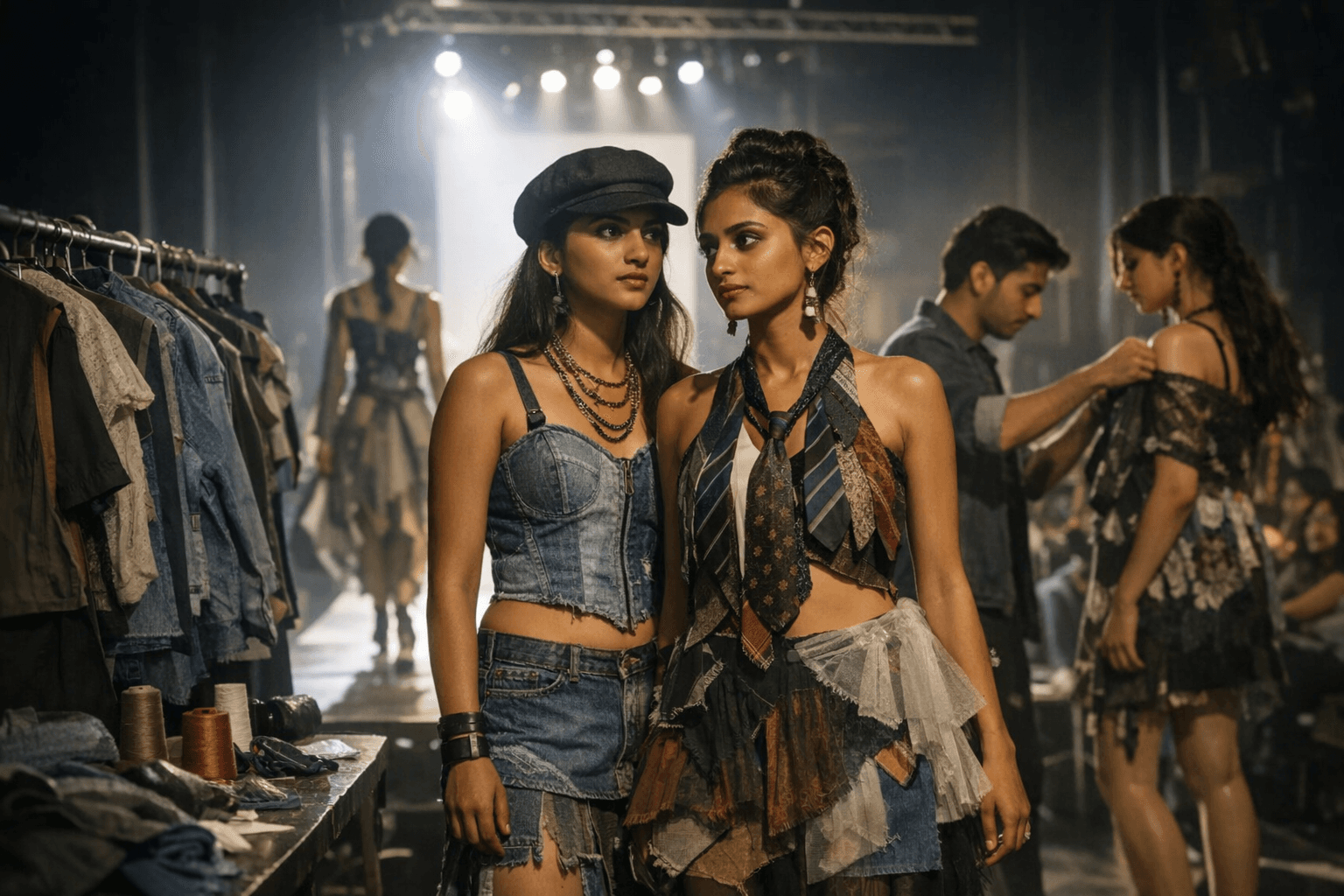
For the DIY-minded: a Kantha stitch running through two contrasting thrifted cottons costs nothing but time and produces a surface that no fast-fashion piece can replicate. Sourcing Khadi or Khadar at an Indian textile market runs cheaper per metre than most synthetic fabrics. And a deconstructed denim build from two or three different thrifted pairs, seamed together at the leg and waistband, is structurally straightforward with a basic sewing machine. The UIFT students just proved it holds up under runway lights.
What "The Green Edit Runway 26" ultimately demonstrated is that the infrastructure for low-impact fashion already exists in secondhand markets and craft traditions; the gap is in treating them as a first choice rather than a fallback. These students didn't compromise their collections to be sustainable. They built the sustainability into the design logic from the first sketch.
This article was produced by Prism’s automated news system from verified source data, official records, and press releases, then run through automated quality and moderation checks before publishing. The system is built and supervised by the people who set the standards it runs under. Read our full AI policy.
Did this article answer your question?


