Paradise Textiles Invests $102 Million in Egypt's Integrated Fabric Facility
Paradise Textiles committed $102M to an Alexandria fabric mill featuring the Regen® Microfibre Filtration System, the world's first designed specifically for textile manufacturing.
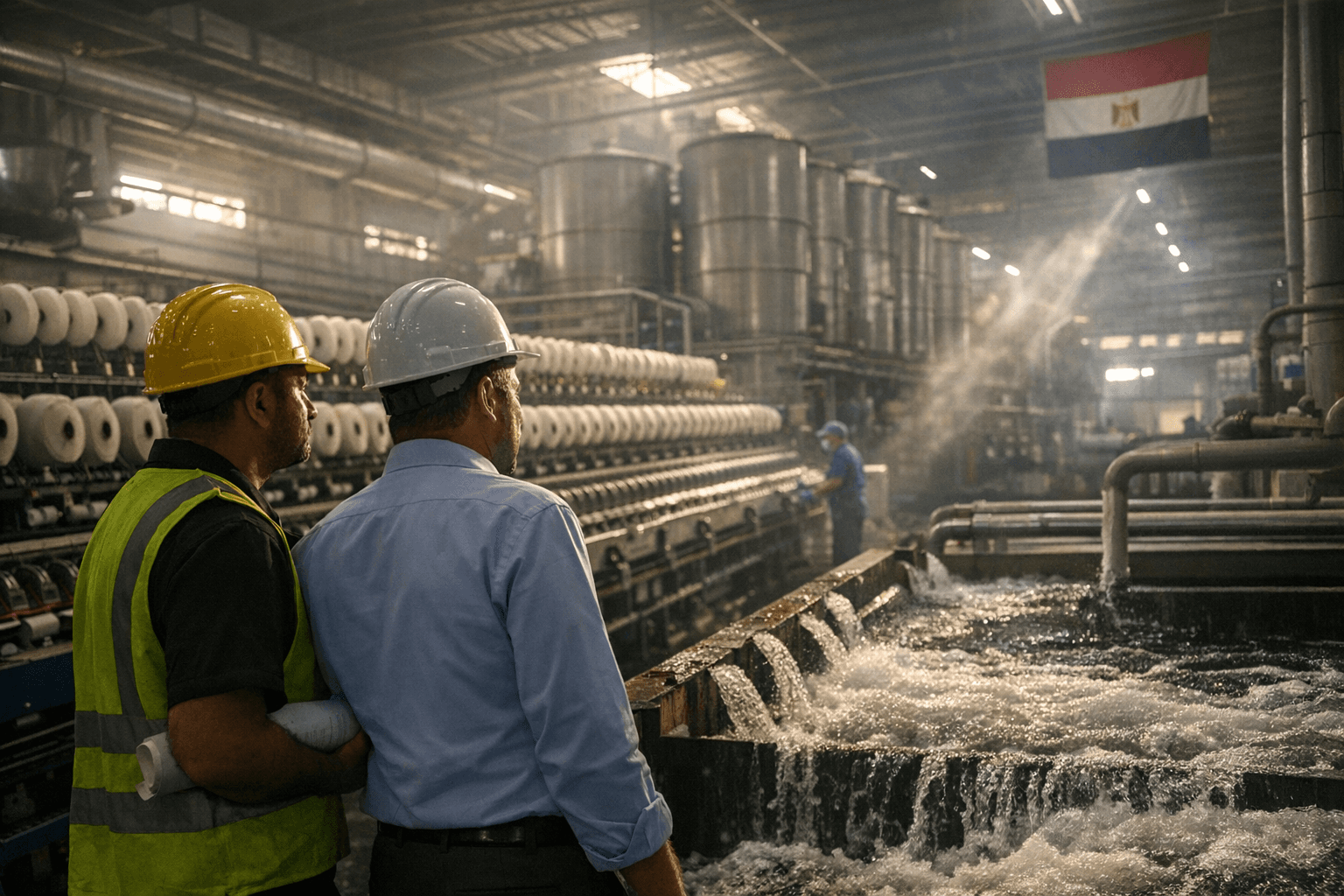
Paradise Textiles, the material-science arm of Alpine Group, committed US$102 million to build an integrated fabric manufacturing facility in the Amreya Public Free Zone in Alexandria, Egypt, backed by a US$72 million financing agreement with Commercial International Bank (Egypt). The plant, which is expected to begin operations by the third quarter of 2026, will produce high-performance polyester and synthetic fabrics for activewear and sportswear brands serving US and European markets.
The facility sits adjacent to Alex Apparels, Alpine Group's existing garment manufacturing hub in Egypt. That proximity is the point. By colocating fabric design and production next to cut-and-sew operations, the company is compressing the distance between material development and the factory floor, enabling tighter collaboration on technical specifications and faster iteration on performance fabrics. Ehab Mohi, chairman of Alex Apparels, framed it in supply-chain terms: "This investment strengthens our ability to deliver greater speed, consistency and technical collaboration for our brand partners. We are improving lead times, enhancing quality control, and enabling performance-driven production for activewear and sportswear brands serving global markets."
The sustainability infrastructure built into the plant is where the project gets genuinely interesting. The facility will deploy energy-efficient machinery, lower-impact production technologies, and integrated environmental management systems for continuous monitoring of water and energy consumption. Most notably, it will house the first installation of the Regen® Microfibre Filtration System, described as the world's first microfibre filtration system designed specifically for textile manufacturing. Microfibre pollution, the synthetic particles shed during fabric production and washing that end up in waterways, has become one of the industry's most scrutinized environmental liabilities. Putting filtration infrastructure at the production source rather than downstream is a meaningful design choice.
Ashok Mahtani, Co-Founder and Chairman of Alpine Group and Paradise Textiles, put the investment in longer strategic terms: "This project reflects our long-term vision of bringing fabric innovation closer to the needle, strengthening vertical integration and building manufacturing ecosystems that are fit for the future."
The facility is expected to generate around 1,200 jobs over the next two years. The Amreya Public Free Zone location positions the plant to serve export-oriented production at scale, with output directed primarily toward US and European brand partners navigating tighter sourcing timelines and growing regulatory pressure on supply chain transparency. For a sector still reconfiguring global sourcing after years of disruption, a vertically integrated fabric-to-garment hub in a free zone with filtration tech already installed is a credible infrastructure bet.
This article was produced by Prism’s automated news system from verified source data, official records, and press releases, then run through automated quality and moderation checks before publishing. The system is built and supervised by the people who set the standards it runs under. Read our full AI policy.
Did this article answer your question?