Reju to Build Lacq Regeneration Hub for Industrial-Scale Post-Consumer Polyester Depolymerisation
Reju, the Technip Energies subsidiary, announced plans on Feb 13, 2026 to build a Regeneration Hub in Lacq, south-west France to run industrial-scale depolymerisation on polyester from post-consumer textiles and PET waste.
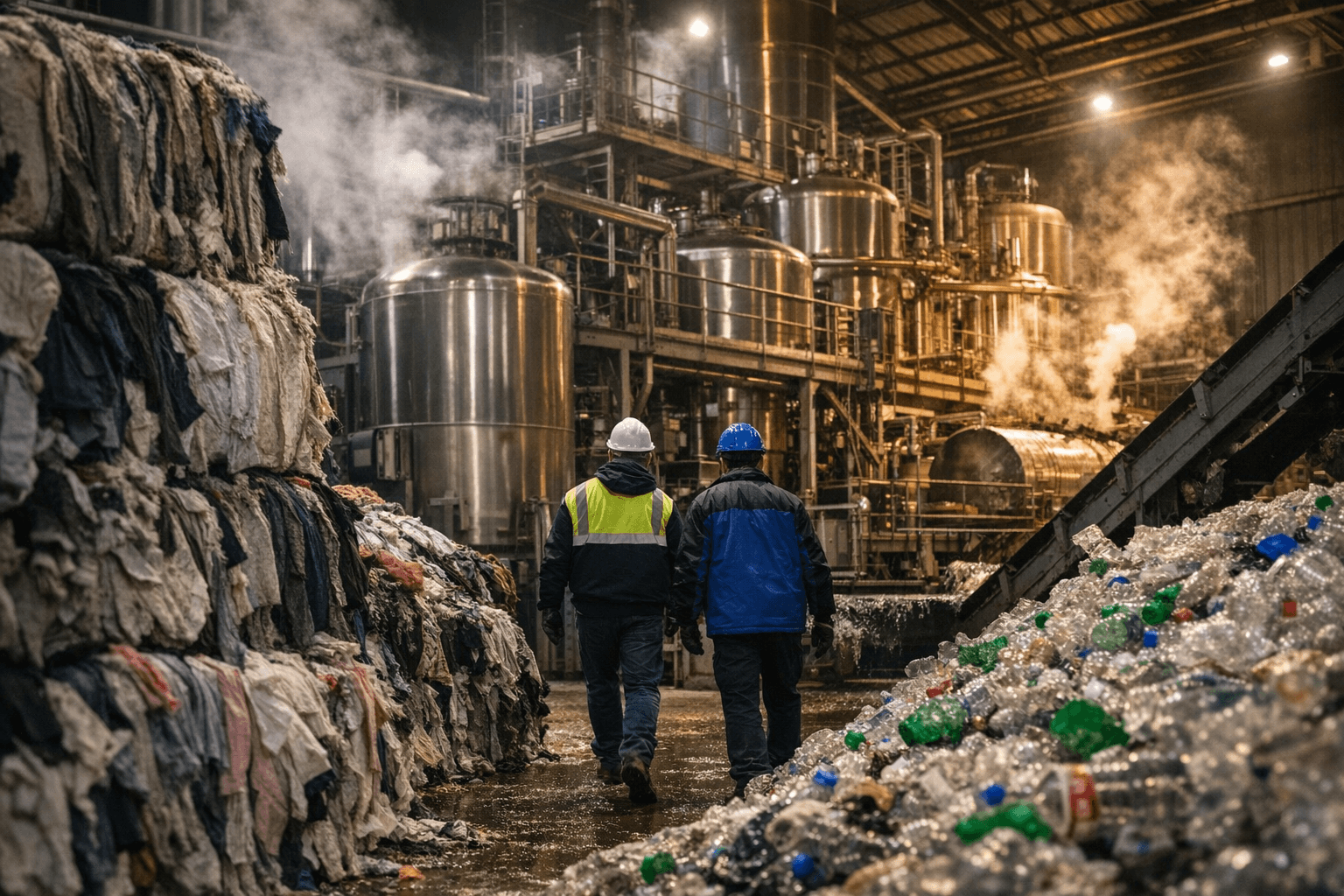
Reju will build a Regeneration Hub in Lacq, south-west France to run industrial-scale depolymerisation on polyester fractions from post-consumer textiles and PET waste. The move was disclosed on Feb 13, 2026 by Reju, which operates as a subsidiary of Technip Energies, and it names Lacq as the site for scaling the company’s chemical recycling approach.
The company’s plan centers on depolymerisation technology applied at industrial scale to turn polyester fractions into reusable outputs. Reju’s announcement specifically targets two feedstocks - post-consumer textiles and PET waste - calling out polyester fractions rather than whole garments, signaling a focus on the sorted, polymer-heavy streams that feed textile supply chains and bottle-to-fiber programs.
Locating the Regeneration Hub in Lacq places the project in south-west France; the disclosure identifies Lacq as the operational address for the planned industrial facility. Reju’s statement positions the hub as a step beyond laboratory or pilot demonstrations, describing the site as intended for industrial throughput of polyester fractions rather than small-batch testing.
For brands and manufacturers that rely on polyester, the Lacq project changes the calculus on circular feedstock availability. By naming both post-consumer textiles and PET waste, Reju is explicitly bridging two supply streams that fashion brands and plastics recyclers have chased separately - textile-to-textile recycling and bottle-to-fiber conversion - under a single depolymerisation approach at one industrial hub.
Technip Energies’ ownership of Reju links the Lacq Regeneration Hub to an engineering and energy background; the disclosure frames the project as part of Reju’s commercial rollout rather than as an isolated research pilot. Announcing the plan on Feb 13, 2026 gives the industry a clear public timestamp for when Reju moved from concept to siting a dedicated industrial facility.
If realized, the Lacq Regeneration Hub would represent a measurable scale-up of depolymerisation capacity for polyester fractions sourced from post-consumer textiles and PET waste, institutionalizing chemical recycling in a French industrial location and offering a new supply option for brands chasing higher-quantity recycled polyester feedstock.
This article was produced by Prism’s automated news system from verified source data, official records, and press releases, then run through automated quality and moderation checks before publishing. The system is built and supervised by the people who set the standards it runs under. Read our full AI policy.
Did this article answer your question?


