Remake closure signals fading support for fashion sustainability advocacy
Remake shut down after funding for labor and climate justice work dried up, leaving #PayUp’s legacy and a thinner watchdog landscape in fashion.
Remake did not vanish quietly. The San Francisco advocacy nonprofit behind #PayUp and #NoNewClothes ended operations on Feb. 28, 2026 after its board concluded it could not secure sustainable funding, a stark sign that the least glamorous work in fashion sustainability is also the easiest to starve.
That matters because Remake was never just another brand-friendly conscience project. Founded in 2015, it built its reputation on the women who make clothes, on intersectional environmentalism, and on pressure campaigns that made supply-chain abuse harder to ignore. The group said funding for labor organizing and climate justice work had fallen sharply over the past two years, with the contraction becoming especially severe after the 2024 presidential election. Before winding down, it explored restructuring, mergers, and new revenue streams, then chose an intentional closure rather than a chaotic one.
The scale of what disappears is easy to miss until you look at the numbers. Ecotextile reported that Remake assembled a network of 3,000 ambassadors across 80 countries. Remake says its educational resources, toolkits, and campaigns will remain online as a free public archive, but a static archive is not the same as an active watchdog. It cannot organize workers, mobilize shoppers, or keep pressure on brands and lawmakers when the headlines move on.
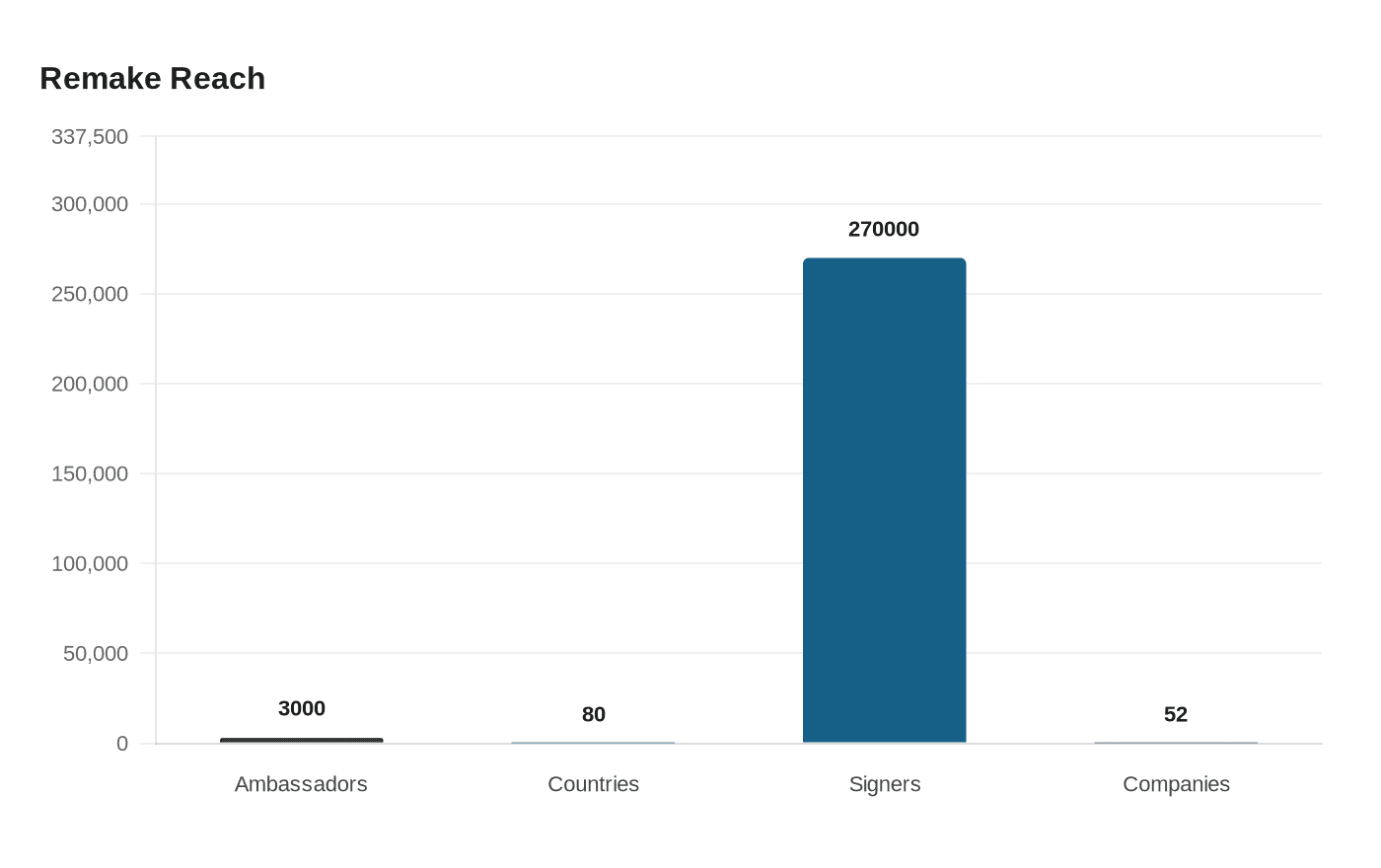
That pressure was the point. Remake says its #PayUp campaign helped recover about $22 billion owed to garment factories and workers from more than 21 or 25 major brands, including Zara, Gap, and Next. More than 270,000 people signed the original petition. The group also pushed California’s Garment Worker Protection Act, or SB62, which it said was designed to close loopholes, nearly triple hourly wages, and create a path to justice for wage theft. In Los Angeles, Remake reported, average garment worker wages had been $5.85 an hour and could fall as low as $2.68 before the law passed in 2022.
The closure lands as a stress test for the wider fashion sustainability ecosystem. Remake’s 2024 Fashion Accountability Report assessed 52 fashion companies and found accountability scores still stagnant, with little meaningful progress on living wages, climate mitigation, or fair supplier practices. That report called for binding regulation instead of voluntary promises, and Remake did not take money from fashion companies. Labour Behind the Label called the shutdown a “huge shock” and said civic space is shrinking as labor groups face reduced funding, criminalization, repression, and vilification. No single organization looks ready to absorb all of Remake’s functions at once, which is exactly the problem: when advocacy shrinks, fashion loses not only a critic, but a worker representative, a supply-chain watcher, and a policy pressure engine all at once.
Know something we missed? Have a correction or additional information?
Submit a Tip