Renasens Secures €10M to Scale CO₂ Recycling for Blended Textile Waste
Stockholm startup Renasens raised €10M to industrialise a CO₂-based process that recovers intact fibres from blended polycotton waste, with no water or toxic chemicals required.
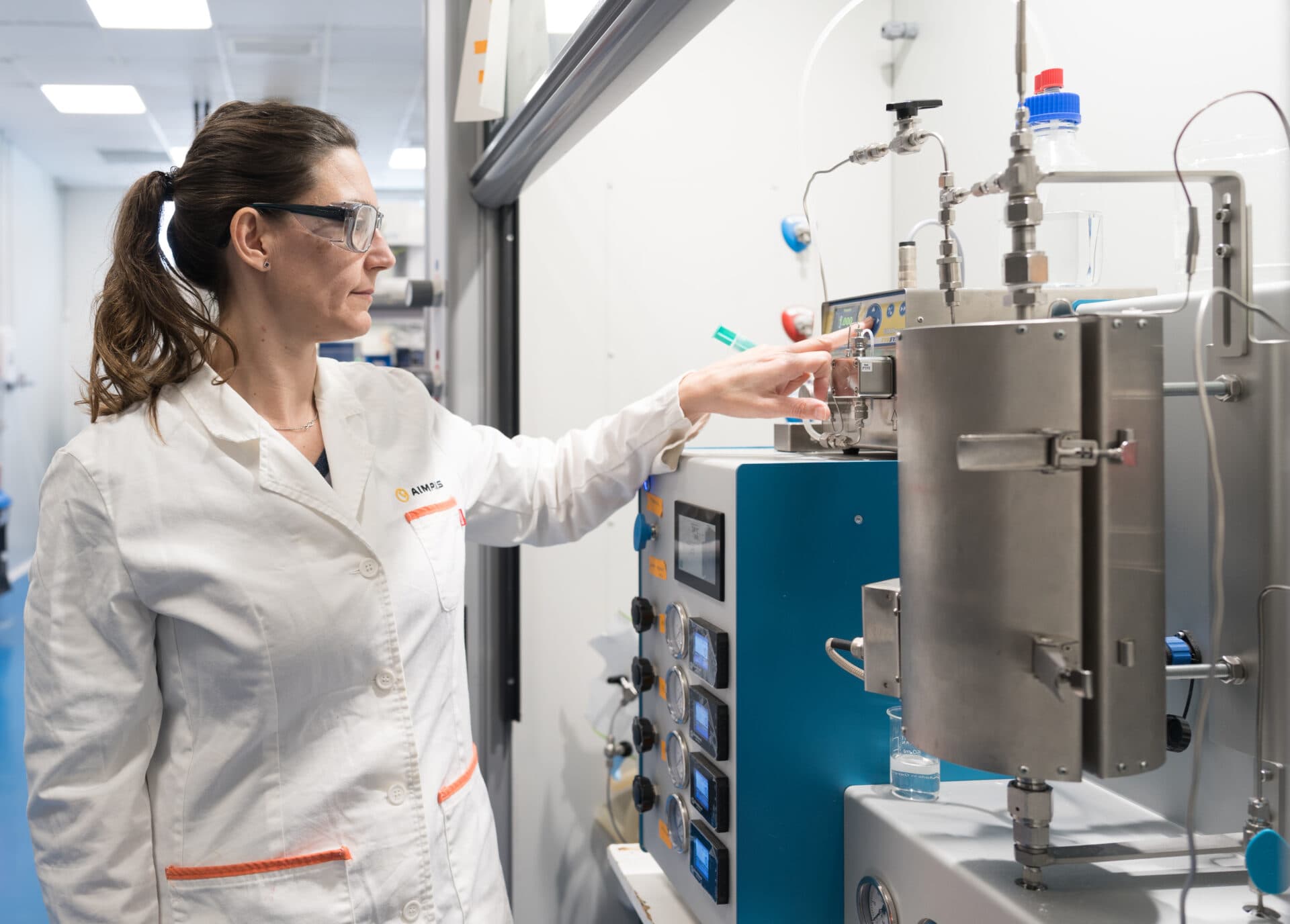
Renasens, a Stockholm-based deeptech company developing textile recycling technology, has raised €10 million in a seed funding round led by Extantia, with participation from Course Corrected VC and continued backing from Norrsken Launcher. The capital will be used to industrialise a supercritical CO₂-based process that separates and recovers fibres from blended polycotton waste, and to build the infrastructure and partnerships needed to support commercial adoption across Europe.
Renasens was founded in September 2022 by Dr. Jade Abir Bouledjouidja, a chemical engineer who arrived at the technology from an unexpected place: during her PhD research into drug delivery using supercritical fluids, she realised the same principles could solve textile recycling's toughest barrier. She moved from France to Sweden to develop the idea and validate the technology at KTH Royal Institute of Technology. In November 2024, she secured €1 million from Norrsken Launcher; within 12 months, she had built a team of ten engineers and chemists from across Europe and Asia, closed the €10 million seed round, and begun executing the Borås pilot plant.
"Post-consumer textile waste has been written off as unsolvable for many years; not just technically, but structurally. "We have cracked the material science behind this, our pilot plant is now scaling, and we are building the infrastructure and partnerships to make recycled fiber economically viable at an industrial scale in Europe, for the first time," says Dr. Jade Bouledjouidja.
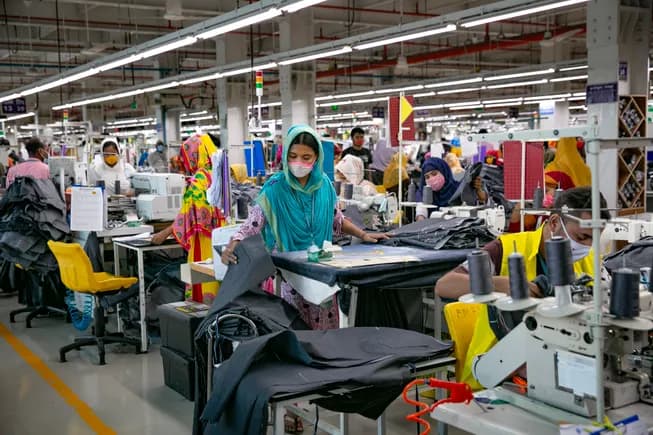
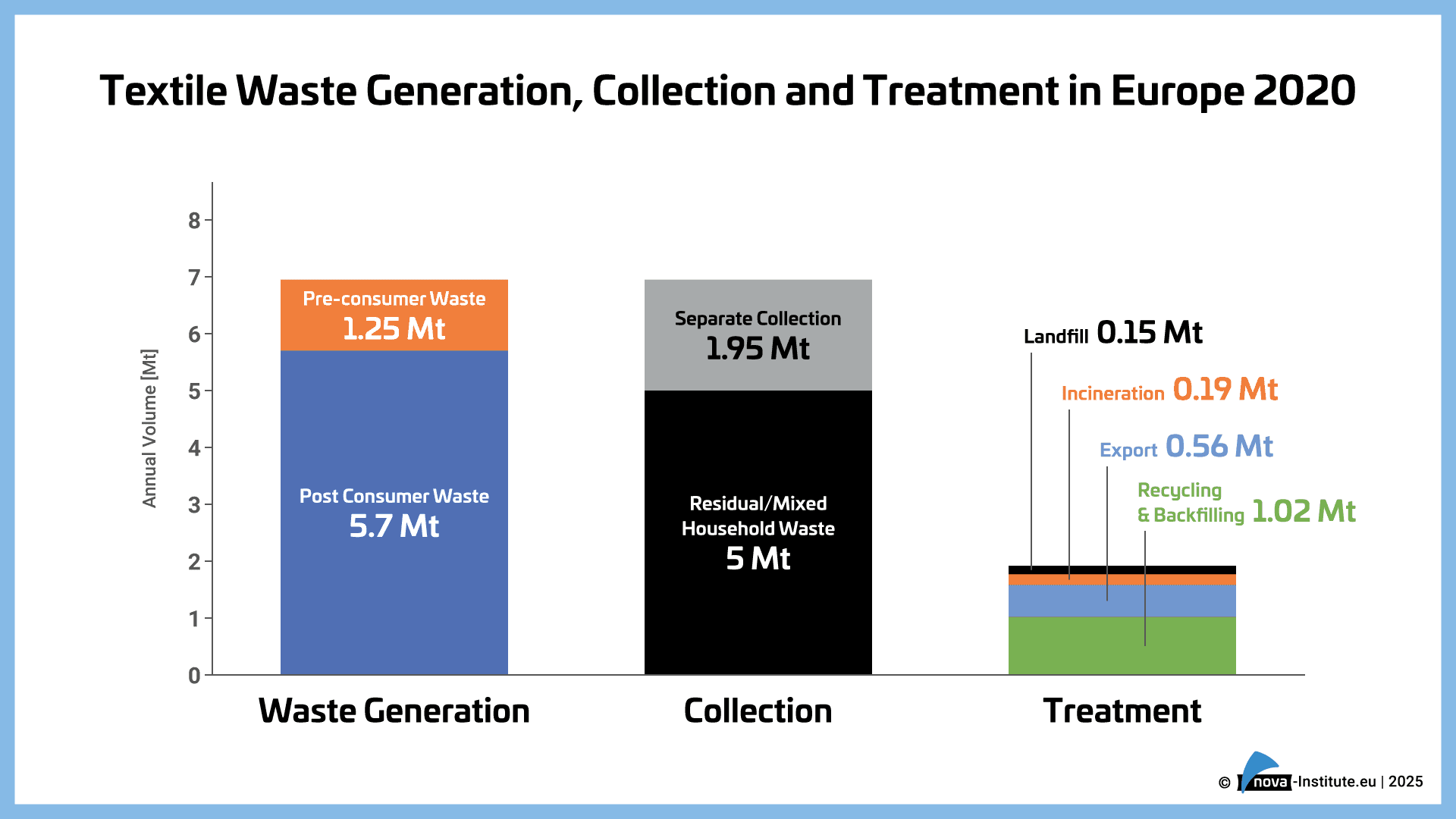
The problem Renasens is attacking is structural. Europe generates more than 12 million tonnes of textile waste annually, yet less than 1 per cent is recycled into new fibres. Existing recycling methods struggle to process blended and treated fabrics, which make up the majority of post-consumer waste. The core issue lies in blended fabrics, such as polycotton, treated synthetics, and dyed materials, which dominate real-world waste but resist both chemical and mechanical recycling.
Renasens addresses that barrier with a process built around a specific physical phenomenon. Its platform uses modified supercritical CO₂ to separate and decolour blended textiles, recovering intact fibres without the use of water or the use of toxic chemicals. Supercritical CO₂ is a state in which carbon dioxide, under controlled pressure and temperature, behaves like both a liquid and a gas simultaneously, making it an unusually effective solvent for separating fibre blends. The recovered materials can be reintroduced into existing manufacturing processes without requiring new equipment, and the system is designed to be modular, allowing deployment within existing facilities across fragmented supply chains. Techfundingnews, which describes the system as patented, puts the commercial logic plainly: cotton and polyester emerge intact, ready to be reused directly in manufacturing, with no additional processing and no new machinery required for buyers.
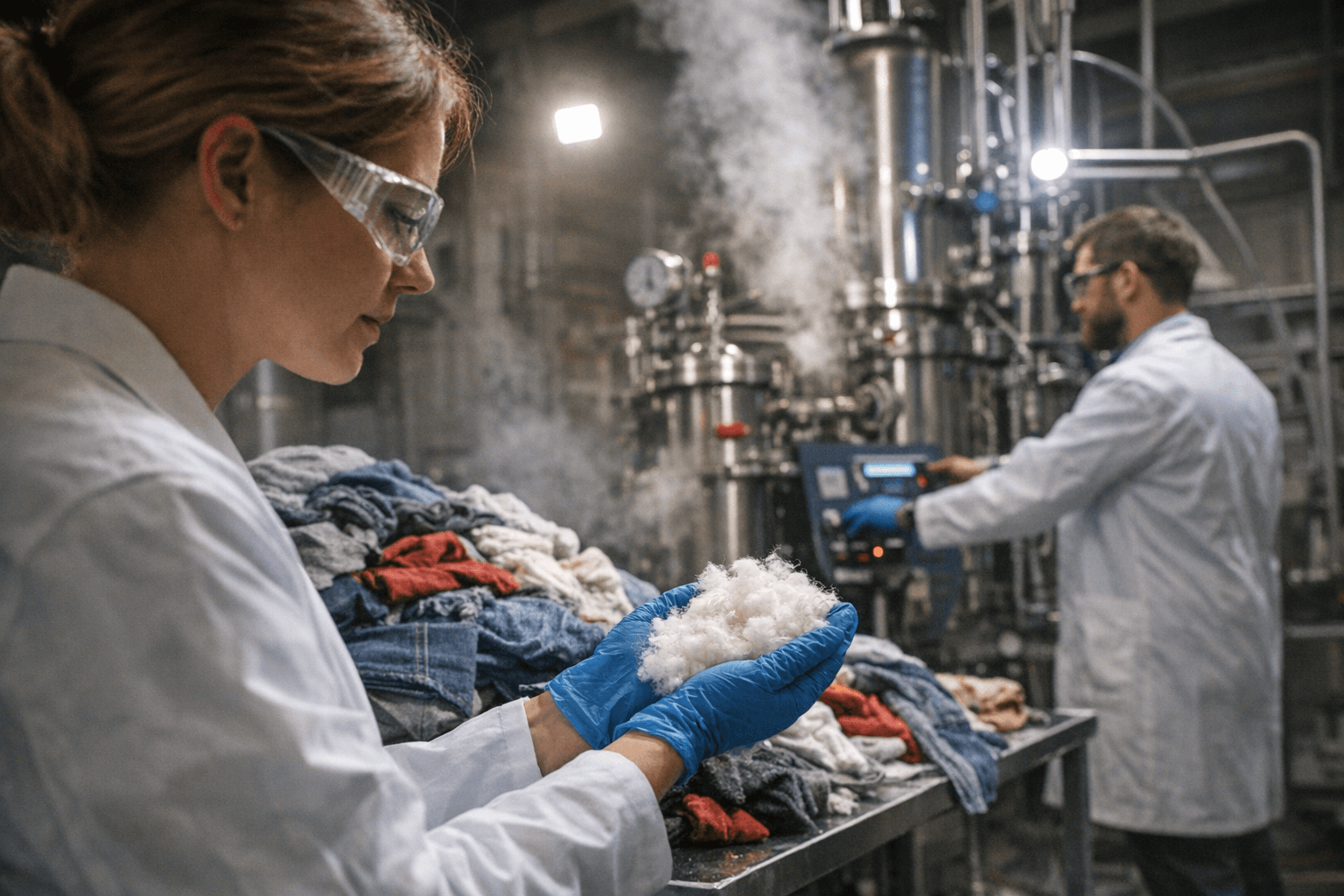
The company is already supplying recovered cotton and polyester fibres to manufacturers in Portugal and Italy, proving early commercial viability. The upcoming Borås pilot will take this further, establishing a working model for large-scale operations across the continent. The company aims to close this gap by enabling fibre-to-fibre recycling at scale and reducing reliance on imported virgin materials.
The regulatory window is narrowing in ways that work in Renasens' favour. Mandatory textile collection systems were introduced across the EU in 2025, and extended producer responsibility schemes are expected by 2027, increasing demand for scalable recycling solutions. The raise is touted to be the largest hardware seed round in Europe this year, a signal that investors are treating the textile waste problem not as an environmental footnote but as an infrastructure gap with a clear commercial payoff. Carlota Ochoa Neven Du Mont, Principal at Extantia, framed the investment in precisely those terms: "Renasens is a piece of strategic European infrastructure. As the EU tightens its grip on textile waste regulation, the brands and manufacturers that need compliant, high-quality and locally-sourced fiber have no viable options. Renasens changes that and what's more, they do this at a green discount."
For a fashion industry still heavily dependent on virgin polycotton blends, the implications extend well beyond the recycling yard. If Renasens can deliver industrially recovered cotton and polyester at the scale its Borås plant is designed for, the fibre a brand buys next year could trace its origin not to a field in Central Asia, but to a pile of discarded T-shirts somewhere in southern Europe.
This article was produced by Prism’s automated news system from verified source data, official records, and press releases, then run through automated quality and moderation checks before publishing. The system is built and supervised by the people who set the standards it runs under. Read our full AI policy.
Did this article answer your question?