Rubi Raises $7.5M to Turn CO2 Into Sustainable Textile-Grade Cellulose
Rubi raised $7.5M to convert CO2 into textile-grade cellulose, pulling in over $60M in customer demand before scaling a single production line.

Rubi just removed one of the most stubborn technical barriers standing between sustainable fashion and actual fiber innovation: the need to mine, grow, or harvest cellulose from the earth. The company closed a $7.5M financing round to scale a cell-free enzymatic platform that converts carbon dioxide directly into textile-grade cellulose, the base material for lyocell and viscose fabrics.
AP Ventures and FH One Investments led the round. The number that matters more, though, is $60 million: that's the reported customer demand Rubi has already logged before meaningfully scaling production. In a category full of startups pitching future-state solutions to skeptical buyers, pre-commercial demand at that level signals something real.
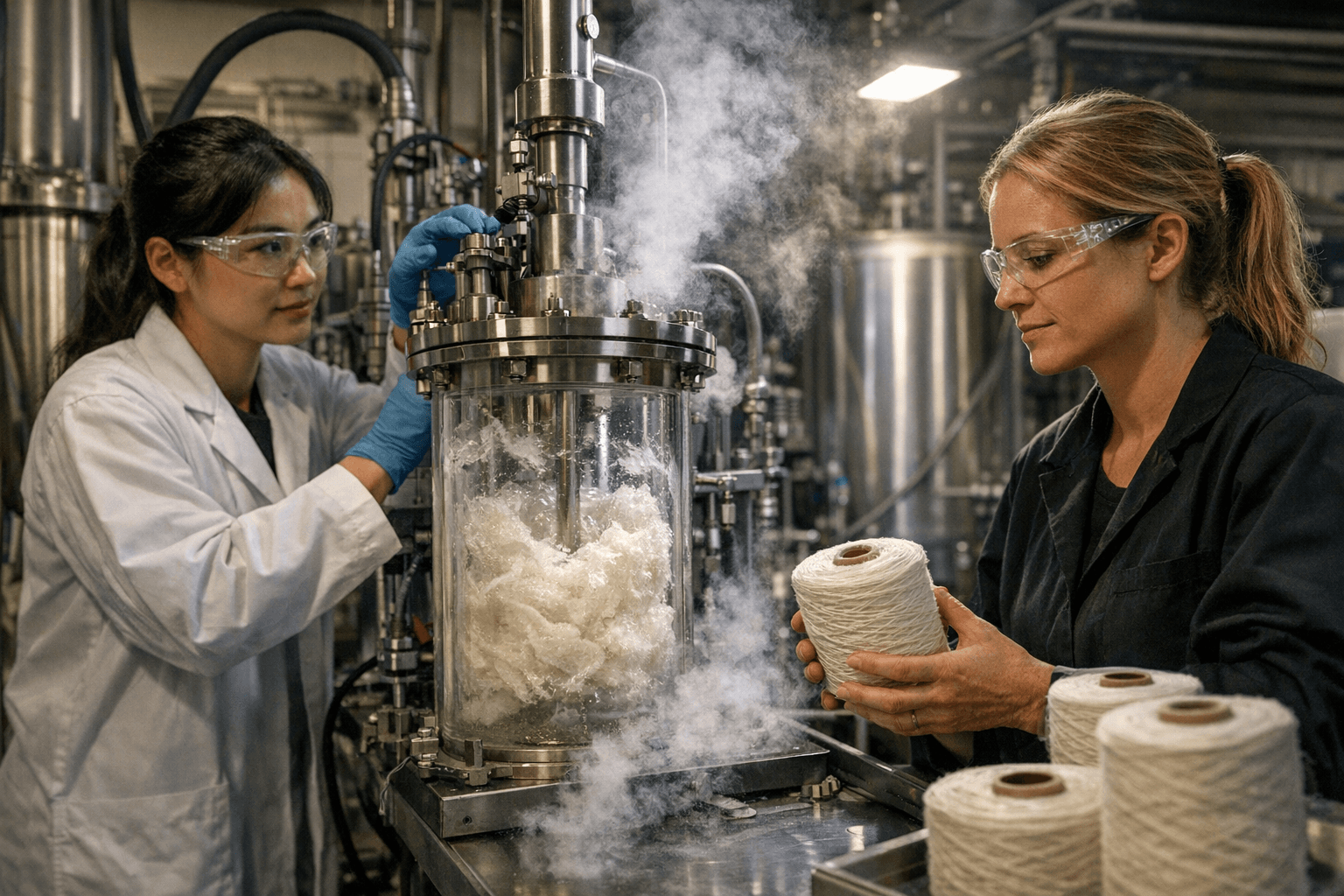
The technology sits at the intersection of biotech and textile manufacturing. Rather than relying on wood pulp harvested from forests or cotton grown across millions of irrigated acres, Rubi's enzymatic process captures CO2 and converts it into cellulose without living cells. Cell-free systems are faster to optimize and easier to scale than traditional fermentation-based biotech approaches, which is part of why the platform is attracting investor attention.
Lyocell and viscose are already positioned as more sustainable alternatives to polyester in fashion supply chains. Lyocell, best known under the Tencel brand, is widely used in everything from Eileen Fisher basics to fast fashion blouses. But even the cleanest current versions of these fabrics still depend on harvested plant matter. Rubi's pitch is that the feedstock itself becomes circular: CO2 in, cellulose out.
The fashion industry's cellulose dependency runs deep. Cotton accounts for roughly 24 percent of global insecticide use despite covering only 2.5 percent of the world's cultivated land. Forest-derived viscose has faced sustained criticism from environmental groups over sourcing transparency. A CO2-derived alternative that produces fiber at commercial grade would quietly rewrite the material story for a significant slice of the apparel market.
Rubi's raise arrives as textile innovation funding is becoming more discerning after a few years of broad enthusiasm. Investors are increasingly focused on companies that can demonstrate feedstock viability and production economics, not just a compelling deck. The $60M demand figure, if it holds through to commercial contracts, gives Rubi a cleaner path to justifying the next, larger raise that scaling a novel materials platform will inevitably require.
This article was produced by Prism’s automated news system from verified source data, official records, and press releases, then run through automated quality and moderation checks before publishing. The system is built and supervised by the people who set the standards it runs under. Read our full AI policy.
Did this article answer your question?