Rural Karnataka women stitch kaudi quilts from recycled clothes, preserving heritage
Kaudi turns worn shirts and saris into warm quilts in rural Karnataka. It is a circular textile system, but one that depends on women, memory, and time.
Kaudi’s circular system starts in the wardrobe, not the mill
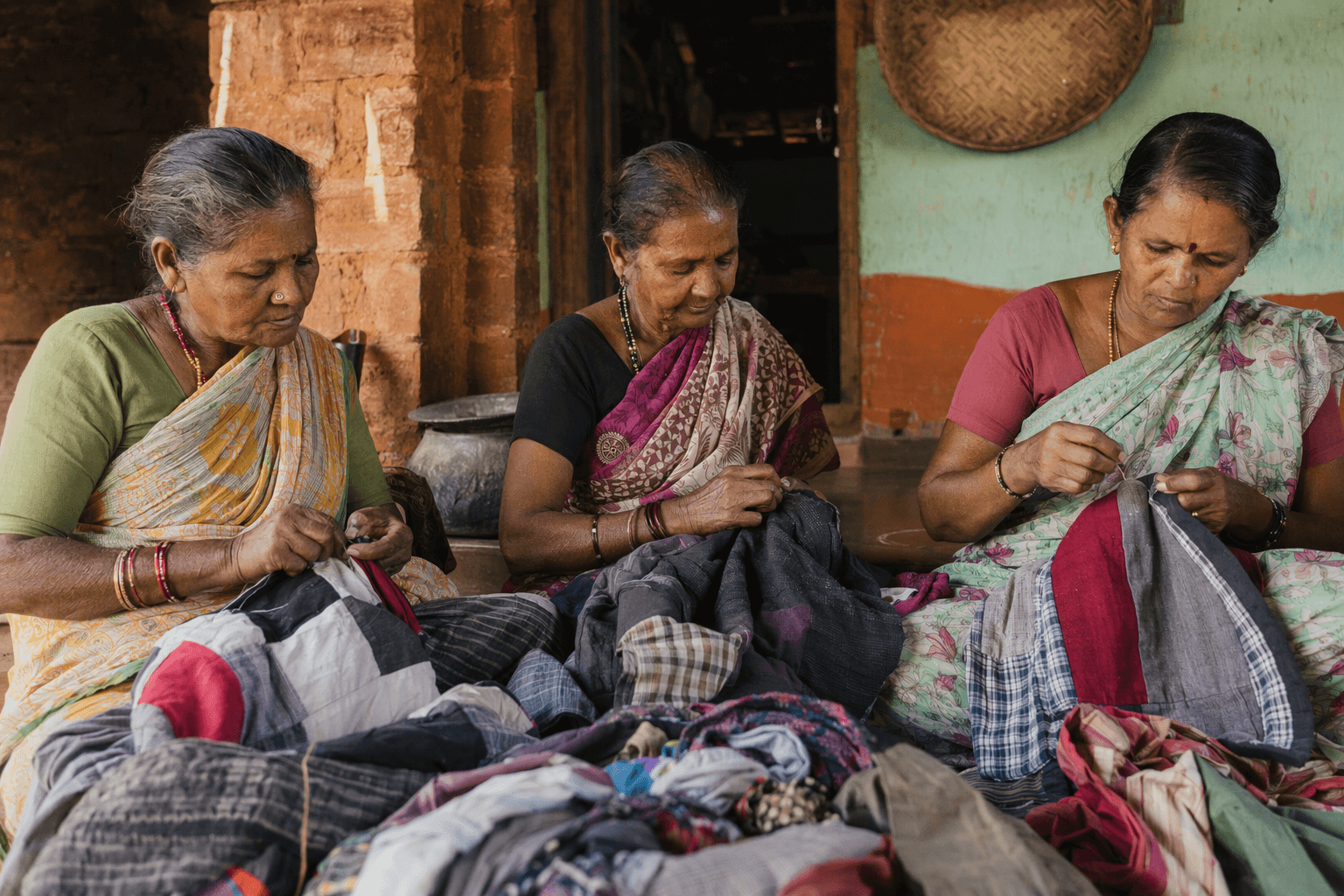
Kaudi is one of those rare textile stories that feels both intimate and commercially sharp. In Haliyal, Uttara Kannada district, rural women hand-stitch quilts from used clothes collected from friends and family, turning worn fabric into a layered material with real tactile presence and clear sustainability value. ELLE India spotlights the textile as a hidden gem from Karnataka, but the more interesting truth is operational: kaudi already works like a small-scale circular supply chain, with post-consumer cloth becoming bedding instead of waste.
That makes kaudi useful to think about now, not as a relic but as a model. It shows how textile reuse can be specific, local, and design-led, with fabric moving through a community before it becomes a quilt. For brands, the obvious fit is not mass-market fashion but small-run home textiles, patchwork throws, upholstery panels, collectible accessories, and any product where irregularity reads as character rather than defect.
How the quilts are made, stitch by stitch
The process is deeply practical. Deccan Herald’s reporting on Haliyal says the cloth pieces are cut from used clothes belonging to friends and family, then hand-stitched into quilts by women who often sit together to work, talk, and keep each other company. A 2012 profile notes that kaudi-making is learned by watching mothers and older women, which means the technique survives through observation as much as instruction.
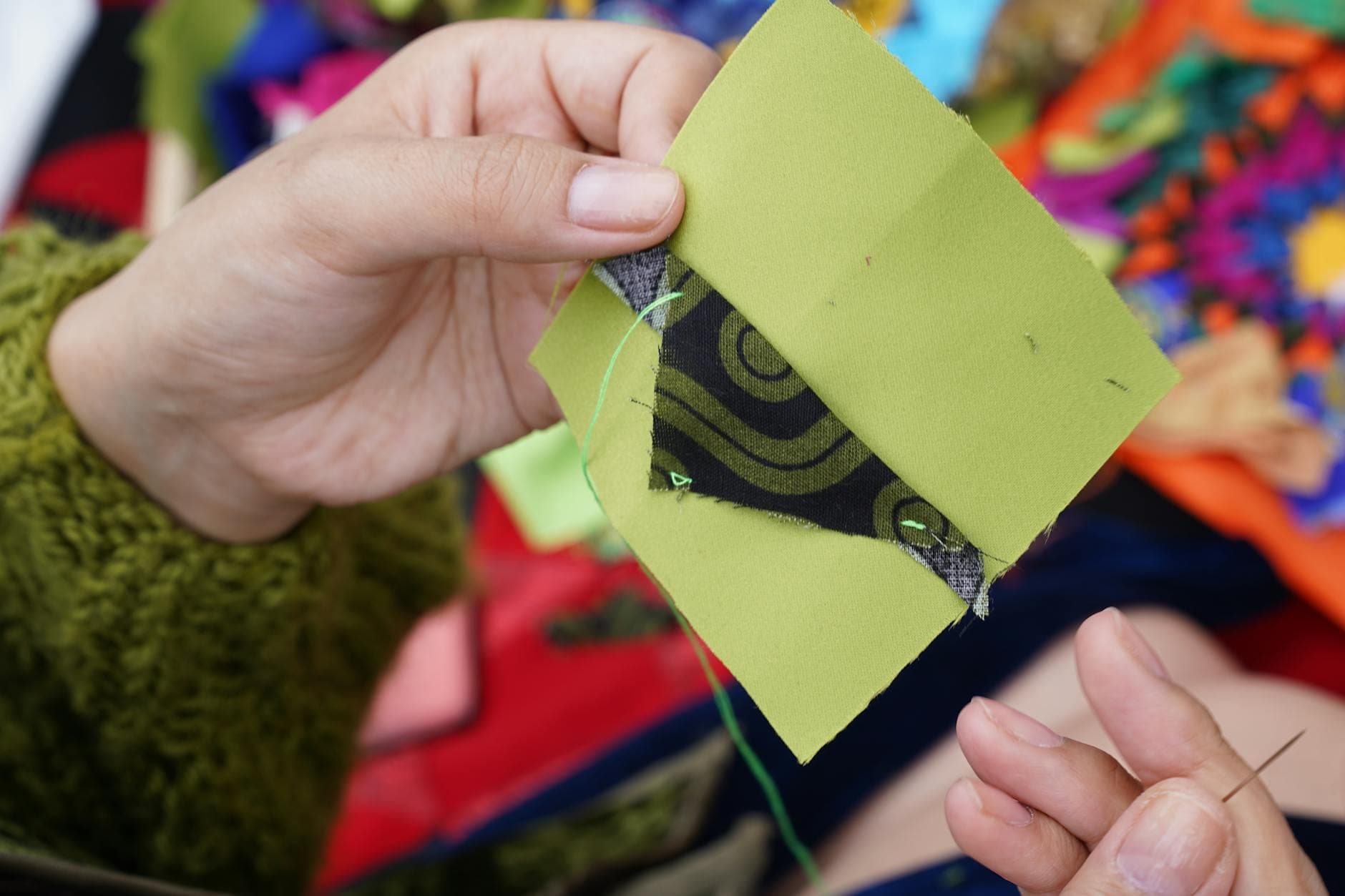
The material logic is smart too. In Anabi village, Yadgir district, women described a sari in good condition as the quilt’s backing, with worn saris used as insulation. Borders and pallu are removed and later reattached as decoration, so the garment’s original life is not erased, only rearranged. Common patterns include basingas, pagadis, gowramma and gowramma-seegamma, and the baby version is called thottilu gowri.
That assembly takes time. Deccan Herald reported that one quilt can take about 15 to 20 days to complete when there is no farm work, which is exactly the sort of labor profile that makes kaudi hard to industrialize without flattening what makes it special. This is not a cut-and-sew shortcut. It is a slow, locally tuned method of transformation.
Memory is part of the material
Kaudi carries emotion as openly as it carries warmth. In that 2012 Deccan Herald profile, Haliyal quilter Nirmalakka said the quilts carry memories of the people whose clothes are used in them. That line matters because it explains why the textile resonates beyond craft circles: it is a reuse system that keeps biography inside the fabric.
The same reporting says there is no clearly documented origin for the practice, only local belief that it began as a practical way to reuse old cloth. That uncertainty is common in living vernacular crafts, and it is part of kaudi’s appeal. It is not frozen heritage under glass. It is a working domestic technology that changes only enough to keep going.
Why kaudi is hard to copy at scale
Kaudi’s biggest strength is also why it resists replication. It depends on mixed, uneven inputs collected through personal networks, not on standardized rolls of fabric. It depends on skilled hands, inherited visual memory, and the patience to sort, layer, and re-stitch cloth into something structurally sound and visually coherent.
The craft also depends on a social rhythm that factories cannot easily imitate. Women in Haliyal stitch together, and that togetherness is part of the product’s value. The quilt is not only an object; it is a record of time spent in company, which is one reason the process feels so rooted and so difficult to mechanize without losing its meaning.
The people keeping the craft alive are not many, which is the point
Janakidevi N. Yareshemi makes that fragility visible. The Hindu reported that the 77-year-old artisan from Ranebennur in Haveri district received the Kushala Kala State Award for 2023-24 on April 18, 2025, after making koudis for five decades. Five decades is a staggering span for any artisan, but it also signals how much this knowledge rests on veteran practitioners rather than a broad pipeline of makers.
The same urgency appears in the Siddi kavand tradition in North Karnataka. The Hindu reported that Siddi women began gaining wider recognition for their craftsmanship around 2015-16, and that art historian and community practitioner Anitha N. Reddy has worked with the community across 15 to 20 villages. The Siddi community traces its origins to Sindh, Pakistan, and parts of Africa, which adds another layer to Karnataka’s textile landscape: these quilts carry not just local memory, but a long, layered cultural history.
Why the fashion industry should pay attention now
Kaudi matters because Karnataka is living through two pressures at once. Older reporting on the state’s weavers describes competition from power looms and policy challenges, while newer coverage on textile waste in Bengaluru shows the state is also confronting the environmental problem that kaudi has long anticipated. Post-consumer textile waste is increasingly being diverted into recycling and upcycling systems, and kaudi already understands that logic in domestic form.
That is why this textile feels so relevant to sustainable fashion. It offers a clear design vocabulary built from worn clothes, sari backs, recycled batting, and hand-applied pattern. It also offers a reminder that the most persuasive circular systems are not always the most technologically advanced ones. Sometimes they are the ones already living in plain sight, in quilts stitched by women who know exactly how to turn discarded cloth into something warmer, tougher, and worth keeping.
This article was produced by Prism’s automated news system from verified source data, official records, and press releases, then run through automated quality and moderation checks before publishing. The system is built and supervised by the people who set the standards it runs under. Read our full AI policy.
Did this article answer your question?