U.S. forced labor probe threatens tariffs, import bans across 60 economies
A sweeping U.S. probe put 60 trading partners under forced-labor scrutiny, raising the odds of tariffs, detentions and import bans across supply chains that cover more than 99% of U.S. imports.
The most fragile seam in fashion right now is provenance. Sixty of America’s largest trading partners have been pulled into a forced-labor probe that could raise prices, delay shipments and trigger import bans across supply chains covering more than 99% of U.S. imports in 2024. The Office of the United States Trade Representative launched the 60 Section 301 investigations on March 12, 2026, set public hearings for April 28 and gave companies until April 15 to file comments.
For brands, that turns traceability from a sustainability talking point into a border-control problem. Section 307 of the Tariff Act of 1930 already bars imports made wholly or in part by forced labor, and U.S. Customs and Border Protection enforces it through the Uyghur Forced Labor Prevention Act, Withhold Release Orders and Findings. If scrutiny widens, importers can expect more detained shipments, slower release times and higher landed costs, especially when they cannot document where cotton, yarn, fabric, trims and finished garments originated or how each tier of the chain was paid and managed.
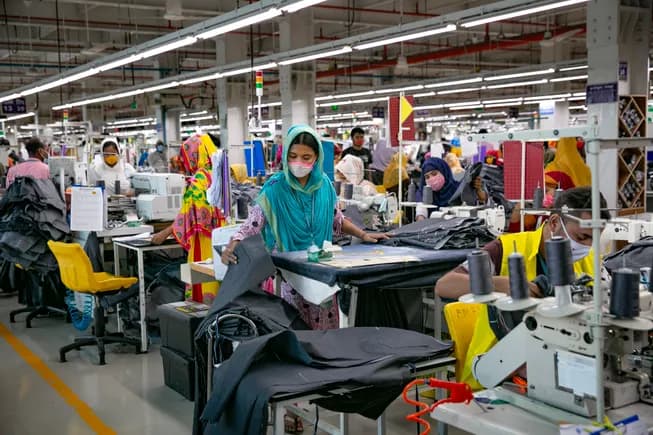
Fashion is unusually exposed because its sourcing is built on distance. A single blouse can move from field to gin, spinner, mill, dye house, factory and freight lane before it reaches a rack, and every handoff creates another place where proof can break down. The companies most at risk are the ones running opaque, high-volume models, private-label programs and deep subcontracting networks, where price pressure has long rewarded speed over evidence. Supply lines that touch China, including the Xinjiang Uyghur Autonomous Region, are already under especially heavy pressure, and this probe will make that pressure harder to ignore.
The numbers behind the policy are stark. The International Labour Organization estimated 27.6 million people were in forced labor in 2021, while USTR put the figure at 28 million that year, up 2.7 million from 2016. The European Union has moved in the same direction, adopting Regulation (EU) 2024/3015 in November 2024, publishing it in December and setting it to apply from December 14, 2027. For global brands, that means two powerful markets are converging on the same expectation: no more plausible deniability, no more separate compliance stories for different regions.
Transparentem has argued that import bans should be a remedy of last resort when corporate self-regulation fails, while Oritain’s Monica Jonas has said brands need robust evidence and proof to build trust and credibility. That is the real market shock here. The next competitive advantage in fashion may belong not to the label with the loudest sustainability language, but to the one that can prove, line by line, exactly where its clothes came from.
This article was produced by Prism’s automated news system from verified source data, official records, and press releases, then run through automated quality and moderation checks before publishing. The system is built and supervised by the people who set the standards it runs under. Read our full AI policy.
Did this article answer your question?