SMEP Pilot Shows Water-Reuse Technology and Financing Reduce Bangladesh Textile Dyehouse Pollution
SMEP presented early outcomes showing a Dhaka pilot that pairs advanced wastewater treatment with an outcome-focused financing app to cut dyehouse pollution and enable water reuse.
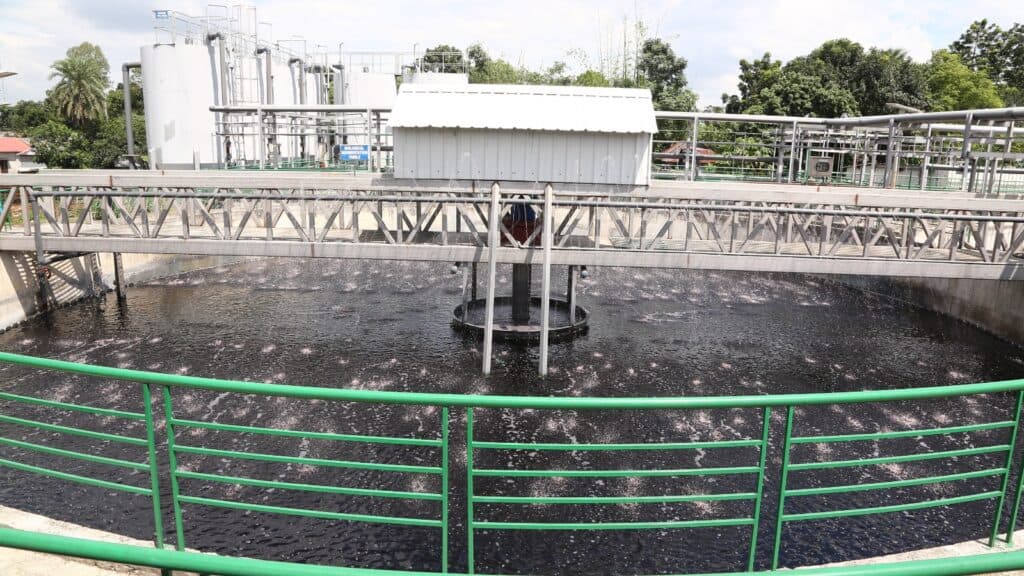
SMEP presented early outcomes in February 2026 from a Dhaka-based pilot that couples advanced wastewater treatment and reuse technology with an outcome-focused financing app, offering a tangible pathway to reduce textile dyehouse pollution. The SMEP brief frames the project as the Textile Wastewater Management pilot and highlights that scaled adoption could contribute up to 7% of Bangladesh’s 2030 NDC emission reduction target.
The SMEP consortium listed in the brief brings together Panta Rei Water Solutions and Grundfos as technology providers, Primark and H&M as brand partners, WaterAid as the NGO, and Fakir Knitwears Ltd as the factory site and a key project co-financier. SMEP’s programme notes that the pilot was implemented at Fakir Knitwears Ltd and that the project was selected by the Bangladesh Alliance for Water Reuse and Recycling - A4R - as its first national water reuse case study. SMEP is funded by the UK and Canada, per the programme brief.
Separate coverage describes a related SMEP-backed pilot led by Solidaridad Network Asia with Dutch impact investor QStone Capital that installed a pilot-scale treatment plant at Zaber & Zubair Fabrics Ltd in Dhaka and pairs zero liquid discharge - ZLD - technology with a blockchain-based water credit finance model. Ecotextile reports this Solidaridad/QStone scheme aims to unlock ZLD finance in Bangladesh and to channel “hundreds of millions of dollars into cleaner production each year.”
A third strand of activity in Dhaka was led by Viridis Research Inc., a Vancouver-based company founded in 2019, which completed an industrial pilot with H&M Group and three textile mill partners. Viridis tested an electrochemical oxidation process that Techcouver describes as fully mineralizing organic contaminants such as dyes, surfactants, and auxiliary chemicals into gas and enabling treated water to be fed back into dyeing operations in a closed-loop system. Dr. Macarena Cataldo, CEO and Founder of Viridis, said: “We set out to prove that water reuse in textile manufacturing is achievable under real operating conditions, and this pilot confirmed it. Working alongside H&M Group and our mill partners, we demonstrated that responsible water stewardship can align with industrial performance.” Sharif Hoque, Water Impact Lead for H&M Group, added: “Our pilot program with Viridis shows what credible innovation can achieve in real factory conditions, with the potential to lower freshwater intake and minimize effluent pollution while supporting supplier performance.” Finance Yahoo notes additional benefits the trial could quantify, including salt recovery for reuse and potential heat recovery.

These pilots collectively point to technical routes - electrochemical oxidation and ZLD - and financial innovations - outcome-focused apps and blockchain water credits - that could shift capital toward cleaner production in Bangladesh, the world’s second-largest apparel exporter. Yet available reporting stops short of publishing detailed performance metrics such as percent reductions in COD/BOD, volumes recycled, CAPEX/OPEX, or independent third-party verification; Finance Yahoo and Techcouver underline that larger-scale trials and independent verification would guide any scale-up.
If the SMEP Textiles Wastewater Management pilot at Fakir Knitwears, the Solidaridad/QStone installation at Zaber & Zubair, and the Viridis/H&M trials in multiple Dhaka mills are distinct efforts, stitching their outcomes into a single national roll-out will require transparent technical data and clarity on the finance mechanics behind the “hundreds of millions” projection. For apparel brands and suppliers watching supply-chain compliance with ZDHC guidelines and national climate targets, these early results offer a promising blueprint but not yet the operating manual needed for sector-wide adoption.
This article was produced by Prism’s automated news system from verified source data, official records, and press releases, then run through automated quality and moderation checks before publishing. The system is built and supervised by the people who set the standards it runs under. Read our full AI policy.
Did this article answer your question?


