Soko Chimica’s Hydrogel slashes denim wash water use by 85 percent
Soko Chimica says Hydrogel can finish denim in one bath, cutting water use by up to 85 percent and using about four liters per piece instead of 30-plus.

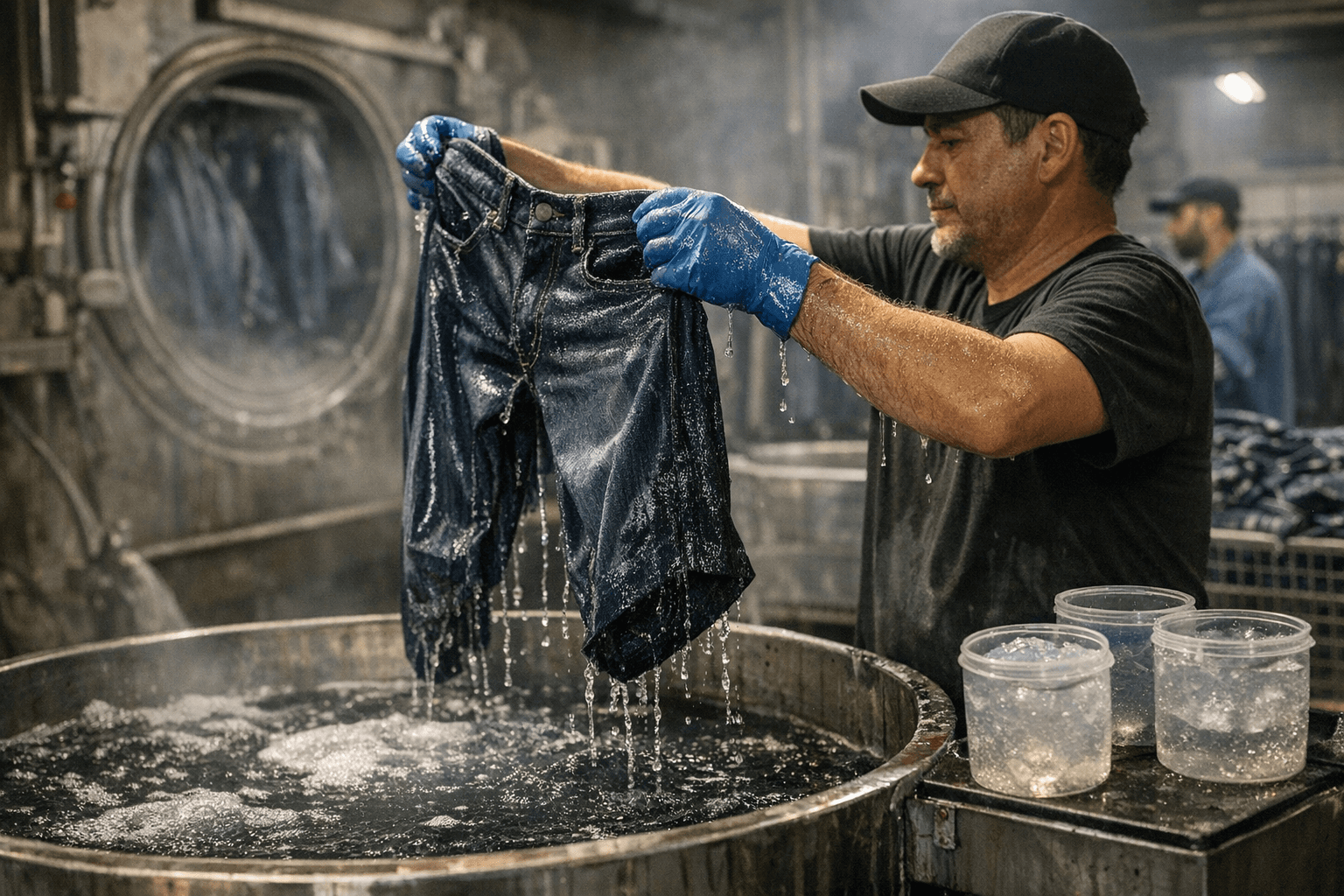
Soko Chimica was trying to turn one of denim’s most water-thirsty rituals into a single bath. The Florence company says its Hydrogel process compresses an eight-step wash into one treatment, cuts water use by up to 85 percent and trims processing time by as much as 50 percent. It also says the method can deliver the coveted stone-bleached effect while reducing heating cycles, rinses and refills, the hidden plumbing that makes washed denim so resource-hungry.
The chemistry is the clever part. Soko says Hydrogel turns water into a high-viscosity medium, so active ingredients stay closer to the surface of the fabric instead of racing deep into the fibers. In the company’s telling, that slows penetration, reduces fiber degradation and helps protect fabric strength, including on elastane yarns that can be unforgiving under aggressive finishing. Soko says the result is a gentler wash with less stress on the cloth, and a cleaner hand on denim that still needs to look convincingly broken-in.
What makes the pitch more than a lab flourish is the production angle. Industry coverage says Hydrogel can run in existing washing machines, which matters because retrofit friction often kills promising chemistry before it reaches the factory floor. One cited benchmark is stark: a complete raw-to-bleached wash can be done in a single gel bath using about four liters of water per piece, versus 30-plus liters in conventional methods. That gap is the kind of number mills understand immediately, but cost per cycle, throughput at scale and third-party validation will decide whether Hydrogel becomes a standard or stays an elegant exception.
Soko’s broader story gives the technology some industrial weight. The company is based in Florence, at Via Scarlatti 5R-7R, and says its business stretches back three generations in textile chemical auxiliaries, with roots in the early 1900s under the Urbini family. Its Projects Division is positioned as a supply-chain R&D hub, and Hydrogel sits beside earlier low-impact denim work such as ozone-based fading and dry-condition effects. Luca Braschi, Soko’s marketing and technology manager, called Hydrogel a “game-changer” because it rethinks water itself. He said the company was seeing industrial adoption of Hydrogel and Lumia as brands search for more ambitious sustainability tools. The real test now is whether this gel-first logic can scale beyond denim, and beyond the promise of a better fade, into a repeatable chemistry that factories can live with every day.
This article was produced by Prism’s automated news system from verified source data, official records, and press releases, then run through automated quality and moderation checks before publishing. The system is built and supervised by the people who set the standards it runs under. Read our full AI policy.
Did this article answer your question?


