Stella McCartney Joins TIME's 2026 Earth Awards Honoring Climate Change Champions
Stella McCartney lands on TIME's global cover for the 2026 Earth Awards, recognized for 25 years of proving luxury fashion doesn't require harm to animals or the planet.
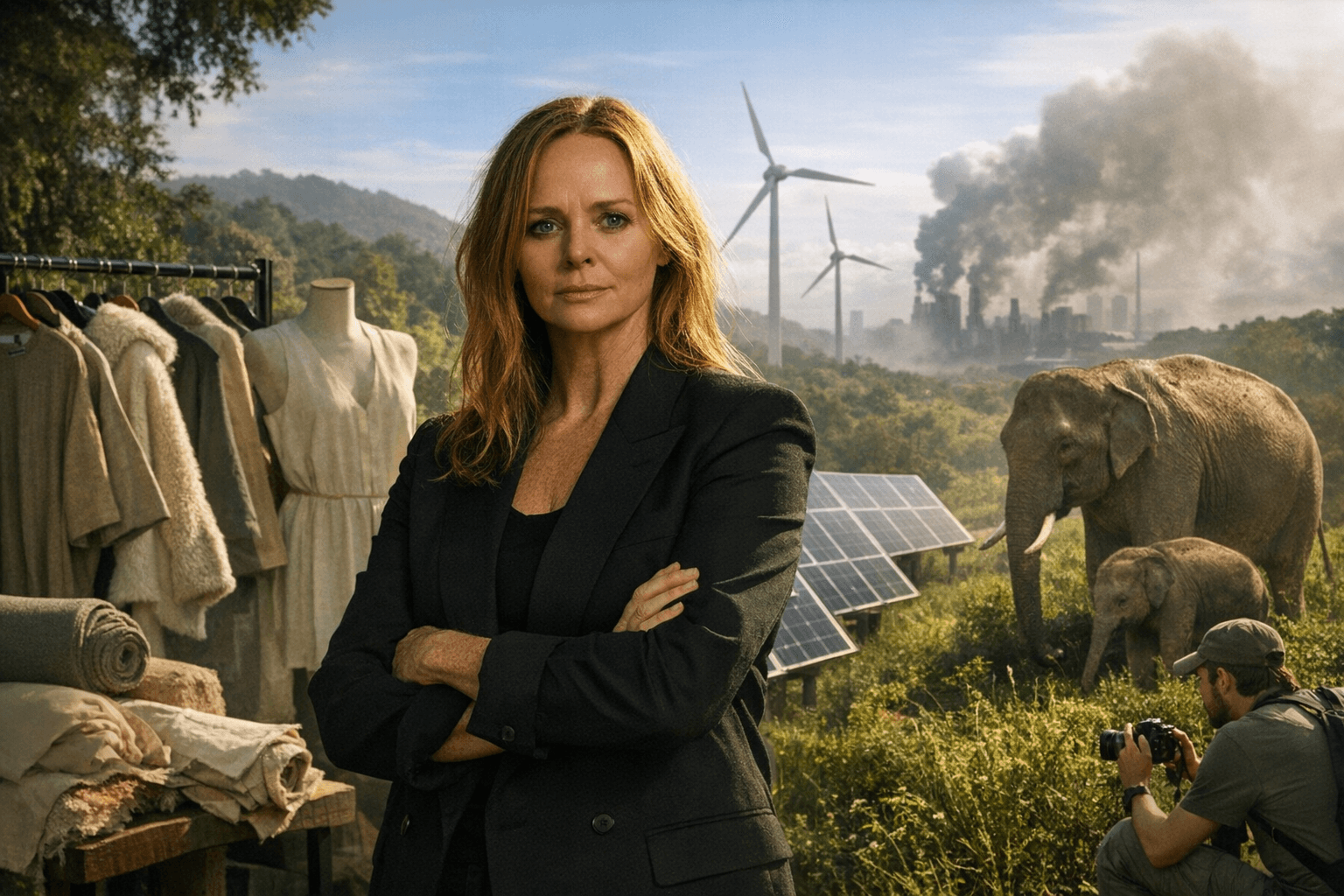
Stella McCartney landed on TIME's global cover this week as one of four honorees in the magazine's 2026 Earth Awards, a recognition the U.K. designer has spent 25 years quietly earning by refusing to use animal-derived materials at a time when the luxury industry treated leather and fur as non-negotiable.
TIME framed McCartney's distinction plainly: over the past quarter century, she has shown "that you don't need to harm animals or the environment in the name of luxury fashion." That sentence carries real weight in an industry that still treats cruelty-free as a trade-off rather than a design brief. McCartney built a house that never accepted that premise, pioneering alternatives to animal-based fabrics before the vocabulary of sustainable fashion even existed in boardrooms.
"I would like to think that I'm trying to contribute in a positive way to my time here," McCartney told TIME. "I hope to inspire and just let other people know that you can have a business model that works in that way." The daughter of Paul and Linda McCartney, she grew up with activism and a respect for nature woven into daily life, values she carried directly into her collections rather than leaving them at the studio door. Going forward, TIME notes she is moving beyond her own label to work as an advocate, adviser, and champion of responsible practices across the broader fashion industry.
McCartney shares the 2026 class with three honorees whose work spans corporate sustainability, global energy equity, and Indigenous climate leadership. Jesper Brodin, former CEO of Ingka Group, the primary operator of Ikea's stores, made the list for demonstrating that a profitable retail giant can simultaneously cut its carbon footprint. He is now taking that proof of concept into corporate consulting, advising C-suite leaders on embedding sustainability at the center of business strategy rather than the margins.
Damilola Ogunbiyi, CEO and Special Representative of the U.N. Secretary-General for Sustainable Energy for All and Co-Chair of U.N.-Energy, was honored for her commitment to making the green transition both swift and equitable. Originally from Nigeria, Ogunbiyi has led cross-sector, cross-geographic collaboration through the U.N. and SEforALL with an explicit focus on closing the global energy gap rather than allowing it to deepen along existing economic fault lines.
Hindou Oumarou Ibrahim, president of the Indigenous women and peoples association of Chad, rounds out the class as a global advocate for bringing Indigenous communities' expertise into the highest levels of climate decision-making. TIME described her work as elevating "the expertise and experiences of local communities at the highest levels of decision making," a role that addresses one of the most persistent blind spots in international climate negotiations.
TIME described this year's group as "a particularly international group of honorees," and the geography bears that out: the United Kingdom, Sweden, Nigeria, and Chad, four countries representing four distinct entry points into the same planetary crisis. The Earth Awards package published March 18, and for fashion readers, the cover alone marks a specific kind of cultural moment: a designer who bet her entire brand identity on the idea that conscience and craft belong together is now the face of the most urgent story of our time.
This article was produced by Prism’s automated news system from verified source data, official records, and press releases, then run through automated quality and moderation checks before publishing. The system is built and supervised by the people who set the standards it runs under. Read our full AI policy.
Did this article answer your question?


