Students Teach Repair Skills at Campus Thrift Fair Tackling Fast Fashion
Students patched, hemmed, and swapped their way through a campus repair fair last week, as 92 million tonnes of garments hit landfills each year and Gen Z quietly reshapes fashion.

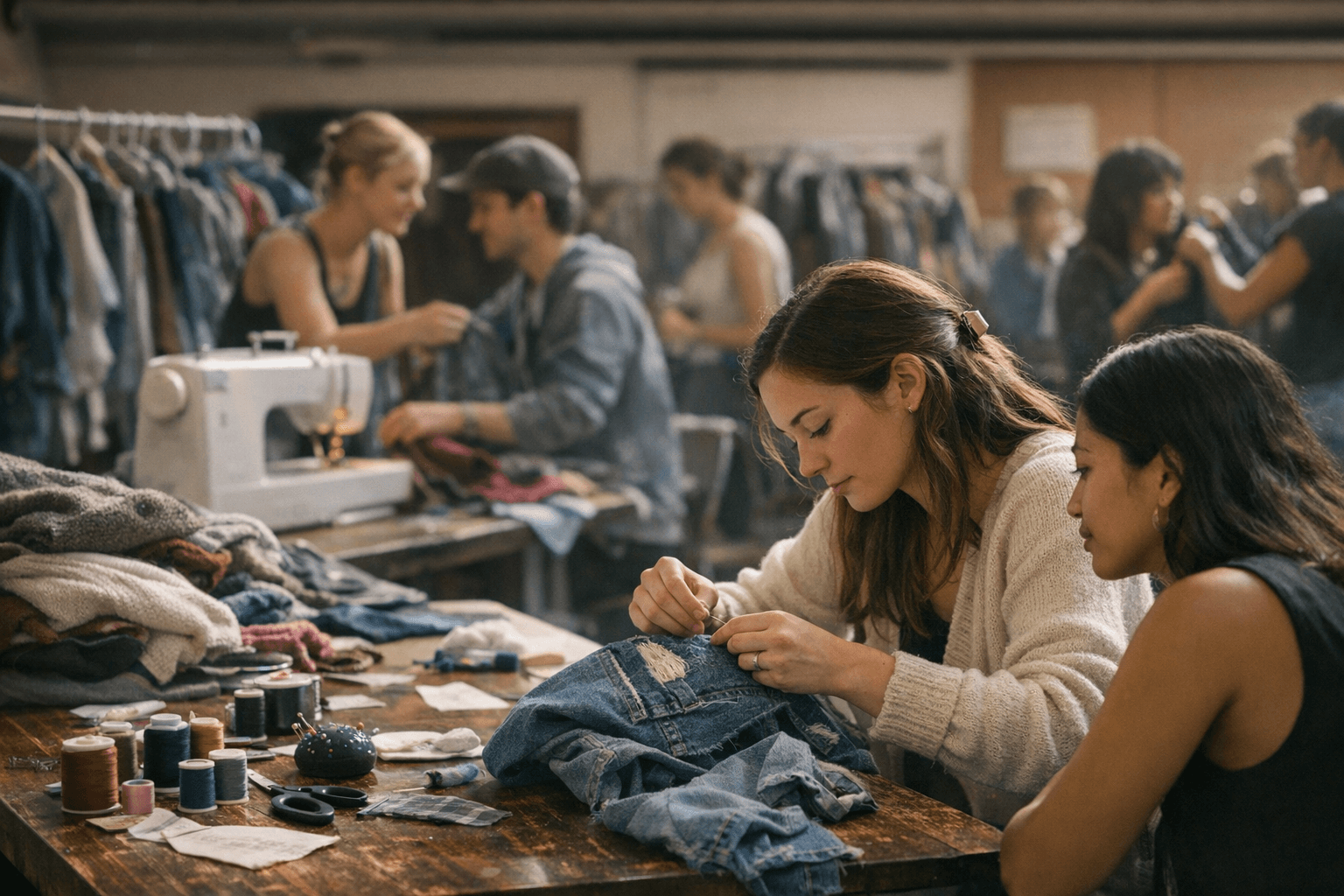
Five stations. A pile of donated clothes. A needle, a button bar, and a tin of shoe polish. The campus Thrift and Repair Fair held on April 7 by students enrolled in the Honors seminar "The History & Future of Thrifting & Secondhand Economies" was not a symbolic gesture; it was a working model, hands-on and free, for what it actually takes to pull a garment back from the edge of a landfill. Students ran every station themselves: patching holes, hemming raw hems, fixing broken backpack straps, polishing scuffed leather shoes, and staffing a peer-sourced clothing exchange where attendees could walk away with something new-to-them without spending a dollar. The goal was concrete: leave with one repaired hero piece and one thrifted staple.
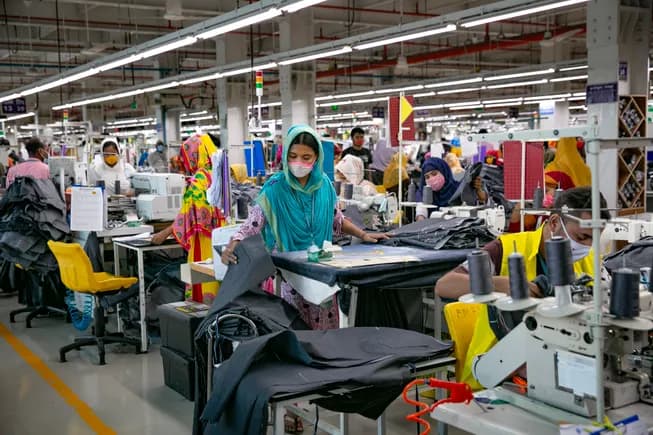
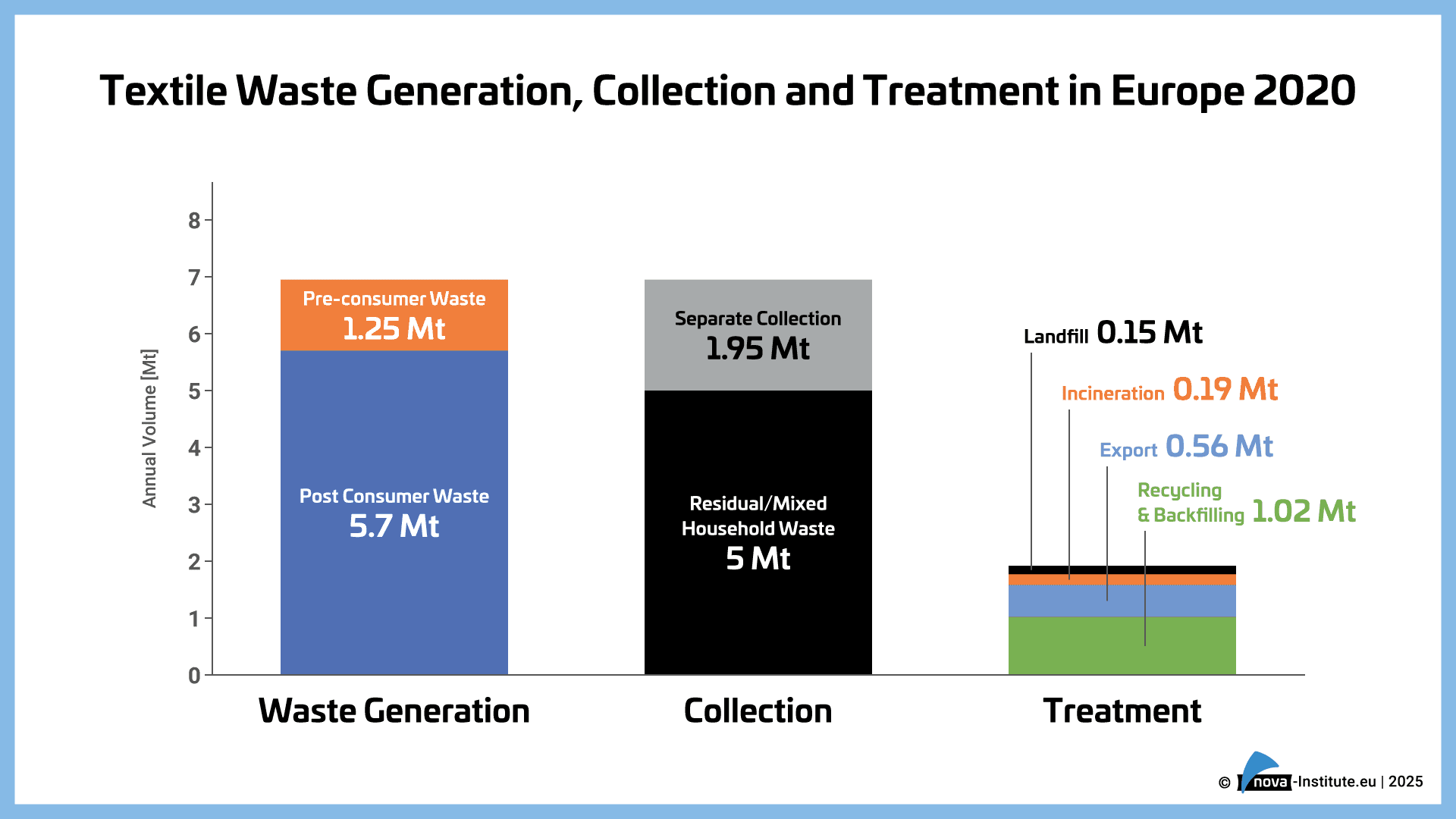
The industry those students are pushing back against is operating at a scale that makes repair look almost quaint by comparison. Until you look at the math. Fashion production now accounts for approximately 10% of total global carbon emissions, roughly equivalent to the entire European Union's annual output. Of the 100 billion garments manufactured each year, 92 million tonnes end up in landfills. At current trends, that figure is projected to climb to 134 million tonnes per year by the end of this decade. Even putting clothes in the wash contributes: laundering releases an estimated 500,000 tonnes of microfibers into the ocean annually, the equivalent of 50 billion plastic bottles. The fast fashion industry driving this damage is not decelerating. It was valued at $150.82 billion in 2025, up 10.74% from 2024, and is projected to reach $291.1 billion by 2032.
That context is why the repair station model matters beyond any single afternoon event. The five-station format from the April 7 fair offers a replicable blueprint that any campus or community group could execute in an afternoon with modest resources. Patching and darning tackle the most common failure points in worn denim and knitwear. Hemming opens up the secondhand rack to anyone who has passed over an otherwise perfect pair of trousers because the break was wrong. Backpack repair extends the life of gear that gets replaced by habit rather than necessity. Shoe polishing restores leather that reads as dead but isn't. The clothing exchange removes the purchase transaction entirely, replacing it with a direct swap. The intake system is straightforward: participants bring a garment or accessory in need of repair, or a piece they no longer wear, and station volunteers assess and work through each item. No appointment, no fee, no minimum purchase.
The volunteers themselves are the curriculum. Faculty framing for the seminar positions the fair as experiential learning tied to the historical and economic study of secondhand markets, which means students arrive at the stations having studied the forces that made repair necessary, then marginal, then urgently relevant again. That academic grounding separates the event from a casual clothing swap and gives participants something to take home beyond a hemmed pair of jeans: a framework for understanding why they're doing it.
The students running those stations belong to the first generation for whom secondhand is the default mode, not the fallback. According to ThredUp's Resale 2025 report, 64% of Gen Z shoppers search secondhand before purchasing new clothing. The global secondhand apparel market is on track to reach $367 billion by 2029, expanding 2.7 times faster than the broader global apparel industry. In 2024 alone, the secondhand market grew 15%, accounting for 9% of total global apparel spending. U.S. secondhand sales increased 14% from 2023 to 2024; in 2023, clothing resale grew 15 times faster than general retail apparel. Forty percent of apparel items purchased in 2023 were secondhand. The hashtag #secondhand had accumulated 1.6 billion TikTok views as of 2022, and eBay listings with "thrifted" in the title rose 400% between 2023 and 2024. Goodwill Industries posted $7 billion in revenue in 2025, its strongest year on record, processing 300 million transactions with $450 million generated through e-commerce alone. These are not niche numbers. The secondhand market is a structural shift in how apparel moves through the economy, and the repair instinct is embedded in the same cultural logic.
The repair stations also connect to a far longer history than most participants likely realized. In 18th-century Britain and Holland, young girls learned mending as a formal educational skill, practiced on darning samplers the way students today practice scales or conjugations. The most direct historical precedent is Britain's World War II "Make Do and Mend" campaign, a government-backed initiative that promoted clothing repair and repurposing as a patriotic duty, disseminated through official booklets, posters, and magazines. As analyzed by the Cooper Hewitt, Smithsonian Design Museum, the cultural norm at the time was to conceal repairs: mending was done to be invisible, to erase evidence of wear rather than display it. The contemporary visible mending movement, exemplified by the Edinburgh Street Stitchers, who set up monthly in the streets of Edinburgh with sewing baskets and embroidered banners, consciously inverts that tradition. Their repairs are meant to be seen, turning a patched elbow or a darned knee into a declaration against throwaway culture rather than an admission of poverty.
The seminar's fair is not happening in isolation. At East Carolina University in Greenville, North Carolina, the Honors College launched "Pirate Swap" in spring 2023, a student-run pop-up thrift store built explicitly to combat fast fashion on campus. It remains active as of early 2026, running semester-by-semester sorting events staffed by student volunteers. Michigan State University's Thrift Club has pursued comparable programming since 2024. The Honors framing at each institution is notable: it positions campus sustainability action not as activism adjacent to the curriculum but as the curriculum itself, connected to the economic and historical forces that make secondhand markets what they are.
Forty-one percent of Gen Z and millennial shoppers say they are less likely to buy a clothing item if it lacks good resale value, according to recent consumer data. That number signals something more significant than a shopping preference: a generation that factors exit strategy into purchase decisions is already thinking about garments the way repair culture demands. The students who staffed the April 7 stations were not teaching their peers a lost art. They were accelerating a shift that is already underway, one hem and one patch at a time.
This article was produced by Prism’s automated news system from verified source data, official records, and press releases, then run through automated quality and moderation checks before publishing. The system is built and supervised by the people who set the standards it runs under. Read our full AI policy.
Did this article answer your question?