Textile and laundry innovations for microfiber pollution mitigation: a comprehensive review
Synthetic textiles shed up to 0.5 million tonnes of microplastics into oceans yearly. Here's every lever scientists say can stop them, from fiber engineering to France's landmark filter law.
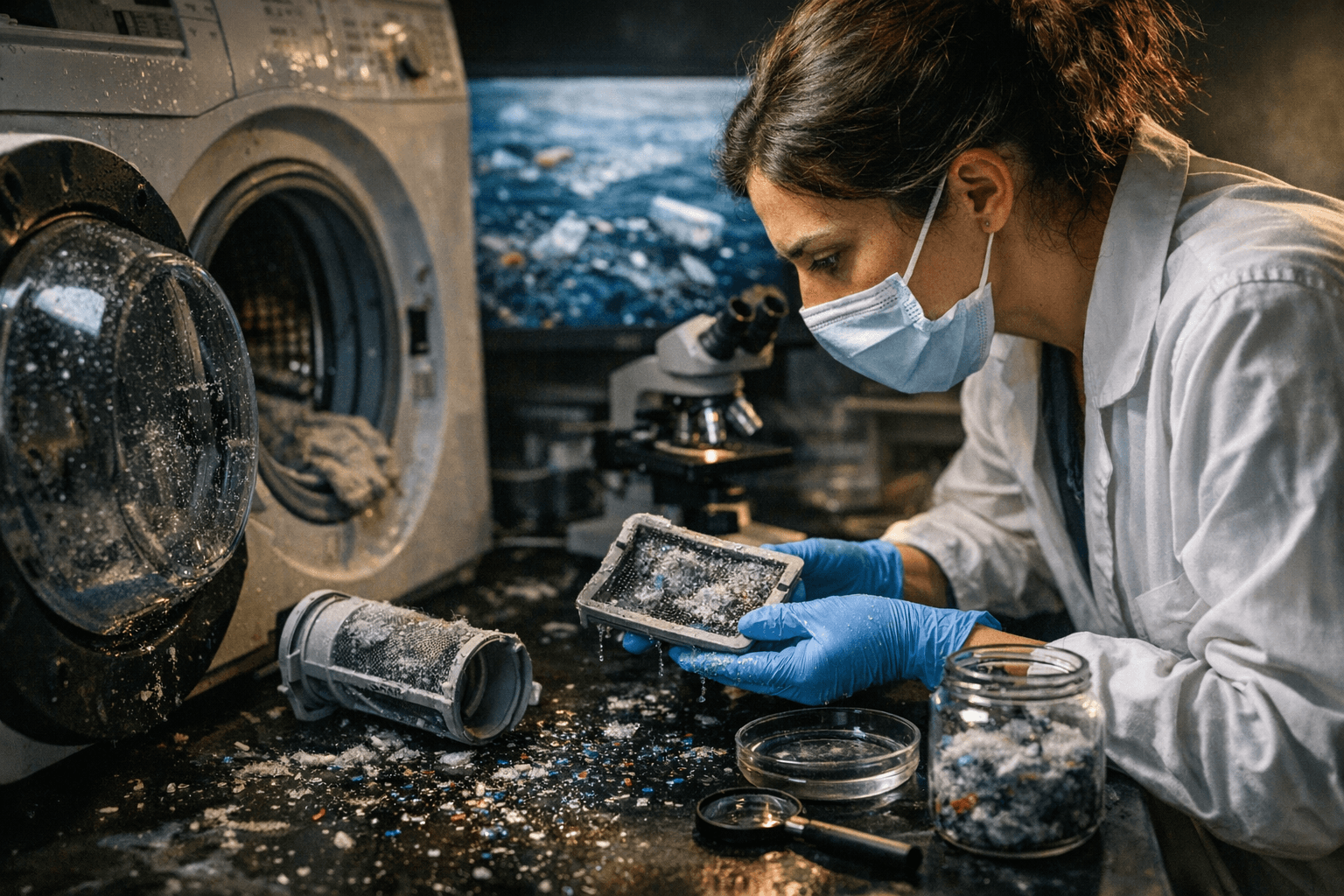
Half a million tonnes. That's how much microplastic synthetic textiles discharge into the world's oceans every year, accounting for an estimated 35% of all ocean microplastic pollution. Each wash cycle releases up to 1,900 individual microfibers from a single garment, fibers so small they slide straight through conventional wastewater treatment and into aquatic ecosystems. A sweeping new review synthesizing 14 years of literature, from 2010 through 2024, maps out every available intervention: the science of making fibers that shed less, the design decisions that compound or cancel out that progress, the filter and appliance technologies already on shelves, and the policy machinery finally catching up. The picture that emerges is less a single fix and more an interlocking system, one that only works if textiles, appliances, regulation, and ecology research move in the same direction at the same time.
Engineering Fibers That Shed Less
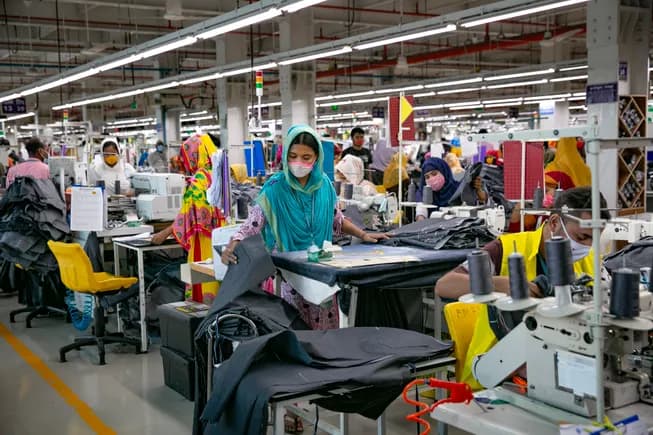
The most upstream intervention is also the most promising: building microfiber release out of the material itself before a garment ever reaches a consumer's wardrobe. The review evaluates three distinct fiber engineering approaches. Low-shedding constructions alter yarn twist, fiber length distribution, and surface bonding so that individual filaments resist detachment under mechanical stress. Surface treatments, which can include coatings or chemical finishes, add a protective outer layer that reduces fiber breakage during agitation. Biodegradable blends take a different philosophical angle entirely: instead of preventing the fibers from releasing, they engineer fibers that break down once they enter aquatic environments rather than persisting for decades.
The trade-offs here are real and underscore why no single approach is a clean win. Treatments that reduce shedding can compromise recyclability, altering fiber chemistry in ways that disrupt sorting and reprocessing systems downstream. Biodegradable blends, meanwhile, may not perform adequately in mixed-waste recycling streams, where they can contaminate loads of conventional synthetics. Recycled polyester research adds one nuance worth noting: fabrics using a 70% blend of recycled polyester shed significantly fewer microfibers than those with a 40% recycled content, suggesting that blend ratios matter in ways the industry has barely begun to optimize.
Fabric and Garment Design: The Decisions Made Before the Factory Floor
Fiber chemistry sets the ceiling, but how a fabric is constructed and how a garment is cut and finished determines how close to that ceiling manufacturers actually get. The review identifies fabric and garment design as the second distinct intervention layer, one that operates through decisions about weave structure, seam placement, and finishing techniques.
Tightly woven or knitted constructions physically entrap fiber ends that would otherwise work loose during washing. Garment construction details, including edge finishes and internal seam types, affect how much surface area is exposed to friction. These choices sit entirely within existing manufacturing infrastructure; they require no new materials and no new machinery. The challenge is that design for low shedding has rarely been a procurement criterion, and without standardized shedding tests, brands have no consistent way to specify or verify it.
Laundry Technology: Machines, Filters, and Chemistry
The third intervention layer is where most consumer-facing solutions currently live. The review examines three distinct categories within laundry technology.
Machine architecture matters more than most people realize. Front-loading washers, which tumble clothes through a small pool of water, generate less friction than top-loading agitator machines and release correspondingly fewer fibers. Drum geometry, water volume, and agitation cycle design all influence shedding rates. A 2020 study by Northumbria University and Procter & Gamble found that switching to colder, shorter wash cycles can dramatically reduce microfiber release, and washing full loads further reduces shedding by decreasing the water-to-fabric ratio and limiting the mechanical friction each garment experiences.
Filtration devices, both built into machines and retrofitted as at-source add-ons, represent the most immediately scalable capture solution. A 2018 University of Toronto study found that one category of after-market washing machine filters captured 87% of microfibers shed by fleece blankets. The review examines the performance landscape across commercial and experimental filtration designs, noting that while capture rates vary, the fundamental technology is proven. The gap is in standardization and mandated adoption.
Modified detergent chemistry rounds out the laundry category. Certain formulations, including some fabric conditioners, reduce fiber-to-fiber friction and have been shown to lower microfiber release. The relative performance of liquid versus powder formats and the role of specific surfactants in fiber damage remain areas of active investigation.
Policy and Governance: The Lever That Forces Scale
Individual brand decisions and consumer behavior changes are useful but insufficient. The review is direct about this: governance and policy are the fourth and, in terms of system-level impact, arguably the most powerful intervention.
France has moved furthest. Under the AGEC (Anti-Waste and Circular Economy Law), all new washing machines sold in France must include a certified microfiber-capture solution as of January 1, 2025, making France the first country to legislate this requirement. The European Union is now actively considering bloc-wide equivalents. If the EU adopts a unified mandate, it would create a single massive market signal, forcing global appliance manufacturers and textile producers to comply at a scale that voluntary industry commitments have never achieved. Cities like Toronto already face staggering contamination loads: estimates suggest 23 to 36 trillion microfibers enter the Lake Ontario watershed from the city alone each year, a figure that reframes filter mandates from a nice-to-have to a basic infrastructure question.
The review also calls for industry standards for low-shedding materials, the kind of harmonized testing protocols that would let procurement teams specify and verify microfiber performance across supply chains. Without a shared measurement standard, brands cannot credibly compare materials, and regulators cannot set enforceable thresholds.
The Systems Roadmap: Why Piecemeal Solutions Fall Short
The review's closing argument is its most important: no single intervention solves the microfiber problem, and optimizing one layer while neglecting others produces at best marginal gains and at worst new trade-offs. A biodegradable fiber that escapes through an unfiltered drain still reaches the ocean. A high-efficiency filter on a washing machine still does nothing about fibers shed during garment manufacturing or dry wear. A low-shedding finish that compromises recyclability shifts the problem from aquatic ecology to the waste stream.
The evidence-based Systems Roadmap the review proposes asks for coordinated regulation that aligns across the textile, appliance, and water treatment sectors; industry standards that make low-shedding performance measurable and mandatory; sustained investment in laundry and appliance capture technology; and interdisciplinary research that explicitly links material science outcomes to measurable ecological impacts. That last point is a quiet rebuke to siloed academic work: the fiber scientists and the aquatic ecologists need to be in the same conversation, measuring success by the same metrics.
The scale of the problem, 500,000 tonnes of microplastic annually from textiles alone, is not going to yield to better consumer habits alone. The solutions already exist across fiber labs, appliance R&D departments, and legislative chambers. The question now is whether the system can be coordinated quickly enough for that science to outpace the contamination already accumulating in sediments, fish tissue, drinking water, and the human body itself.
This article was produced by Prism’s automated news system from verified source data, official records, and press releases, then run through automated quality and moderation checks before publishing. The system is built and supervised by the people who set the standards it runs under. Read our full AI policy.
Did this article answer your question?