Textile Exchange publishes cotton Life Cycle Assessment (first in a series)
Textile Exchange mapped cotton's real environmental footprint across nine countries and four production systems, giving brands the granular Scope-3 data they've been missing.
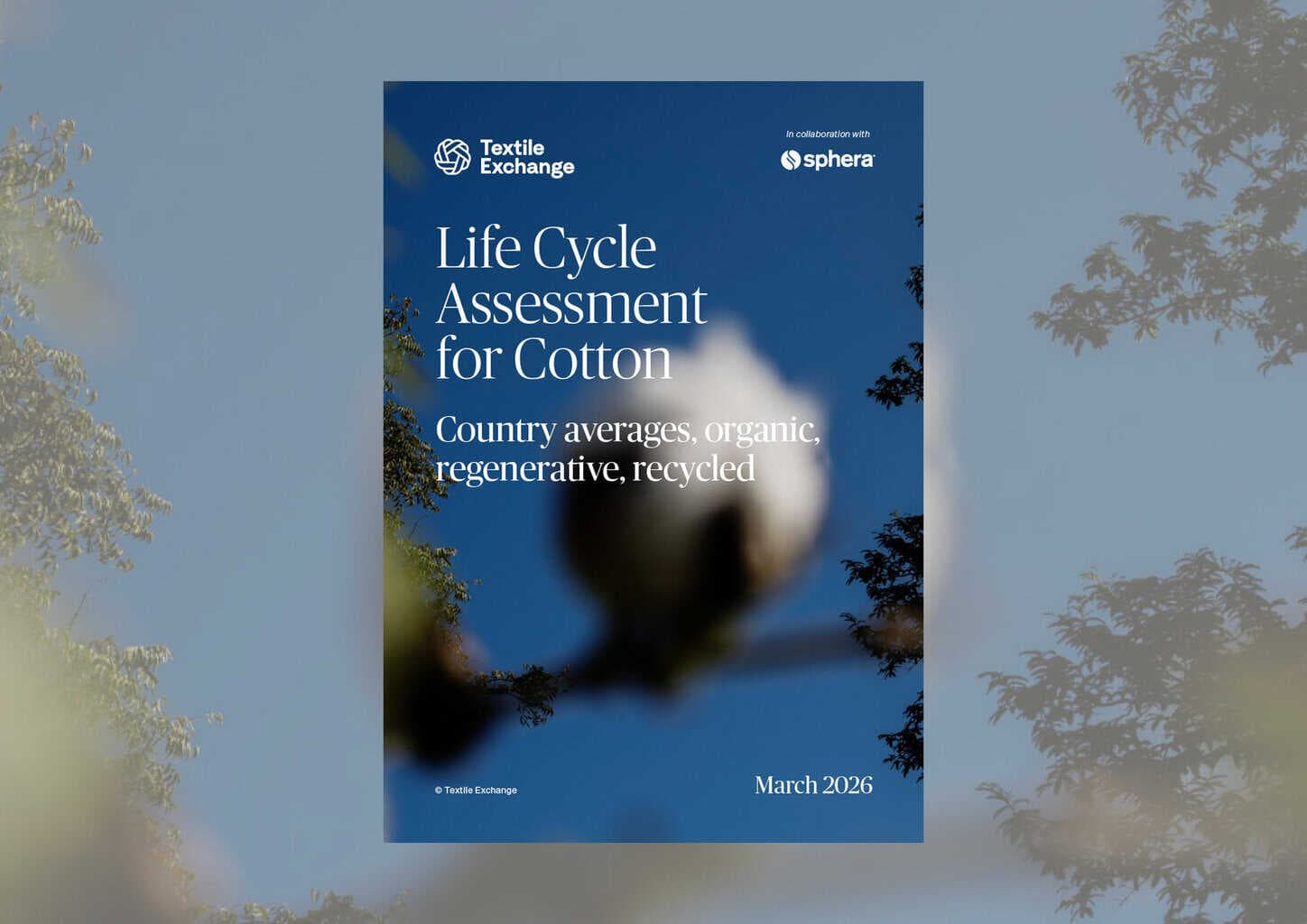
Seven studies. Nine countries. Four production systems. That is the architecture of Textile Exchange's new LCA+ series, and the cotton installment, published March 26, is already the most rigorous fiber impact dataset the industry has seen — precisely because it refuses to treat cotton as a single undifferentiated thing.
For years, brands building Scope-3 emissions models have leaned on averages that flatten enormous variation: conventional Indian cotton counted the same as organic Peruvian cotton, regenerative American cotton lumped in with recycled fiber from Bangladesh. Textile Exchange's new study breaks that habit. Country-specific impact factors now cover nine major producing nations, including Brazil, China, Pakistan, Tanzania, Turkey, and the United States, giving sourcing teams and sustainability directors actual numbers to work with rather than educated guesses dressed up as data.
The methodology itself is the story. Textile Exchange built the study on ISO LCA standards and subjected it to independent expert review, which matters in a space where self-reported impact claims have eroded trust. But the organization pushed further with what it calls the LCA+ approach, extending conventional lifecycle indicators to capture biodiversity, soil health, and social impacts where the science supports it. That framing acknowledges something the industry has been slow to accept: greenhouse gas emissions are not the whole picture, and a low-carbon cotton grown through practices that strip soil biology is not a win.
Cotton is the opening act in a seven-study series scheduled to run through 2026 and 2027. Polyester, cashmere, nylon, leather, and responsible wool and mohair are all queued, which means Textile Exchange is building a comparative library across the fibers that collectively define the global apparel supply chain. The ambition is to make non-representative averages obsolete, not just for cotton but for the full raw material palette brands rely on.
The practical stakes are significant. Scope-3 emissions, the indirect emissions embedded in a brand's supply chain, are where the majority of fashion's climate impact actually lives, and they are also the hardest to measure credibly. Better input data at the fiber level ripples forward into more defensible reporting, more targeted sourcing decisions, and eventually more honest conversations between brands and the regulators increasingly demanding disclosure.
Cotton alone touches hundreds of millions of people across its growing, ginning, spinning, and finishing stages. Getting its impact data right is not a technical footnote. It is the foundation.
This article was produced by Prism’s automated news system from verified source data, official records, and press releases, then run through automated quality and moderation checks before publishing. The system is built and supervised by the people who set the standards it runs under. Read our full AI policy.
Did this article answer your question?


