Textile Recycling Gains Momentum as Brands Join Forces to Scale
Textile recycling is no longer a lab bet. The real bottleneck is coordination, and brands are finally starting to line up around standards, collection and demand.

Textile recycling is hitting the part nobody can glamorize: logistics. The chemistry matters, sure, but the bigger problem now is whether brands, sorters, recyclers and retailers can agree on the same feedstock, the same collection flow and the same buying commitments. Less than 1 percent of textiles globally are recycled back into new textiles, so the industry is not short on ambition. It is short on alignment.
Why scale is the whole game
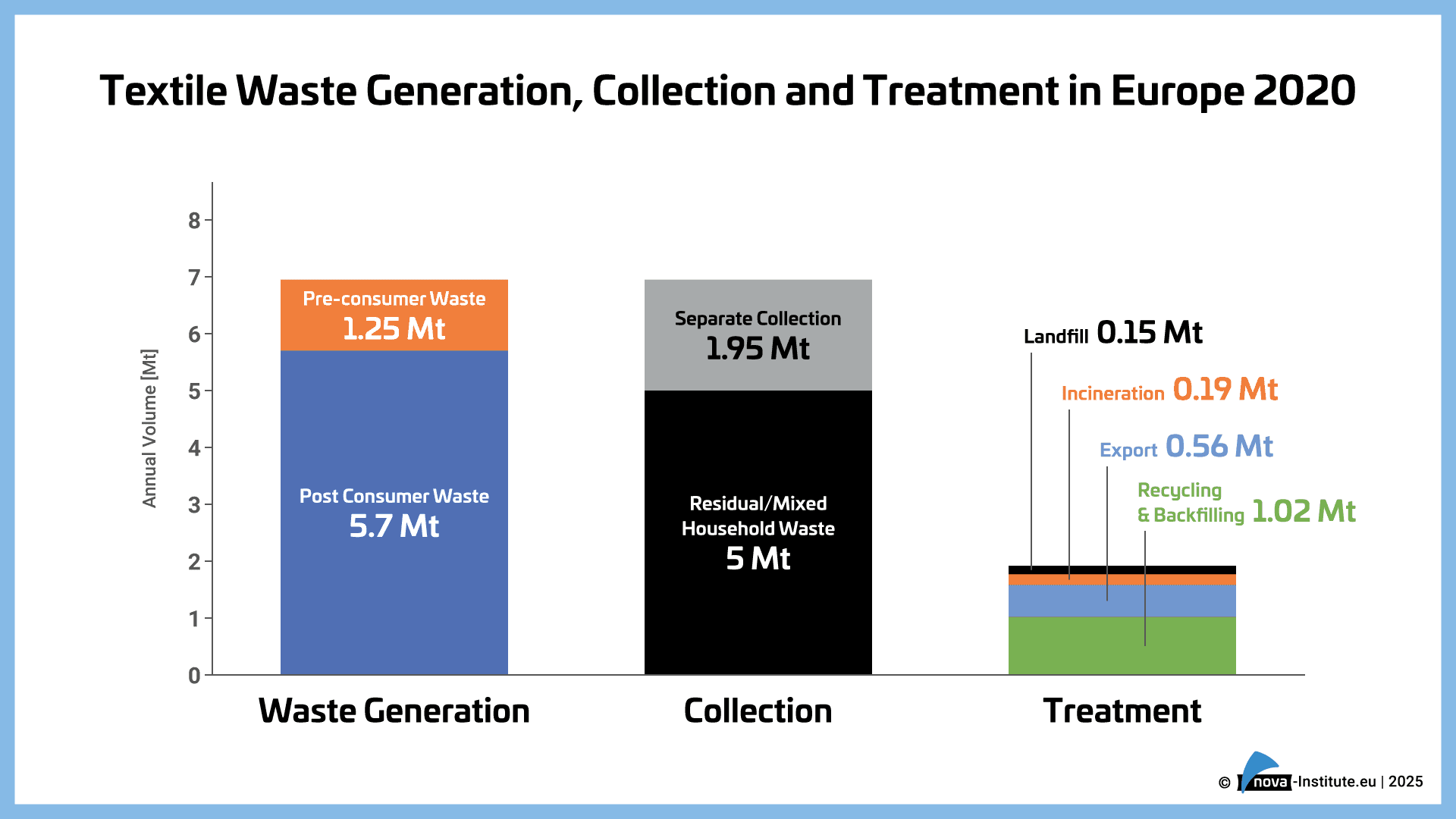
The pressure is not abstract. The European Union generates 12.6 million tonnes of textile waste every year, about 12 kilograms per person, and the U.S. Environmental Protection Agency estimated that textiles made up 17 million tons of municipal solid waste in 2018. The European Commission’s 2030 textiles vision is blunt about where this has to land: products sold in the EU should be durable, repairable, recyclable and largely made from recycled fibres, with enough recycling capacity to keep material out of incinerators and landfills. That is not a mood statement. It is a market design.
What makes this moment different is that the conversation has moved from “Can textile-to-textile recycling work?” to “Who is going to make the whole chain work together?” That is the real industry question, and it is why the current wave of collaboration matters more than any single pilot or headline-grabbing material launch.
The bottleneck is not just technical
The cleanest way to understand the problem is to look at the messy middle. Fashion for Good’s Feedstock Activation Europe project says sorters still cannot viably prepare post-consumer material at the price, quantity and quality recyclers need. That is the choke point. If the incoming material is inconsistent, if collection is uneven, if preprocessing is too expensive, then even the best recycler ends up starving for feedstock.
That is why the panel WWD brought together matters. Representatives from Accelerating Circularity, Target, Unifi, Reju and Elevate Textiles, including Sarah Coulter, Katrin Ley, Eva von Alvensleben, Dennis Nobelius and Karla Magruder, were essentially describing the same reality from different points in the chain: recycling at scale is an alignment problem. Feedstock standards need to be clearer. Collection systems need to be more reliable. And offtake commitments need to be strong enough that someone can actually finance the buildout.
This is where the fashion industry has to get less dreamy and more industrial. Recyclers cannot keep taking every fiber fantasy on faith. They need predictable input and predictable demand. Without both, scale stays stuck in pilot mode.
The first serious collaborations are already forming
Fashion for Good and The Fashion Pact are trying to push the sector past that stall point with the Circular Fibre Collective, a cross-industry initiative designed to accelerate the adoption and scaling of textile-to-textile recycled and next-generation fibres. That kind of umbrella effort matters because it gives the market a shared agenda instead of a dozen siloed experiments. When everybody is solving a slightly different version of the same problem, nobody gets to the finish line.
Target is making a similar bet, but from the retail side. The company says it is investing in Accelerating Circularity U.S. trials to identify the gaps in collection, sortation and preprocessing, then use that knowledge to bring post-consumer recycled textiles into new garments. Its 2024 Sustainability and Governance Report says the Universal Thread team launched the first products in Target’s owned-brand portfolio using recycled fibres from post-consumer garments and textiles, in collaboration with Accelerating Circularity. That is the kind of move that turns circularity from concept into a rack-ready business line.
The important detail here is not just that a big retailer is involved. It is that a big retailer is helping create demand for recycled feedstock. That is how you move the market from “nice pilot” to “we need more capacity, now.”
Policy is finally adding a spine
The policy side is catching up, and that changes the math. In 2025, the European Parliament adopted new textile waste rules that push the costs of collecting, sorting and recycling waste textiles onto producers, with national extended producer responsibility schemes to follow on a set timetable. That matters because it turns recycling from a voluntary side project into a structural cost of doing business. When the bill lands on the producer side, infrastructure stops looking optional.
The T2T Alliance, formed by Circ, Circulose, Re&Up Recycling Technologies and Syre, is making the same argument from a different angle: no single company can solve the textile waste crisis alone. The alliance exists to push policy that recognizes textile-to-textile recyclers, which is exactly the kind of signal the sector needs if it wants capital to flow into real capacity instead of endless demos.
Then there is T-REX, the EU-funded project that finished in May 2025. It produced a blueprint for scaling textile-to-textile recycling across Europe and demonstrated recycling pathways for polyester, polyamide 6 and cellulosic materials. That is a big deal because it shows the technology is no longer the obstacle. The remaining challenge is ecosystem design. The machinery is getting there. The market has to catch up.
What would actually unlock scale fastest
If brands want textile recycling to stop behaving like a perpetual pilot, the shared actions are not mysterious:
- Standardize feedstock. Brands need to agree on clearer material specs, fibre blends and contamination limits so sorters and recyclers are not forced to guess what they are getting.
- Build collection systems together. Separate brand-by-brand takeback programs waste money and confuse consumers. Shared collection and sorting infrastructure makes the stream denser, cleaner and more financeable.
- Sign real offtake commitments. Recyclers and processors need purchase commitments that justify new machinery, preprocessing capacity and long-term contracts.
- Back policy that rewards circular inputs. EPR rules and recognition for textile-to-textile recyclers create the certainty that private capital usually waits for.
That is the part of sustainable fashion people outside the industry never see: not the polished campaign, but the stubborn infrastructure beneath it. The future of recycled textiles will not be decided by one breakthrough material or one beautiful collection. It will be decided by whether the industry can finally act like a supply chain instead of a group chat.
Textile recycling is no longer waiting on proof. It is waiting on coordination, and the brands that help build it will define the next phase of fashion’s material economy.
This article was produced by Prism’s automated news system from verified source data, official records, and press releases, then run through automated quality and moderation checks before publishing. The system is built and supervised by the people who set the standards it runs under. Read our full AI policy.
Did this article answer your question?