Textile Recycling Inches Toward Scale in North America, But Gaps Remain
Less than 1% of discarded textiles are recycled globally, but a wave of U.S. plant announcements and landmark partnerships is pushing that number toward change.

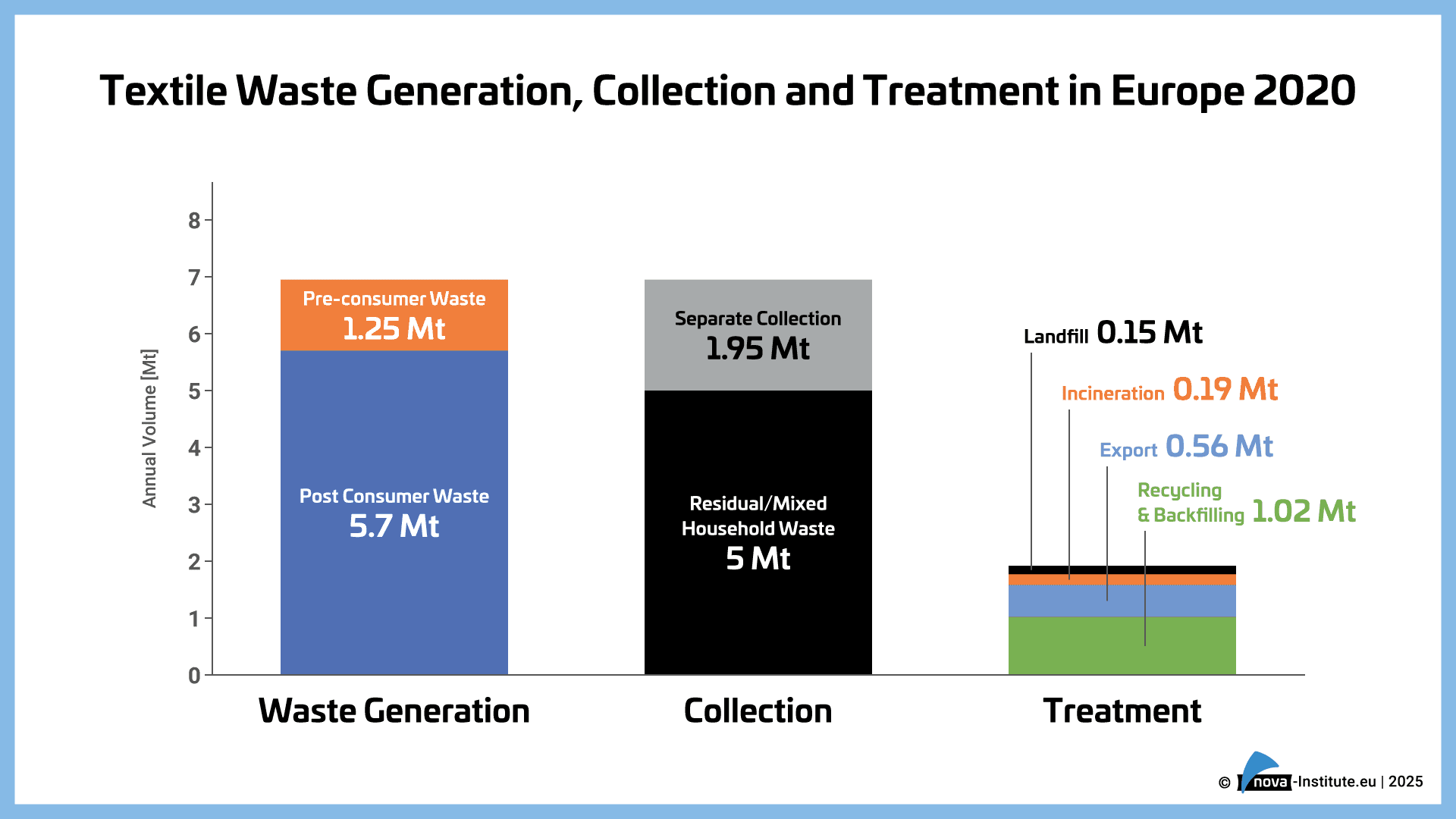
Less than 1% of clothing that isn't reused gets recycled globally today, and more than 80% of all clothing waste ends up in landfills. Those two numbers explain why the textile recycling sector is suddenly crowded with announcements, partnerships, and plant construction plans across North America.
Reju, a textile-to-textile regeneration company that opened its first Regeneration Hub in Frankfurt, is now working to establish a U.S. presence. Reports indicate the company is opening a plant in Rochester, though the state and operational timeline remain unconfirmed. What is confirmed is a multi-year collaboration with Goodwill and Waste Management to build out collection and sorting infrastructure on American soil. Goodwill, a network of 154 local nonprofits across the U.S. and Canada, and WM plan to run pilots collecting, sorting, and grading discarded textiles for resale. Materials unsuitable for resale are expected to feed Reju's future U.S. recycling facility as raw feedstock. "To tackle the challenges posed by discarded textiles, we need radical collaboration and cooperation, and through our potential project with Goodwill and WM, we are building the ecosystem to achieve textile circularity," said Patrik Frisk, Reju's CEO.
The collection problem is real at every scale. In Columbus, Ohio, the Solid Waste Authority of Central Ohio funded and coordinated a network of textile drop-off sites running through August 2025, funneling collected material to Leigh Fibers in South Carolina, where it gets recycled into vehicle insulation, furniture padding, and construction thermal insulation. "Locally, about 4% of the waste stream is comprised of these materials, putting clothing in the Top 10 most thrown-away items," said SWACO executive director Joe Lombardi.
On the manufacturing side, Selenis North America, a co-polyester supplier based in Fayetteville, North Carolina, partnered with Stockholm-based Syre in October 2024 to build a textile-to-textile recycling plant in Cedar Creek, North Carolina, with an estimated capacity of up to 10,000 metric tons of circular polyester per year. The plant was originally targeted to be operational by mid-2025, but the May 2025 closure of an Alpek PET flake and resin factory at the same location complicated that timeline. Selenis has maintained it still plans to build, though an updated operational date has not been confirmed.
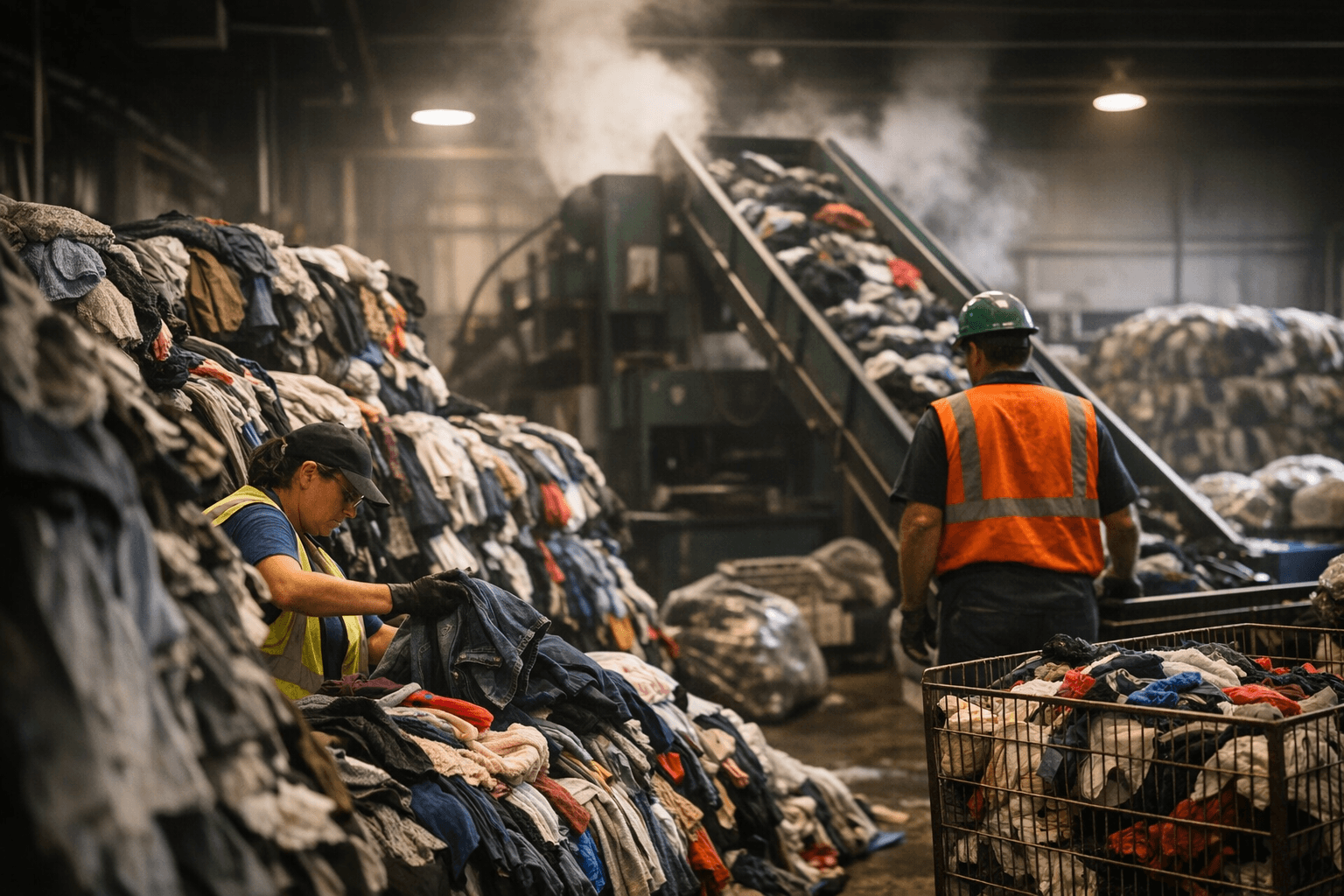
Virginia-headquartered Circ is pursuing a different technical challenge entirely: recycling polycotton blends, which have historically been considered unprocessable. The company announced a facility in Saint-Avold, France, targeting 70,000 metric tons of polycotton material per year, a capacity figure that would represent meaningful scale if achieved. Back in the U.S., Reju's partnership with French firm Nouvelles Fibres Textiles addresses one of the most persistent mechanical obstacles to recycling at volume: automatic sorting of garments and removal of disruptors like zippers and buttons that contaminate fiber streams.
Policy is starting to apply pressure from the other direction. California's Responsible Textile Recovery Act takes effect in 2027, requiring fashion brands to establish their own systems for textile recycling and reuse, effectively making product end-of-life a brand responsibility rather than a municipal one. CalRecycle is already ramping up extended producer responsibility implementation ahead of that deadline.
The industry is convening around these pressures. The inaugural Textile Recycling Expo USA takes place April 29-30, 2026 at the Charlotte Convention Center, with American Circular Textiles, a coalition of more than 30 circular fashion brands and supply chain stakeholders, signed on as a Founding Partner. Charlotte is not an arbitrary choice: it sits at the center of what remains of America's textile manufacturing geography, and the concentration of plant announcements in the Carolinas suggests the region is positioning itself as the operational core of the country's recycling buildout.
The infrastructure is being assembled piece by piece. Whether it reaches the scale needed to meaningfully close the gap between that 80% landfill rate and something approaching a circular system depends on whether the announced plants actually open, the pilots produce consistent feedstock, and brands treat the 2027 California deadline as a floor rather than a ceiling.
This article was produced by Prism’s automated news system from verified source data, official records, and press releases, then run through automated quality and moderation checks before publishing. The system is built and supervised by the people who set the standards it runs under. Read our full AI policy.
Did this article answer your question?