Textile-to-Textile Recycling Costs Too High for Viable Circular Economy
Europe recycles less than 1% of textiles back into textiles. A BCG and ReHubs report says fixing that will cost up to €11 billion, and the math still doesn't work.
A new report from Boston Consulting Group and ReHubs, titled "Advancing Textile Circularity," published from Brussels on March 23, 2026, delivers a verdict the industry has long dreaded: the economics of textile-to-textile recycling simply do not work at scale. Recycled textile fibres represent a new product category with structurally higher processing costs, and under current market conditions they cannot compete with incumbent recycled materials or virgin fibres without targeted policy support and enabling mechanisms.
The report estimates that up to €11 billion in investment will be needed across the value chain, including brands, retailers, manufacturers and recyclers, to scale textile-to-textile recycling by 2035. That figure covers capital expenditure alone. Reaching the necessary tipping point will also require between €5 billion and €6.5 billion in annual operating costs. The combined pressure on private capital is substantial, and the report is candid about why that capital has not materialized: private companies, including recyclers, yarn manufacturers and fashion brands, are expected to provide much of the investment, but only if the industry can make the economics work.
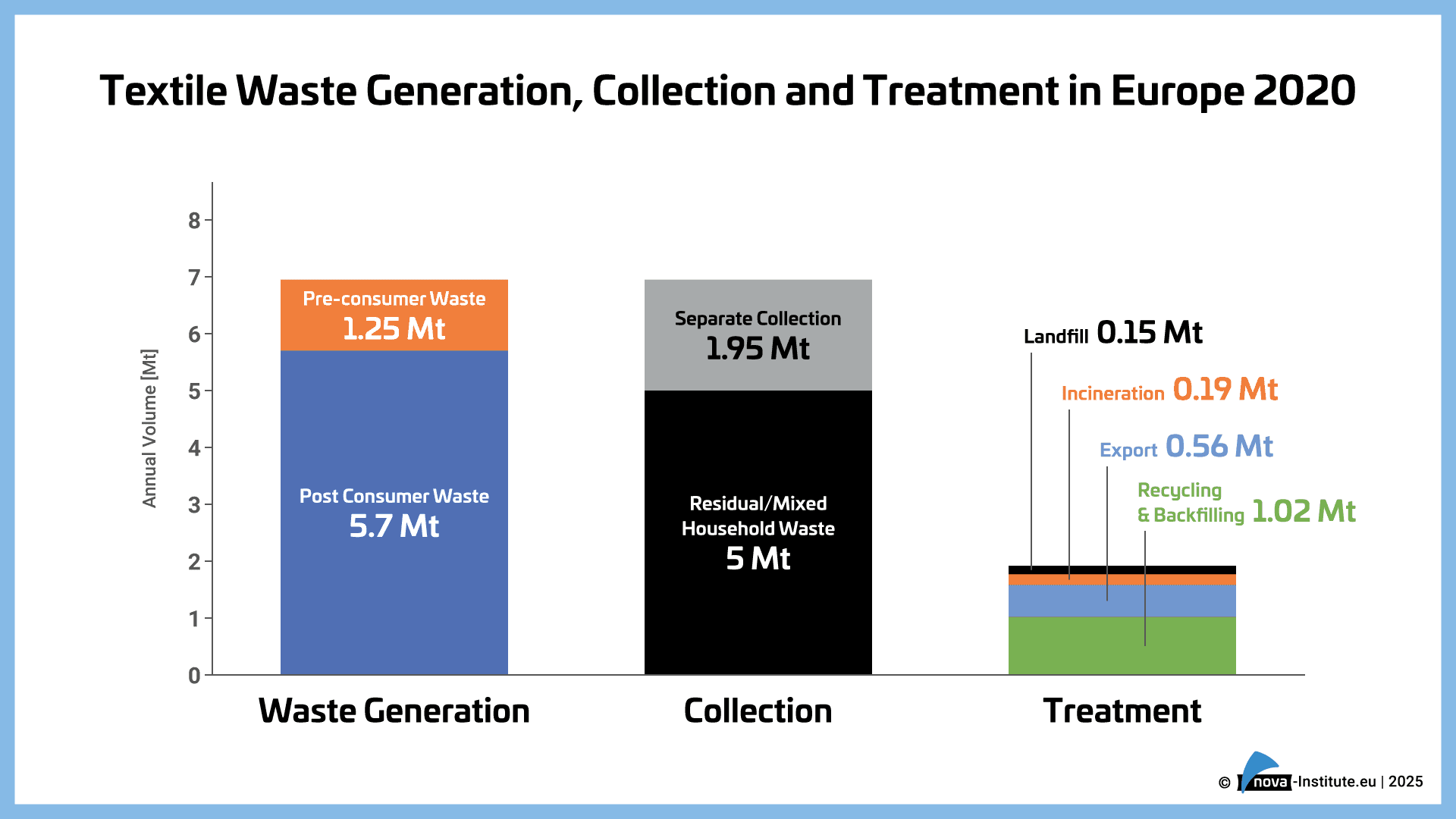
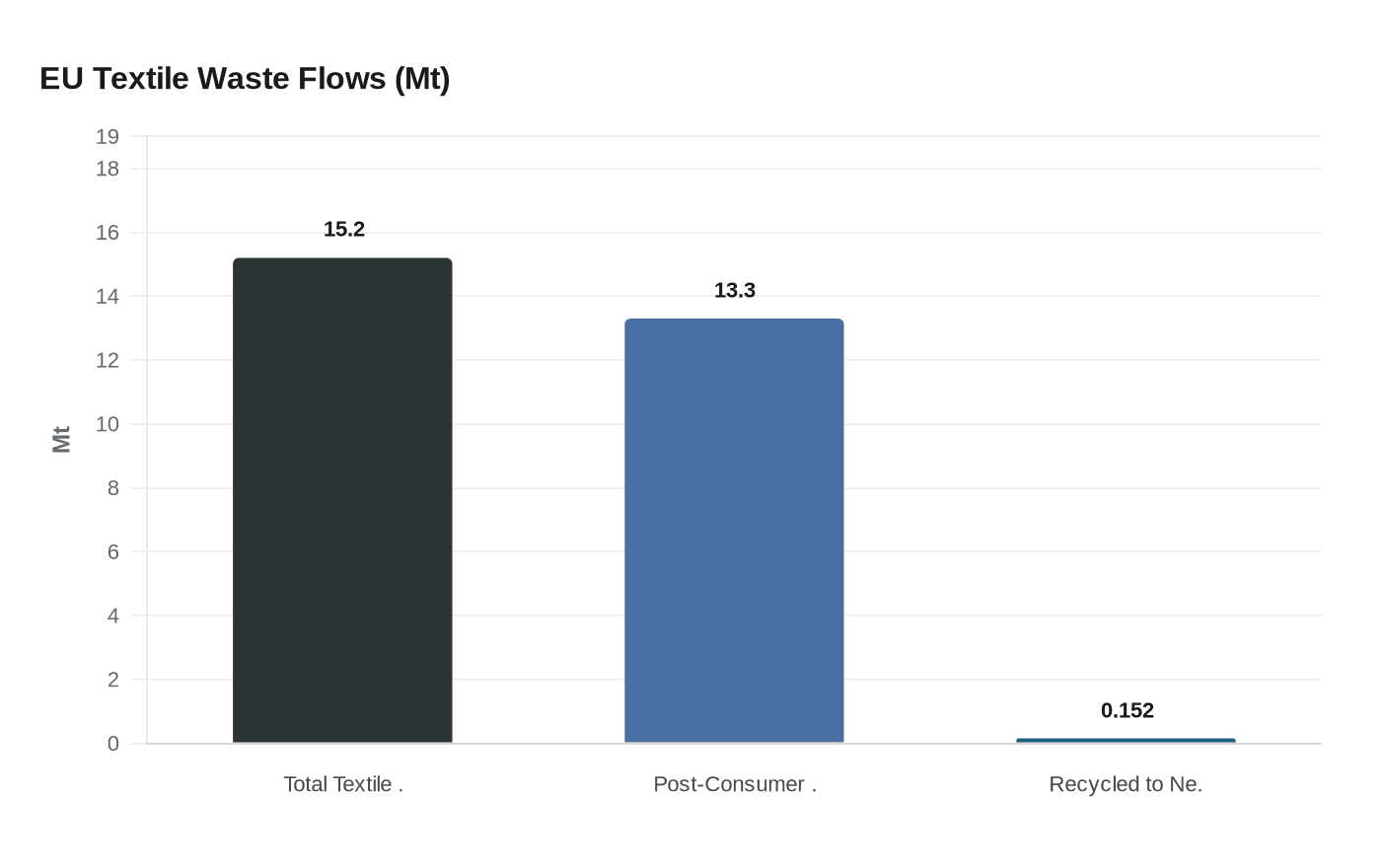
The study found that Europe generates around 15.2 million tonnes of textile waste per year, but less than 1 percent is currently recycled into new textiles. Of that annual mountain of discarded fabric, 13.3 million tonnes is post-consumer waste, yet only a small share is collected and sorted for recycling, leaving most outside any recycling system, with textile-to-textile recycling representing less than 1 percent of post-consumer textile waste. In the research notes, that collection gap is put even more starkly: only one tonne in nine reaches dedicated sorting channels at all.
Scaling textile-to-textile recycling is technically possible, but requires reaching a critical tipping point of approximately 2.7 million tonnes of recycling annually by 2035 to unlock economies of scale and make the ecosystem viable. Much of the required investment would be concentrated in scaling recycling technologies and expanding sorting and pre-processing capacities, particularly for cotton, polyester and blended materials that make up the majority of the waste stream.
The root of the deadlock is structural. Without stronger policy frameworks, financial incentives and clearer demand signals from brands, including commitments to incorporate recycled fibres into products, the result is what the report describes as a supply-demand "deadlock." ReHubs CEO Robert van de Kerkhof framed the stakes in industrial terms: "If we don't build this system, others will take that opportunity," he said, warning that failure to develop domestic recycling capacity could shift production to regions with lower costs or more aggressive investment strategies.
BCG Managing Director and Partner Nicolas Manuelli was equally direct: "This report shows that scaling textile-to-textile recycling in Europe is achievable, but it requires the right economic conditions. Textile-to-textile recycled fibres are a new product category with higher processing costs, meaning they will not scale without enabling mechanisms."
ReHubs has already pushed back its own goalposts for scaling recycling capacity from 2030 to 2035, reflecting the complexity of the challenge. That five-year retreat is itself a signal: the industry understands the mountain ahead. Scaling textile recycling could offer Europe resource resilience, allowing it to retain valuable raw materials within its economy rather than relying on imports, but that opportunity will only materialize if the cost equation changes. Nine tonnes discarded for every one recovered is not a recycling system. It is a slow-motion waste crisis wearing the language of circularity.
This article was produced by Prism’s automated news system from verified source data, official records, and press releases, then run through automated quality and moderation checks before publishing. The system is built and supervised by the people who set the standards it runs under. Read our full AI policy.
Did this article answer your question?