Textiles recycling expo spotlights data gaps holding back US circularity
Textile recycling's real bottleneck is data: without shared measures for fiber content, contamination and outcomes, circularity cannot scale.

The hardest part of textile-to-textile recycling is not the bale, the shredder or the sorting line. It is the data. Without shared measurements for fiber composition, sorting accuracy, contamination and what happens after a garment is collected, circularity stays a promise instead of a system.
That was the blunt lesson from the debut Textiles Recycling Expo USA, held at the Charlotte Convention Center in Charlotte, North Carolina, on April 29-30, 2026. AMI positioned the two-day show as North America’s first dedicated exhibition and conference focused exclusively on textile recycling, and it drew 1,858 visitors, 95 exhibitors and 52 expert speakers. The event was free to attend, but the real price tag is still being paid across the industry: brands, recyclers and sorters are operating without the common data language needed to prove that discarded clothing can reliably re-enter the supply chain.
AMI built the conference agenda with Accelerating Circularity, a partnership that underscored where the pressure points sit. Textile circularity does not stall on ambition; it stalls on infrastructure. Delegates kept returning to the same missing measurements: what fibers are actually in the feedstock, how accurately those materials are being sorted, how much contamination survives collection, and whether recovered textiles are genuinely being resold or recycled into new fabric, rather than downgraded or discarded. Those are the numbers that will determine whether a textile-to-textile model can scale in the United States.
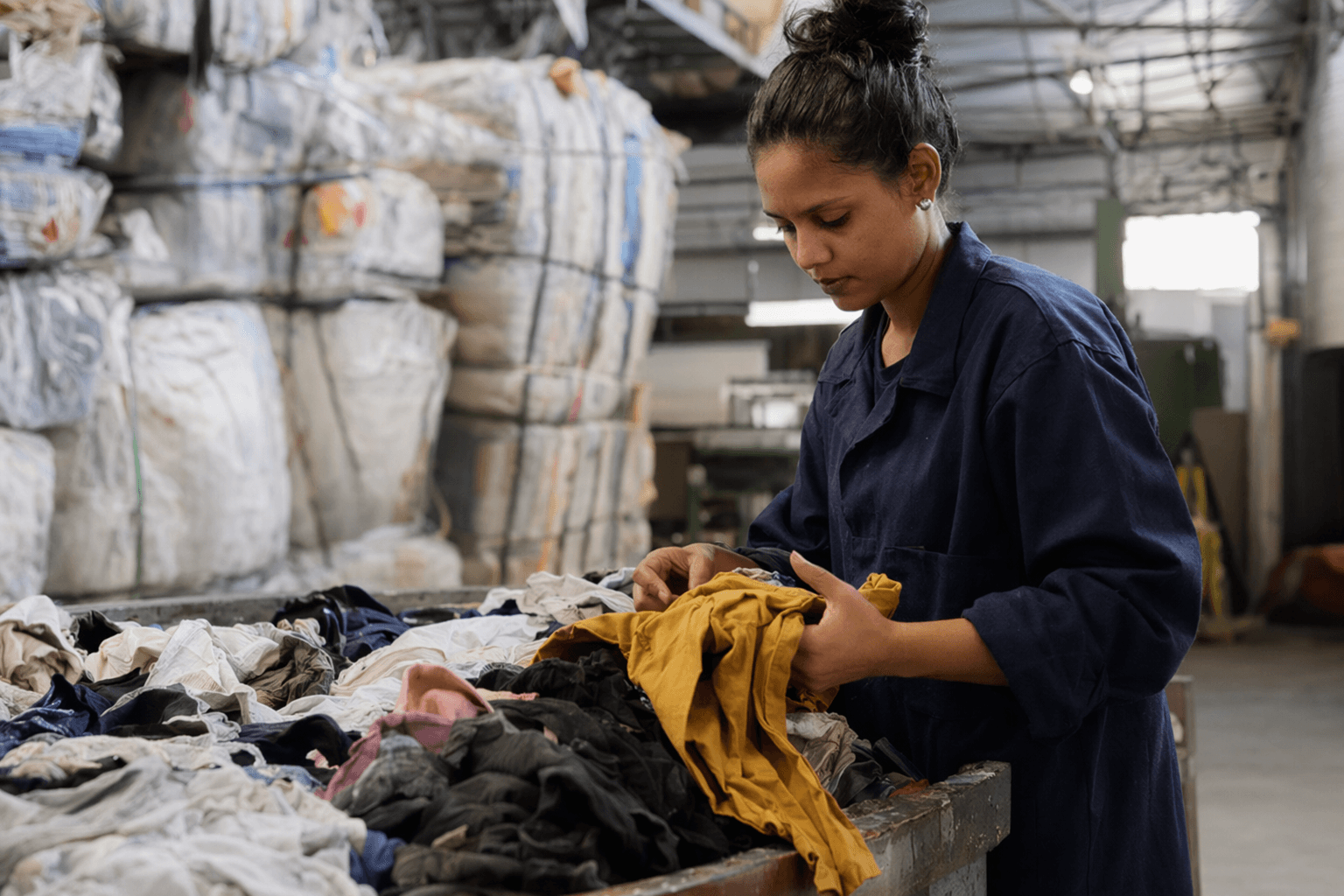
The policy backdrop makes the stakes impossible to ignore. The US Environmental Protection Agency says textiles made up 11.3 million tons landfilled in the United States in 2018, and that the recycling rate for textile municipal solid waste was 14.7 percent. The agency also identifies discarded clothing as the main source of textiles in municipal solid waste. The US Government Accountability Office has also examined textile waste, its environmental impacts and federal actions to reduce it, a reminder that the problem is now large enough to demand public-sector attention as well as private investment.
Standards bodies are already pushing toward the missing infrastructure. The National Institute of Standards and Technology has developed the NIR-SORT database to improve sorting at recycling centers, and the dataset includes 64 different fabric types. That kind of tooling matters because textile recycling fails fast when a sorter cannot distinguish one blended fabric from another under industrial conditions. AMI’s earlier European edition in Brussels on June 4-5, 2025, drew 3,336 visitors from 67 countries and 126 exhibitors, proof that the conversation is global. But the Charlotte debut made the sharper point for the US market: recycling will not be credible until the industry can measure it, compare it and verify it at scale.
This article was produced by Prism’s automated news system from verified source data, official records, and press releases, then run through automated quality and moderation checks before publishing. The system is built and supervised by the people who set the standards it runs under. Read our full AI policy.
Did this article answer your question?


