West Africa Cotton Partnership Targets $5 Billion Investment to Boost Textile Production
Five West African nations launched a $5 billion cotton investment push at the WTO's MC14 in Yaoundé, with a new platform and a roadmap to turn raw fibre exports into finished garments.
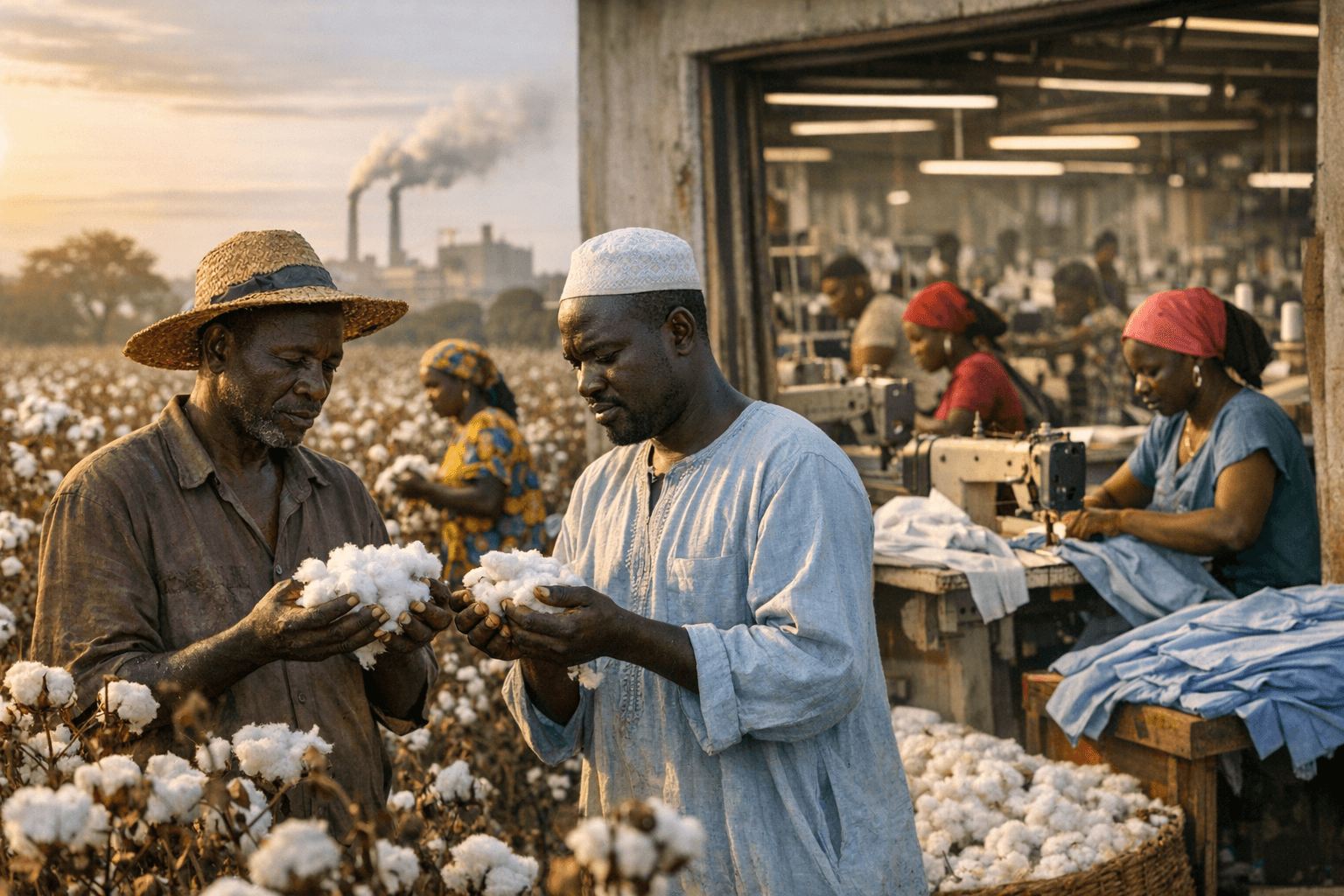
Around 98% of West Africa's cotton leaves the region as raw fibre — and five countries gathered in Yaoundé on March 25 to make the case that this era is ending. A high-level event marked the launch of a new phase under the Partenariat pour le Coton (PPC) initiative, with a focus on mobilizing investment to accelerate the transformation of the cotton-to-textile-and-garment value chain. The event, held on the margins of the WTO's 14th Ministerial Conference in Cameroon, was the most concrete public push yet to convert the region's agricultural abundance into industrial output.
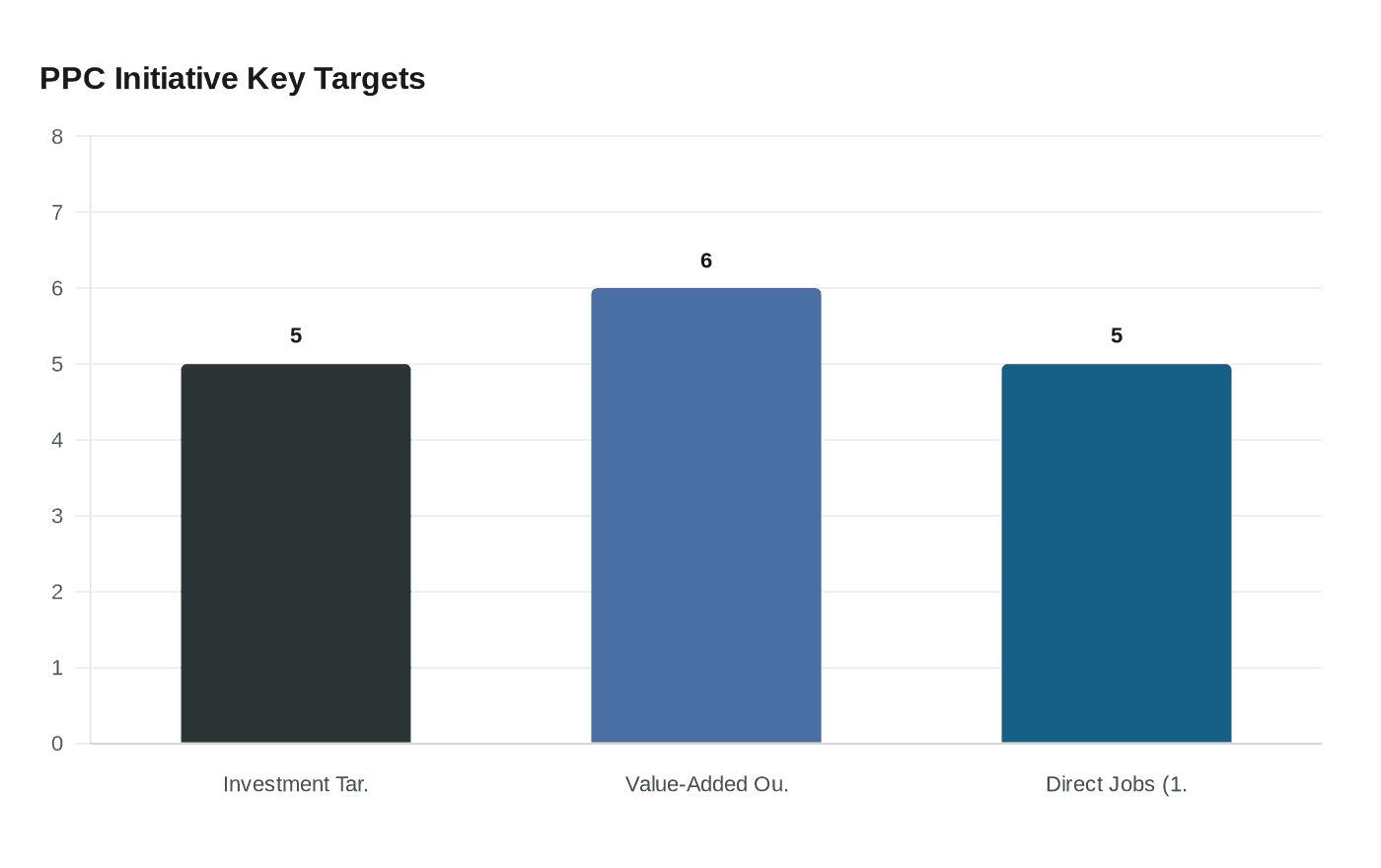
The initiative aims to support the C-4+ countries in mobilizing USD 5 billion in investment over a 10-year period, generating USD 6 billion in value-added products, and enabling the region to position itself as a competitive West and Central African cotton and textile gateway for investment. PPC analysis shows that USD 5 billion in investment and capacity-building support could generate around 500,000 direct jobs, such as textile manufacturing, transport and even fashion design, with women and youth among those set to benefit.
"We are on the cusp of creating a modern textiles and garment industry across West and Central Africa," said WTO Director-General Ngozi Okonjo-Iweala. "The future of African cotton lies in value addition," said ITC Executive Director Pamela Coke-Hamilton. Mali's trade and industry minister Moussa Alassane Diallo was blunter: "The C-4 and Ivory Coast are open for business here and now!" he said, adding that "thanks to the cotton partnership, we now have a credible roadmap, feasibility studies, and a clear institutional framework" for investments.
The initiative builds on the leadership of the "C-4+" group of countries: Benin, Burkina Faso, Chad and Mali, plus Côte d'Ivoire. According to 2024 WTO data, these countries generate more than one million tonnes of cotton per year, representing 50% of Africa's total production and 4% of global production. Benin alone exported $505 million worth of raw cotton in 2024, ranking fifth globally among raw cotton exporters — all of it shipped out unprocessed, leaving the finishing, spinning, and garment value locked up overseas.
Central to the new implementation phase was the debut of a concrete investor tool. PPC partners launched the "Africa Textile Invest" platform, a new tool to support investors by providing a single access point to information on country data, industrial zones and a pipeline of investment opportunities. UNIDO Managing Director Gunther Berger called the portal "an example of how we can translate the vision of the C-4+ into concrete action," reaffirming UNIDO's commitment to support the development of industrial capacities across the cotton-textile-garment value chain.
The partnership's architecture is notably broad. Coordinated by the WTO in close cooperation with partners including UNIDO, ITC and ILO, it brings international organizations together with governments, development banks, international financial institutions, the private sector and civil society organizations. The Steering Committee includes representatives of the International Cotton Advisory Committee, UNIDO, the ITC, the ILO, the International Atomic Energy Agency, Afreximbank, FIFA, the Better Cotton Initiative, and Cotton Made in Africa.
Financing the roadmap will require more than goodwill. The WTO has been explicit that a combination of donor funding, blended finance solutions, and risk-mitigation instruments must be mobilized at scale. In Burkina Faso alone, around four million of the country's 23 million inhabitants depend directly or indirectly on the cotton sector, which represents four percent of GDP and about 14% of the country's export earnings — a structural dependency the partnership is specifically designed to rebalance. The platform presented strategic partnerships for 2026 to 2030 as the first milestone in turning that ambition into factory floor reality.
The fashion industry's interest in traceable, sustainably grown natural fiber makes the timing sharper than it might otherwise seem. Cotton produced in the C-4+ countries is among the most sustainable in the world, as it is hand-picked, irrigated by rainwater and, for the most part, organically fertilized. The gap between that supply-side advantage and the finished garments on global retail rails is exactly what the PPC intends to close.
Know something we missed? Have a correction or additional information?
Submit a Tip