Women Leaders Reshaping Fashion's Future With Practical Sustainability Initiatives
Darshani Patel and Thread Reviv are the names you need to know: women building real circular systems, not just better branding.
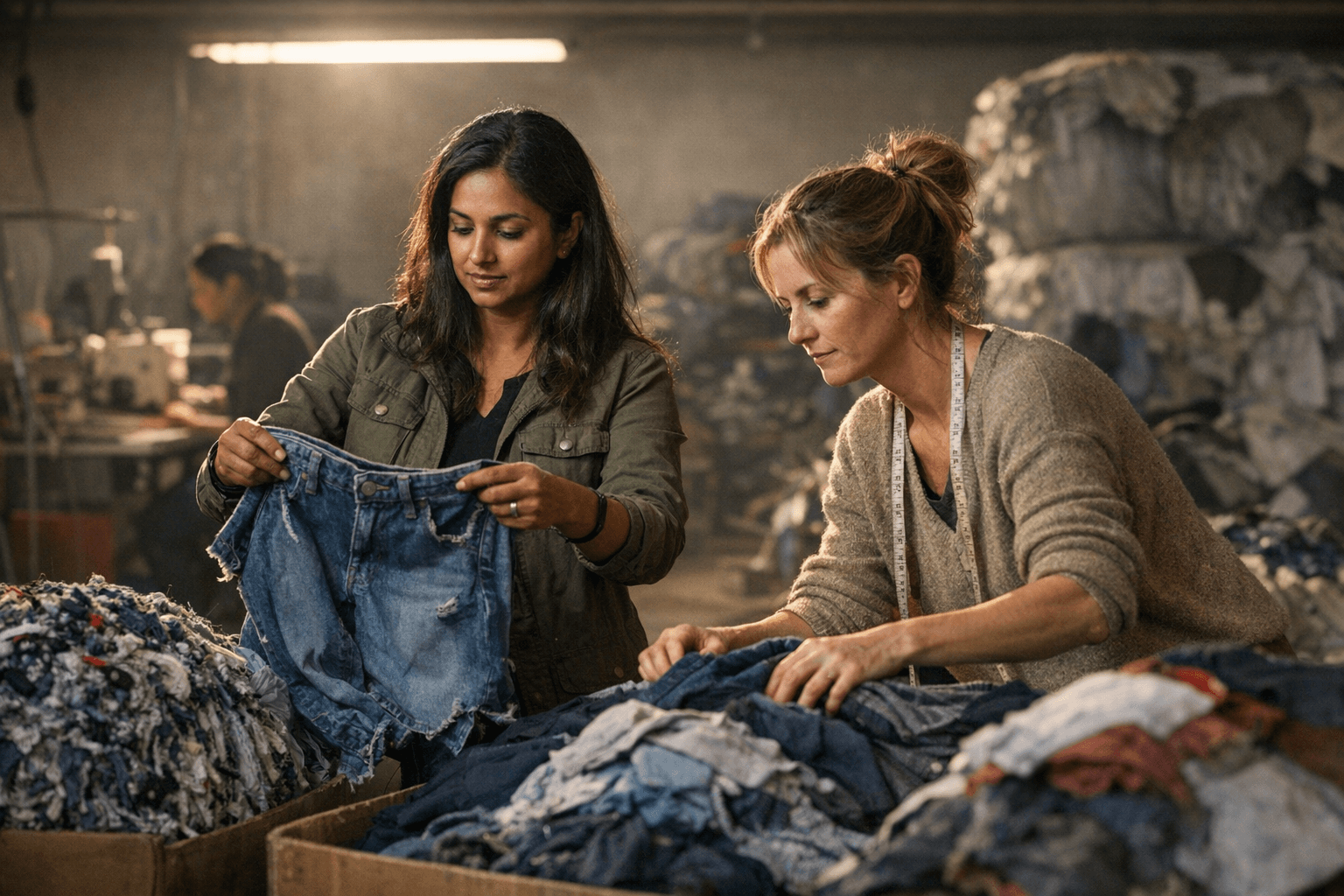
The sustainability conversation in fashion has a visibility problem. For every headline-grabbing brand pledge about net-zero targets and recycled polyester capsules, there are women quietly doing the harder work: building the infrastructure, the supply chain fixes, and the material innovations that actually move the industry forward. This Women's History Month, the University of Fashion put a spotlight on exactly those leaders, profiling the designers and entrepreneurs whose sustainability work is measured in concrete impact rather than press releases.
Darshani Patel and the Thread Reviv Model
Darshani Patel is one of the names the University of Fashion feature centers on, and for good reason. Her work with Thread Reviv represents the kind of practical, systems-level thinking that the circularity conversation desperately needs more of. Where a lot of sustainable fashion brands focus on the consumer-facing end, swapping in organic cotton or printing "made responsibly" on a hangtag, Thread Reviv is operating at the level of the textile itself, addressing what happens to fabric before it ever becomes a garment and after it stops being one.
This distinction matters more than it might sound. The fashion industry generates an estimated 92 million tons of textile waste annually, and the vast majority of that waste is created at the production stage, not at the consumer's closet cleanout. Initiatives that only address end-of-life garments are solving a fraction of the problem. Thread Reviv's approach targets the fuller loop, which is why Patel's work has earned recognition from a platform like the University of Fashion rather than just the usual sustainable fashion awards circuit.
Why Women's History Month Framing Is More Than Symbolic
The University of Fashion's decision to frame this feature around Women's History Month is pointed. Women make up the majority of garment workers globally, and they also represent the majority of fashion consumers, yet leadership roles in the industry's largest houses have historically skewed male. The women profiled in this feature are not operating inside that traditional power structure; they are building parallel ones.
That positioning has practical consequences for how their work gets done. Without access to the venture capital pipelines and legacy distributor relationships that established fashion houses rely on, entrepreneurs like Patel have to build solutions that prove their value quickly and scale efficiently. The result, in cases like Thread Reviv, is innovation that is leaner and more replicable than what tends to come out of a major brand's internal sustainability lab.
What Practical Sustainability Actually Looks Like
The word "sustainable" has been stretched so thin in fashion marketing that it has nearly lost meaning. A $400 linen blazer gets called sustainable. A brand offsetting its carbon emissions with forestry credits gets called sustainable. What the University of Fashion feature is distinguishing, by choosing to profile leaders driving "practical" sustainability changes, is work that produces measurable outcomes rather than repositioned aesthetics.
Practical sustainability in 2026 looks like:
- Textile recovery systems that divert material from landfill at scale, not just through boutique take-back programs
- Supply chain transparency that names mills and factories, not just country-of-origin labels
- Business models designed from the start around circularity rather than retrofitted with a recycling bin at the checkout counter
- Technology or process innovation that other brands can adopt or license, expanding impact beyond a single label
Thread Reviv fits this framework. Patel's work is not about making one beautiful garment from reclaimed material and photographing it beautifully. It is about creating a process that can be applied repeatedly and scaled, which is the only version of sustainability that meaningfully changes an industry producing over 100 billion garments a year.
The University of Fashion as a Platform for This Work
The University of Fashion is not a trade school or a runway incubator. It functions as an educational resource for the industry, which means that featuring Patel and Thread Reviv in a Women's History Month spotlight is also a curriculum decision. It signals to the next generation of designers and business students that sustainability leadership is not a niche specialization or a brand values add-on; it is a core competency for anyone serious about working in fashion's future.
That framing has real influence. The designers and entrepreneurs currently in school or early in their careers are absorbing what gets treated as central to the craft versus what gets treated as peripheral. When institutions like the University of Fashion put women like Patel at the center of their editorial, they are shaping what the industry treats as expertise worth having.
The Broader Cohort
While the research details are most specific about Darshani Patel and Thread Reviv, the University of Fashion feature is a broader profile of multiple women leaders, each with their own area of practical focus. The through line across the cohort is the emphasis on tangible change rather than aspirational positioning. These are not spokespeople for a brand's sustainability journey. They are the people engineering what that journey actually requires: better materials, better systems, better business models that do not depend on overproduction to stay profitable.
The distinction is worth holding onto as fashion's sustainability conversation continues to mature. In 2026, greenwashing is better documented and more widely criticized than it was five years ago, partly because of the work done by researchers, journalists, and educators drawing clear lines between performance and practice. The women in this feature are on the practice side of that line, and the industry's direction in the next decade will depend heavily on how much space and resources they get to keep building.
Thread Reviv and the work of Darshani Patel are worth tracking closely. The initiatives that look like niche solutions today have a habit of becoming industry standard once the economics catch up with the urgency.
This article was produced by Prism’s automated news system from verified source data, official records, and press releases, then run through automated quality and moderation checks before publishing. The system is built and supervised by the people who set the standards it runs under. Read our full AI policy.
Did this article answer your question?


