Wool’s ethical promise faces scrutiny over mulesing and plastic coatings
Wool is warm and breathable, but mulesing, plastic-coated superwash finishes, and messy carbon accounting make its ethical case harder than the tag implies.

A wool sweater that can survive a machine cycle is not the same thing as one that will quietly return to the soil when you are done with it. Wool still gets sold as the clean-living answer to winter dressing: soft knits, heavy coats, that easy drape that makes a cheap outfit look considered. But as Good On You put it, it is "not as simple as shearing happy sheep," and that is exactly where the confusion starts.
Why wool’s “natural” label is doing too much
Wool is the most common animal fiber used in the fashion and textile industry. It is natural, breathable, resilient, and thermoregulating. Those traits are real, which is why wool keeps coming back every cold season, from ribbed beanies to sharp tailored overcoats. But “natural” does not mean automatically low-impact, and it definitely does not mean automatically ethical.
Wool sits at the intersection of animal welfare, chemistry, and end-of-life claims. Some superwash wool is coated in plastic to keep it from felting, which makes the easy-care pitch a lot less innocent than the label suggests.
The mulesing fight is the stain wool cannot shrug off
If you only remember one welfare issue, make it mulesing. RSPCA Australia says the Australian wool industry promised in 2004 to phase it out by 2010, then abandoned the commitment. In 2024, RSPCA Australia marked the 20-year anniversary of that failed phase-out promise.
RSPCA Australia says the country produces around 368 million kilograms of wool every year and supplies about 70% of the apparel wool used by the global fashion industry.
Victoria required pain relief for mulesing from 1 July 2020, and Tasmania also mandates it, while other states have historically left the decision to producer discretion. A wool jumper can come from a system with pain relief rules, a system without them, or a supply chain that offers no easy way to tell.
Standards help, but only if they are specific
This is where the labels start to matter. The Responsible Wool Standard, or RWS, was developed in 2016 through an open, multi-stakeholder process that brought in animal welfare groups, industry organizations, supply-chain members, brands, and experts (Textile Exchange). It is built around traceability and named requirements, not vague branding language.
RWS-certified farms now exist in Australia, New Zealand, South Africa, Argentina, Uruguay, and the United States. If a wool product claims responsibility but cannot point to a standard like RWS, it is worth assuming the marketing is doing more heavy lifting than the farm.
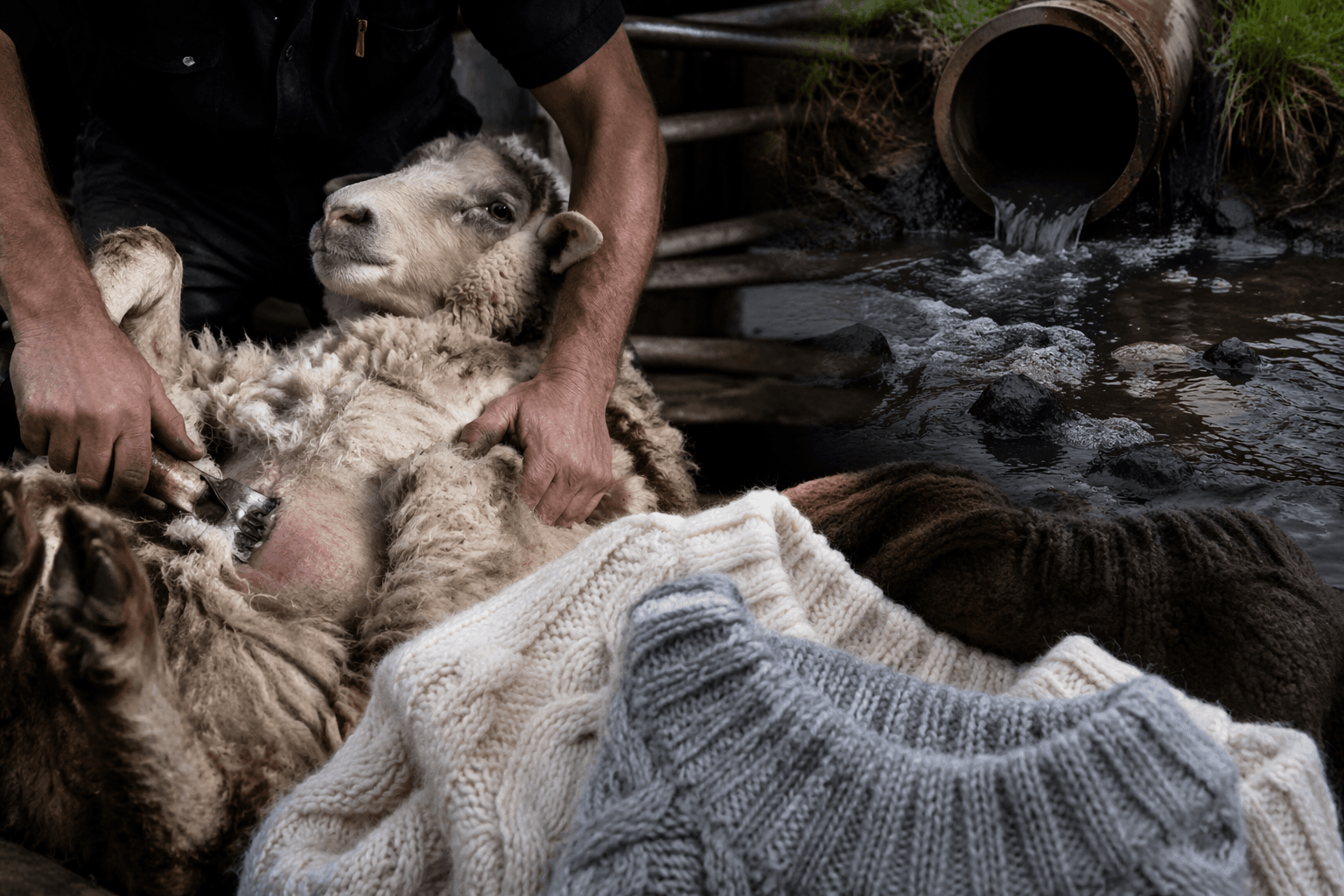
Four Paws announced a partnership with Humane Society International Australia and RSPCA Australia in December 2021 aimed at supporting a transition toward certified mulesing-free production and promoting mulesing-free wool by 2030.
Carbon claims are real, but they are not the whole story
Wool’s environmental case gets argued through life-cycle assessment, and that is where the numbers can get slippery. Those assessments look at on-farm impacts such as greenhouse-gas emissions, fossil energy use, land occupation, and water stress levels, then carry the analysis through processing and consumer-use stages. Sheep farming emits greenhouse gases, especially methane from enteric fermentation, so the fiber’s climate story starts on the animal, not in the mill.
The International Wool Textile Organisation says conventional LCA methods can miss short-term biogenic carbon cycles, which is one reason wool’s footprint is so hard to pin down with a single tidy number. There is no centralized global data set that can track wool’s full impacts on land, water, climate, and biodiversity.
How to judge a wool piece without falling for the shorthand
The smartest way to shop wool is to break the story into parts. Animal welfare, processing, blend composition, and end-of-life are separate questions, and the answer on one does not fix the others.
Start with the sheep
Ask whether the wool is mulesing-free, whether pain relief is required, and whether the brand names a standard or traceability system. If the answer is fuzzy, the supply chain is probably fuzzy too.
Then look at the finish
Superwash wool deserves scrutiny. If the fabric is coated in plastic to resist shrinking and felting, that finish affects how the garment behaves at the end of its life, even if the fiber itself is natural.
Then read the blend
Pure wool, wool blends, and wool with synthetic coatings are not interchangeable. A small percentage of polyester can change recyclability, while a coating can complicate biodegradability and make the “natural” promise less meaningful.
Then check the claims
A serious wool product should be able to point to specifics like RWS certification, named farm regions, or a clear mulesing policy. Vague phrases like responsible, conscious, or premium wool mean very little without the paperwork behind them.
This article was produced by Prism’s automated news system from verified source data, official records, and press releases, then run through automated quality and moderation checks before publishing. The system is built and supervised by the people who set the standards it runs under. Read our full AI policy.
Did this article answer your question?