British workwear staples bring practical style to modern wardrobes
British workwear lasts because it is a system, not a nostalgia hit. Waxed jackets, moleskin and quilted layers keep moving from field to city with every wear.
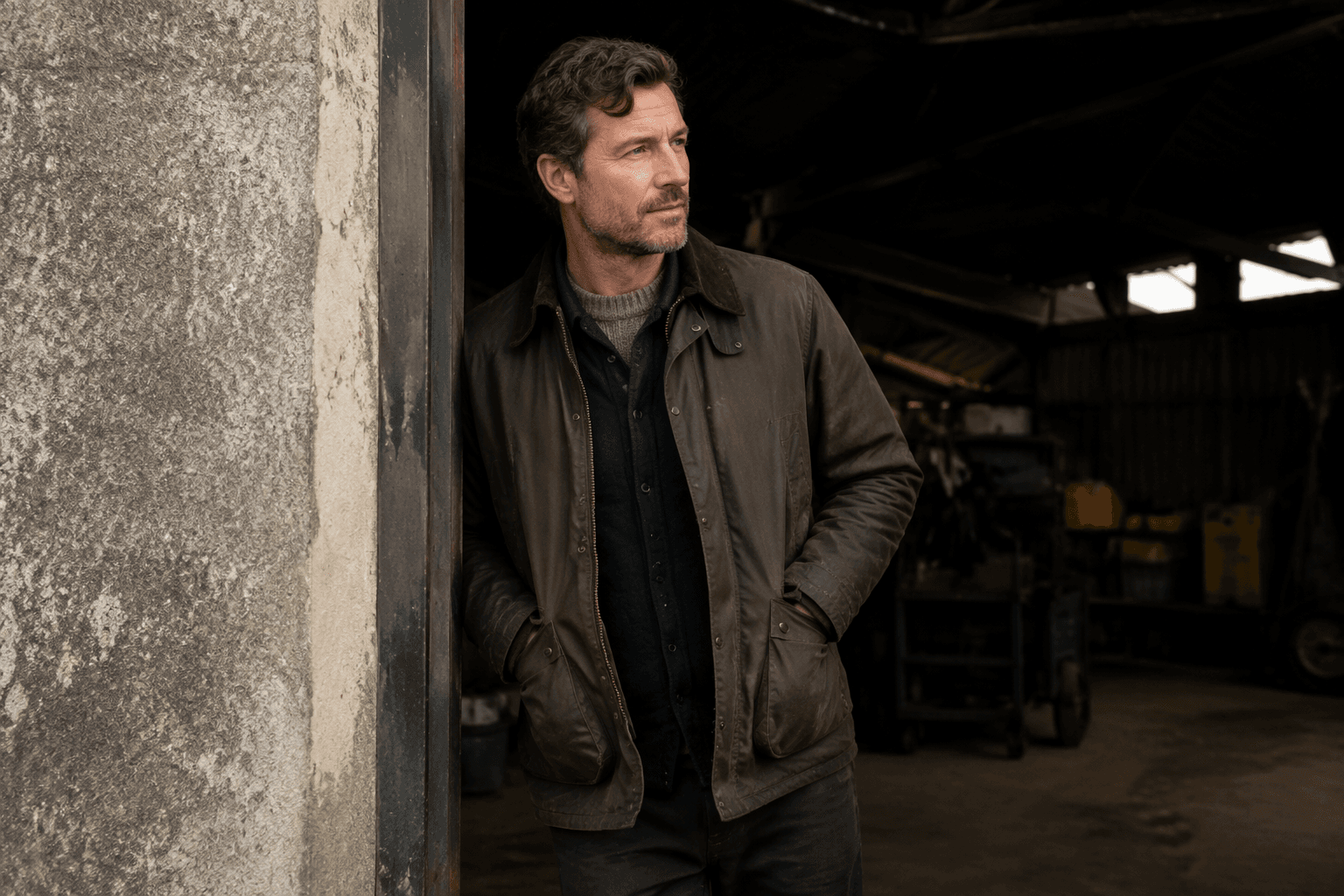
British workwear endures because it was designed as a repeatable system of practical solutions. Chore-like jackets, heavy twill trousers, knitwear, weatherproof outerwear and stout boots were built for rain, mud, wind and repeated wear, which is exactly why they keep returning to modern wardrobes with so little effort.
The British template
British workwear reads differently from the American version because it grew out of countrywear and weatherproofing, not just denim and canvas. Storm flaps, throat latches, patch pockets, robust cotton twills, quilted insulation and muted colors such as olive, navy, brown and black give it a quieter, more layered look than the railroad-and-ranch codes that shaped so much U.S. workwear.
That difference matters when you get dressed now. A waxed jacket over a merino knit and straight-leg denim feels immediate, while a quilted coat with wool trousers and lace-up boots bridges town and country without trying to perform either one. British workwear does its best work when one textured piece carries the outfit and the rest stays pared back.
Barbour set the tone
Barbour is one of the clearest examples of how British workwear moved from utility into daily style. The brand was founded in 1894 in South Shields, England, and began by supplying durable outerwear to workers along the North East coast. One Barbour history source adds a useful detail: the company started as an importer of oil cloth before waxed jackets made its name.
That origin story explains why Barbour still feels so embedded in the British landscape. BBC Culture has described the jacket as a symbol of Britishness, worn from the Royal Family to Glastonbury, in all its slightly dishevelled glory. British GQ has also called the wax jacket a staple of the Great British outdoors, which is the neatest way to understand its range: rural, urban, practical, and oddly chic all at once.
Belstaff turned protection into style
Belstaff tells a parallel story, but with the road at its center. The brand was founded in 1924 in Stoke-on-Trent, Staffordshire, by Eli Belovitch and Harry Grosberg, and the company says it has spent 100 years on outerwear excellence and motoring innovation. That focus shows up most clearly in the Trialmaster, Belstaff’s definitive jacket since 1948.
The Trialmaster was developed to keep riders dry in tough weather, with roots in the Scottish Six Days Trial, and Belstaff says it is built from 6 oz. British Millerain waxed cotton. That makes the jacket feel less like a fashion item than a piece of equipment that happened to become desirable. It is the same logic that has carried waxed jackets across generations of sailors, workers, motorcyclists, hunters and, eventually, royalty.
Why the fabric still matters
Waxed cotton is the backbone of this whole category because it is repeatedly described as waterproof or water resistant, and it wears in beautifully. Instead of going limp or looking tired, the surface takes on patina, the kind that makes a jacket look better after a few winters rather than worse.
The same principle applies to the other fabrics in the British workwear wardrobe. Moleskin softens, quilted jackets settle into a more natural drape, and sturdy cotton twills hold their shape without feeling stiff or precious. These are clothes meant to be worn hard, then worn again, which is why they never feel disposable.
How to wear it now
The easiest way to make British workwear feel current is to keep the formula disciplined. Pick one textured or weatherproof piece, then let everything else do its job quietly.
- A waxed jacket with a merino knit, straight-leg denim and sturdy boots gives you the clearest version of the look.
- A quilted coat with wool trousers and lace-up boots feels sharper, especially in navy, brown or black.
- A utility overshirt under a weatherproof outer layer adds depth without piling on bulk.
- Moleskin trousers and a corduroy-collar jacket lean into the texture without tipping into costume.
Labels like Barbour, Belstaff, Nigel Cabourn, Universal Works and Drake’s all sit comfortably inside this language because they understand that the appeal is not a single nostalgic silhouette. It is the system behind it: practical garments, durable fabrics and a restrained palette that make dressing easier in real weather.
From the field to the city
The real reason British workwear keeps resurfacing is that it moved far beyond the farm, the rail line and the workshop without losing its original logic. It became leisurewear, status dressing and heritage style because the clothes already had the one thing fashion can rarely fake: a clear purpose.
That is why a waxed jacket still looks right over denim in the city, why a quilted coat belongs with tailored trousers, and why the Barbour and Belstaff names still carry weight. British workwear remains one of menswear’s most reliable templates because it was built to solve a problem first, and style itself second.
This article was produced by Prism’s automated news system from verified source data, official records, and press releases, then run through automated quality and moderation checks before publishing. The system is built and supervised by the people who set the standards it runs under. Read our full AI policy.
Did this article answer your question?