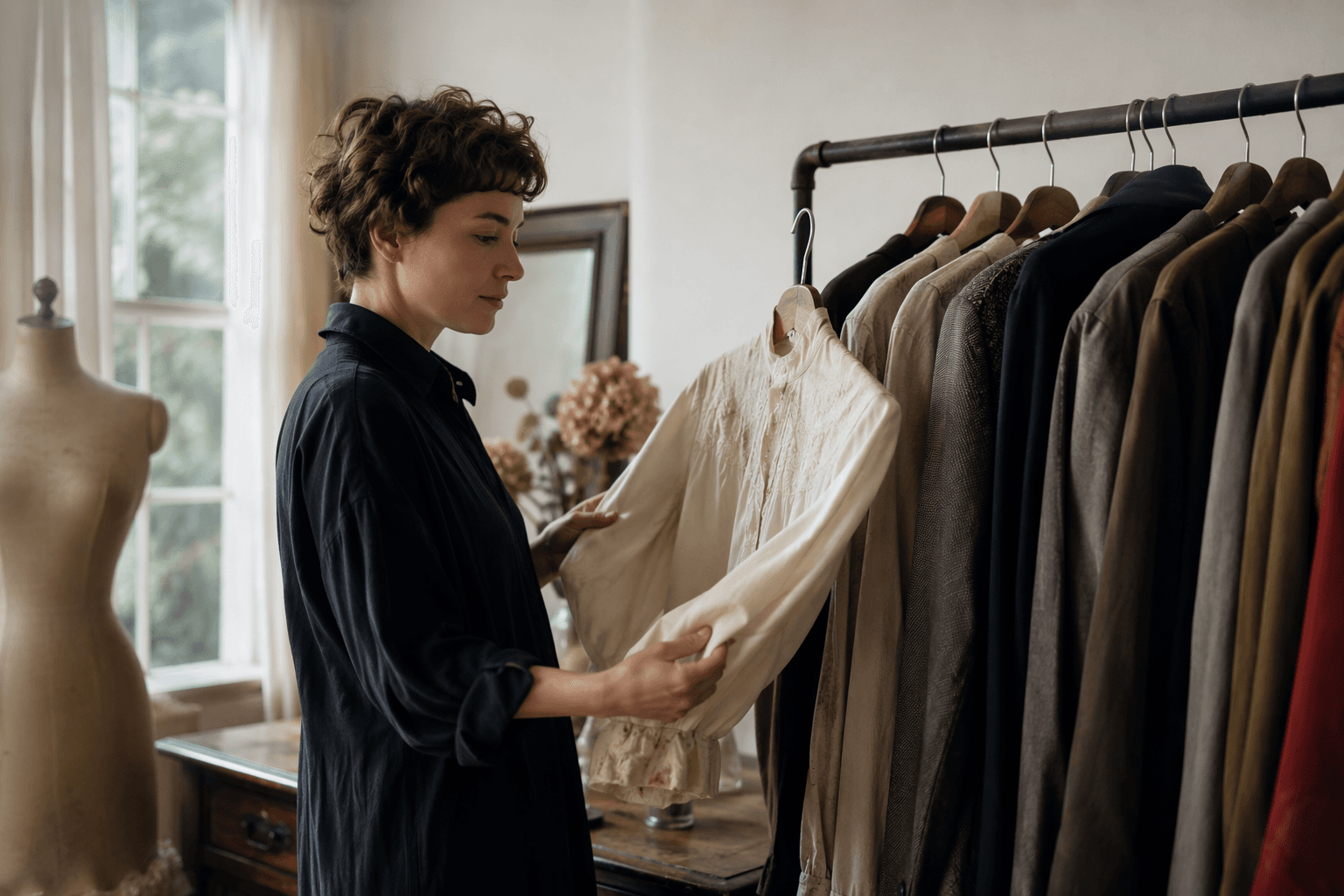
Why the shop coat is workwear’s most versatile layer
The shop coat earns its own lane: longer than a chore jacket, cleaner than a work shirt, and built to layer over everything from denim to relaxed tailoring.
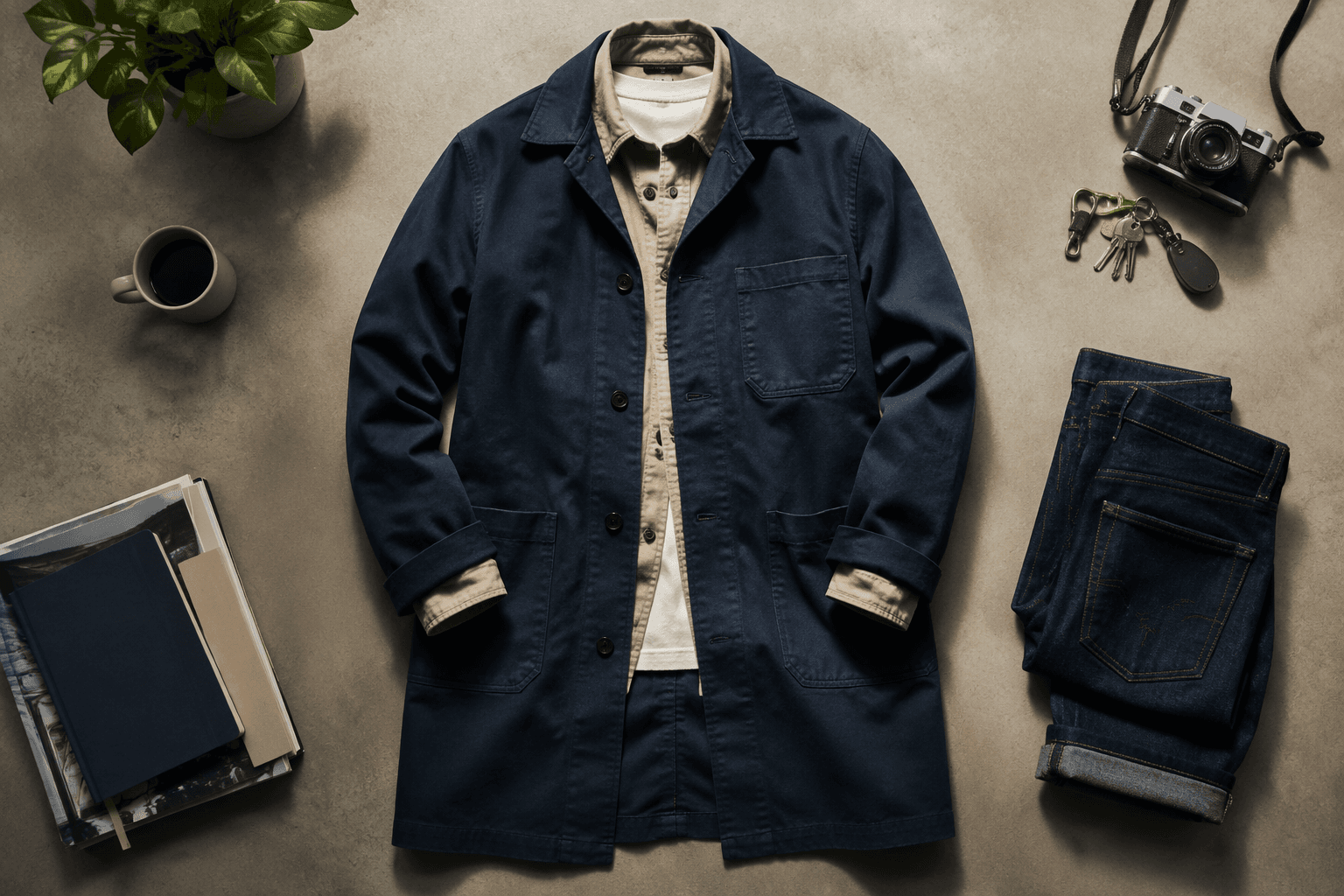
Longer than a chore jacket and cleaner than a work shirt, the shop coat gives you coverage without the bulk of a coat, which is why it still looks right over denim, relaxed tailoring, or just a tee. Its appeal starts in utility, but the reason it feels modern is the shape: a straight, protective line that makes everything underneath look sharper.
What makes a shop coat a shop coat
The silhouette is the point. A true shop coat is longer and more enveloping than a cropped chore jacket, with a straight cut, a simple front closure, roomy patch pockets, and a utilitarian collar or lapel. That extra length was never decorative in factory and workshop settings, where it helped shield trousers and shirts from dust, grease, paint, and thread debris.
- Cotton drill gives the coat a dry, substantial hand.
- Twill softens the structure and helps the coat drape a little more cleanly.
- Moleskin adds a denser, velvety surface that makes the piece feel slightly richer without losing its workwear logic.
Those construction choices change how the coat sits on the body. A lighter shop coat can skim like a technician’s coat, while a heavier one behaves more like outerwear, carrying the line of the garment all the way down the frame. That separates it from an overshirt, which usually stops short on the body, and from a blazer, which carries tailoring cues the shop coat never needs.
The coat belongs to workrooms, not just wardrobes
The shop coat makes sense once you place it in the economy of making and repairing clothes. The 1921 *Dictionary of Occupational Terms* lists “Tailors; Tailors’ Pressers and Machinists” under textile and dress-related occupations. AVANT’s “Shop Coats: Fashion in Factories” uses the same frame: factories, tailoring shops, ateliers, and repair trades.
Clothing, once made at home or by custom tailors, became increasingly commercialized as garment manufacturing expanded. Ready-to-wear clothing had already become one of Cleveland’s leading industries by 1860, and the city’s garment industry peaked in the 1920s.
The shop coat also sits near the lab coat for a reason, even if their origins are different. Chemists and physicians adopted the lab coat in the 1880s to maintain hygiene, and protective coats had long communicated order as well as cleanliness.
Why it is not just another chore coat
Menswear has spent years treating the chore coat as the default workwear reference. Heddels published its chore-coat history on Sept. 3, 2018, and updated it on April 27, 2026. By now, the garment’s path from practical labor clothing to everyday staple is familiar enough that the shop coat feels like the fresher sibling: same utility vocabulary, but with more length, more coverage, and a cleaner vertical line.
That difference changes the mood. A chore coat usually suggests casual utility and ease. A shop coat reads more precise, closer to a garment-room layer or a technician’s uniform, which is why it can look especially good when the rest of the outfit is relaxed but controlled.
How to wear it now
The shop coat works best when you let its length do the styling for you. Over a white tee and wide-leg trousers, it creates a column of color that feels intentional without being formal. Over denim and boots, it brings enough structure to keep the look from collapsing into generic workwear.
- Wear it indoors as a smarter alternative to a cardigan when you want utility without bulk.
- Choose cotton drill or twill if you want the coat to read crisp and architectural.
- Choose moleskin if you want a softer surface that still holds the shape.
- Keep the base layer simple so the coat’s straight cut stays visible.
A few ways to think about it:
The most useful shop coats are the ones that sit comfortably between categories. They are not trying to become a blazer, and they should not be cut so short that they lose the protective idea that defines them. When the proportions are right, the coat works with relaxed tailoring as easily as it works with denim.
Where the silhouette feels current
Taylor Stitch and Analog Shift continue to lean into utility outerwear.
This article was produced by Prism’s automated news system from verified source data, official records, and press releases, then run through automated quality and moderation checks before publishing. The system is built and supervised by the people who set the standards it runs under. Read our full AI policy.
Did this article answer your question?