Gender-Fluid Menswear Gains Momentum as Gen Z Rewrites Fashion Rules
The new menswear mood is softer, richer and more fluid, but the best office looks still read as polished: think eased tailoring, draped shirting and one sharp accessory.
What’s changing now
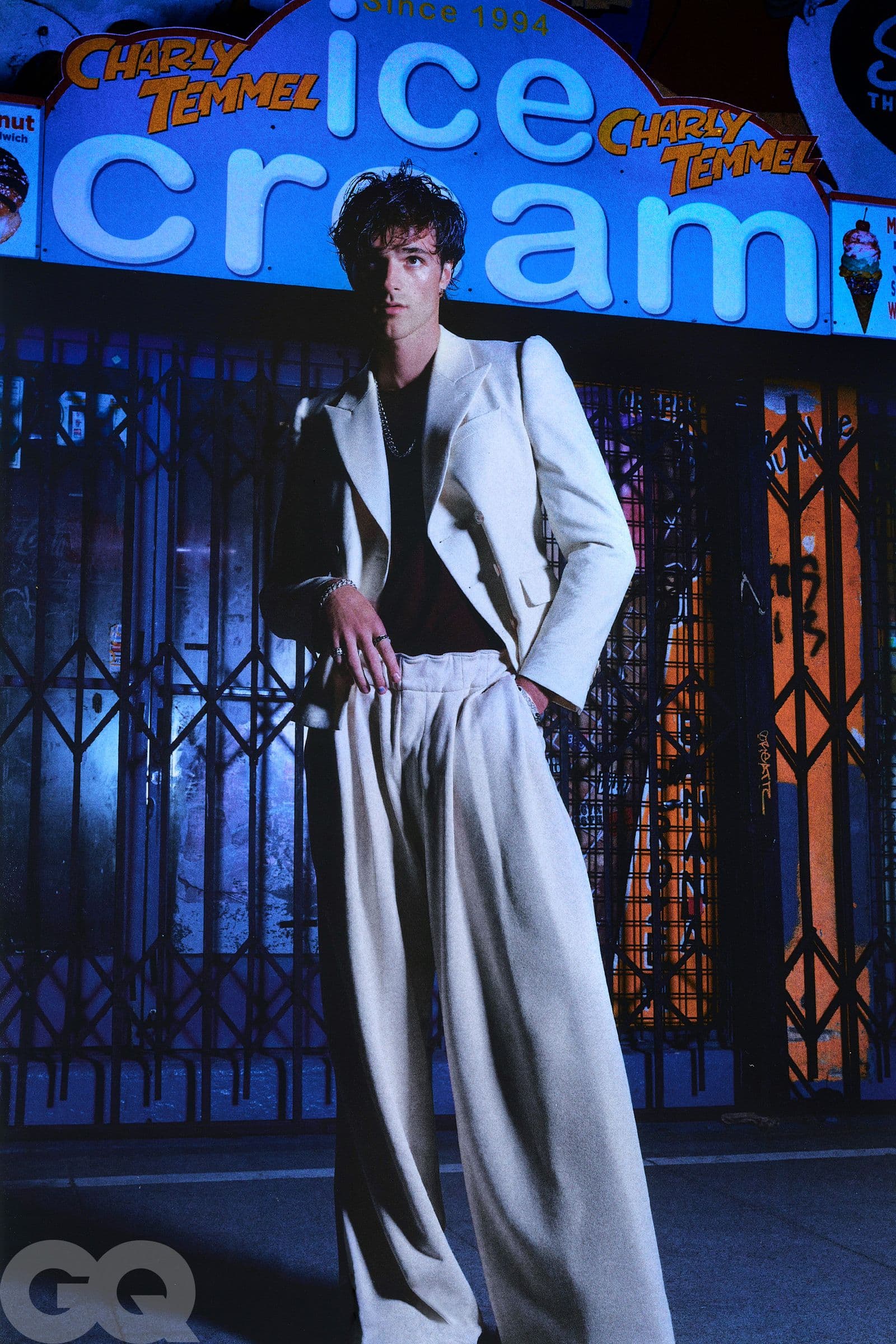
Menswear is not simply loosening up, it is becoming more expressive in ways that still work under fluorescent office light. The shift is visible in the kind of men who can make a womenswear look feel convincing, from Jacob Elordi in womenswear to A$AP Rocky’s increasingly fluent relationship with Chanel. The message is clear: this is no longer about stunt dressing or red-carpet provocation. It is about men borrowing softness, texture and silhouette in a way that feels credible in real life, including at work.
What makes the moment worth paying attention to is that the fashion industry is finally seeing the difference between novelty and demand. More than half of Gen Z consumers believe gender-neutral clothing is the future of fashion, 56% prefer brands that offer gender-neutral options, and 33% have already bought from gender-fluid collections. FashionUnited also cites the global unisex apparel market at $11.73 billion in 2024, with growth projected to $62 billion by 2033. That is not a passing mood. That is a consumer base telling brands where the next rules are headed.
Why the office is the real test
The smartest version of this trend is not about abandoning menswear codes. It is about refining them. In a professional wardrobe, gender-fluid dressing works best when it introduces ease without sacrificing structure: a shoulder that softens rather than collapses, trousers that skim rather than cling, shirting that drapes instead of crisps up into corporate rigidity. The point is polish with a pulse.
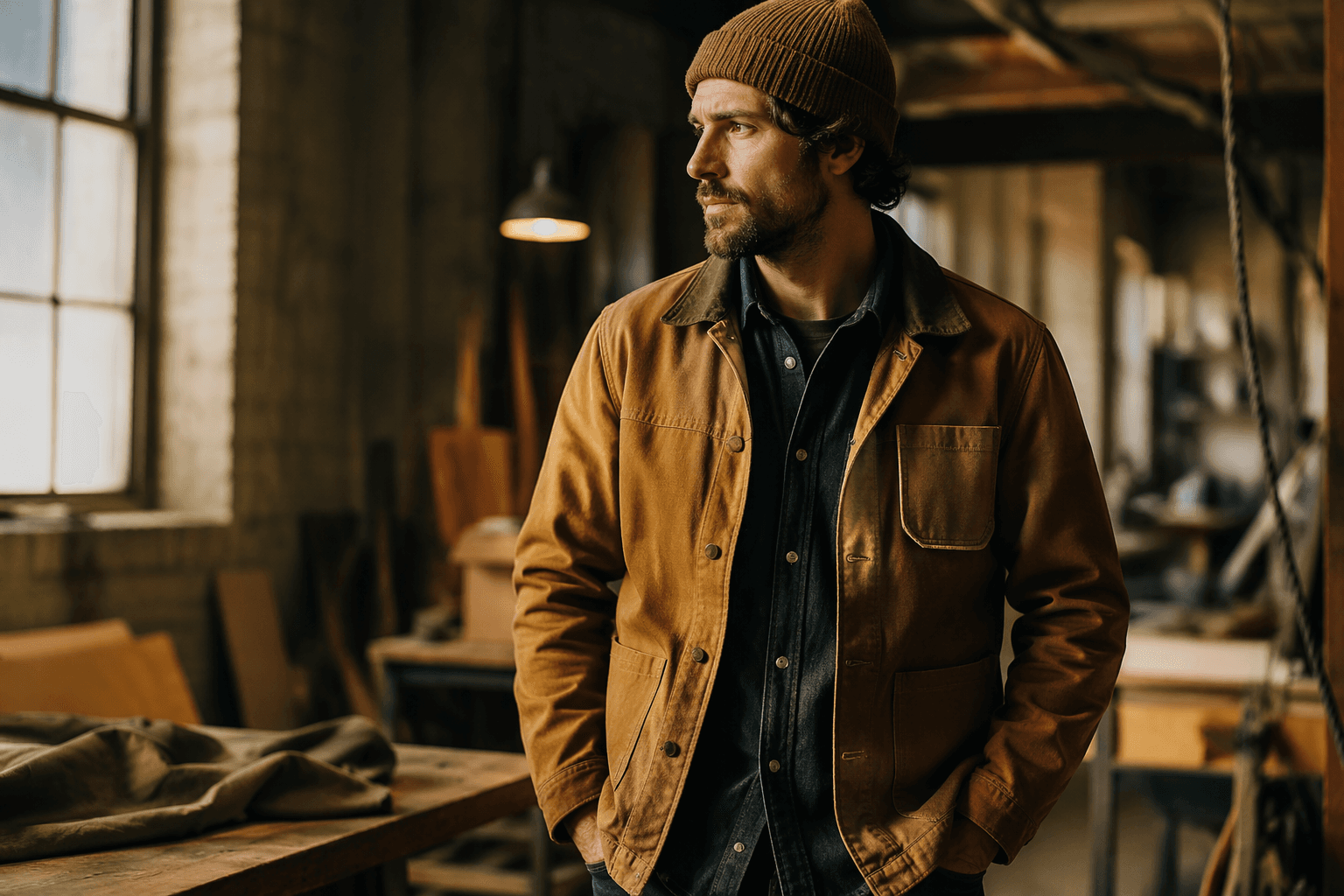
That is why this shift feels especially relevant for workwear. A man does not need to wear a runway look head to toe to participate. He needs one or two deliberate changes that make his clothes feel less armored and more considered. Think richer fabric, a less boxy cut, a piece of jewelry with presence, or a handbag that reads as part of the look rather than an afterthought.
The Chanel example tells the story
Chanel is a useful case study because the house still does not have an official menswear line. Leena Nair, Chanel’s chief executive, has said the brand does not plan to launch one, even as she has made clear she is happy to see men wearing Chanel. That tension is exactly what makes the brand so useful to this conversation. Men are already entering the world of a house that was never structured around them.
A$AP Rocky’s formal appointment as a Chanel ambassador in late November 2025 sharpened that signal. Chanel described him as embodying “talent, curiosity, and limitless creativity,” and his appearances in the brand have shown how male dressing can feel persuasive without becoming costumey. At Matthieu Blazy’s Métiers d’Art show in New York, he wore a full Chanel outfit, including a frayed tweed jacket and a red handbag. The look mattered because it was not a joke and not a costume. It was tailored, tactile and fully controlled.
For office dressing, that is the useful takeaway. A frayed tweed jacket may be too much for most desks, but the principle translates easily. Texture can do the work of drama. A brushed wool jacket, a softly structured blazer or a matte leather bag can signal confidence without shouting.
This trend has deeper roots than Instagram culture
The current wave may look fresh, but gender-crossing dress has a long history. English Heritage points to early 20th-century figures including Vita Sackville-West, Gwen Lally and Radclyffe Hall, who used masculine dress in subversive, exploratory, playful and practical ways. That history matters because it reminds us that men dressing with more range is not a new invention. It is a recurring conversation about freedom, identity and self-presentation.
National Geographic has also described gender-bending fashion as a repeated theme in couture, which helps place today’s moment in a broader fashion lineage rather than a social-media bubble. The present difference is scale. What once lived at the margins is now being shaped by market data, retail strategy and a generation that does not see clothing categories as fixed.
What the market is really rewarding
Columbia Business School’s research adds an important wrinkle. Gender-fluid products, the researchers found, overwhelmingly feature masculine markers, and women and nonbinary consumers are often the most enthusiastic adopters. In other words, the category is not dissolving menswear so much as reworking it around masculine-coded tailoring, proportion and utility.
That is useful for anyone building a professional wardrobe. The strongest pieces in this space usually keep a backbone of structure, even when they soften everything around it. A coat can be sweeping without becoming theatrical. A shirt can be loose without looking sloppy. A trouser can be wide without losing line. The best gender-fluid workwear tends to be less about ornament and more about calibration.
How to wear it to work without losing authority
Start with the silhouette, then move to the fabric, then finish with one unexpected detail. The clothes should look intentional at a glance and more nuanced the longer you look.
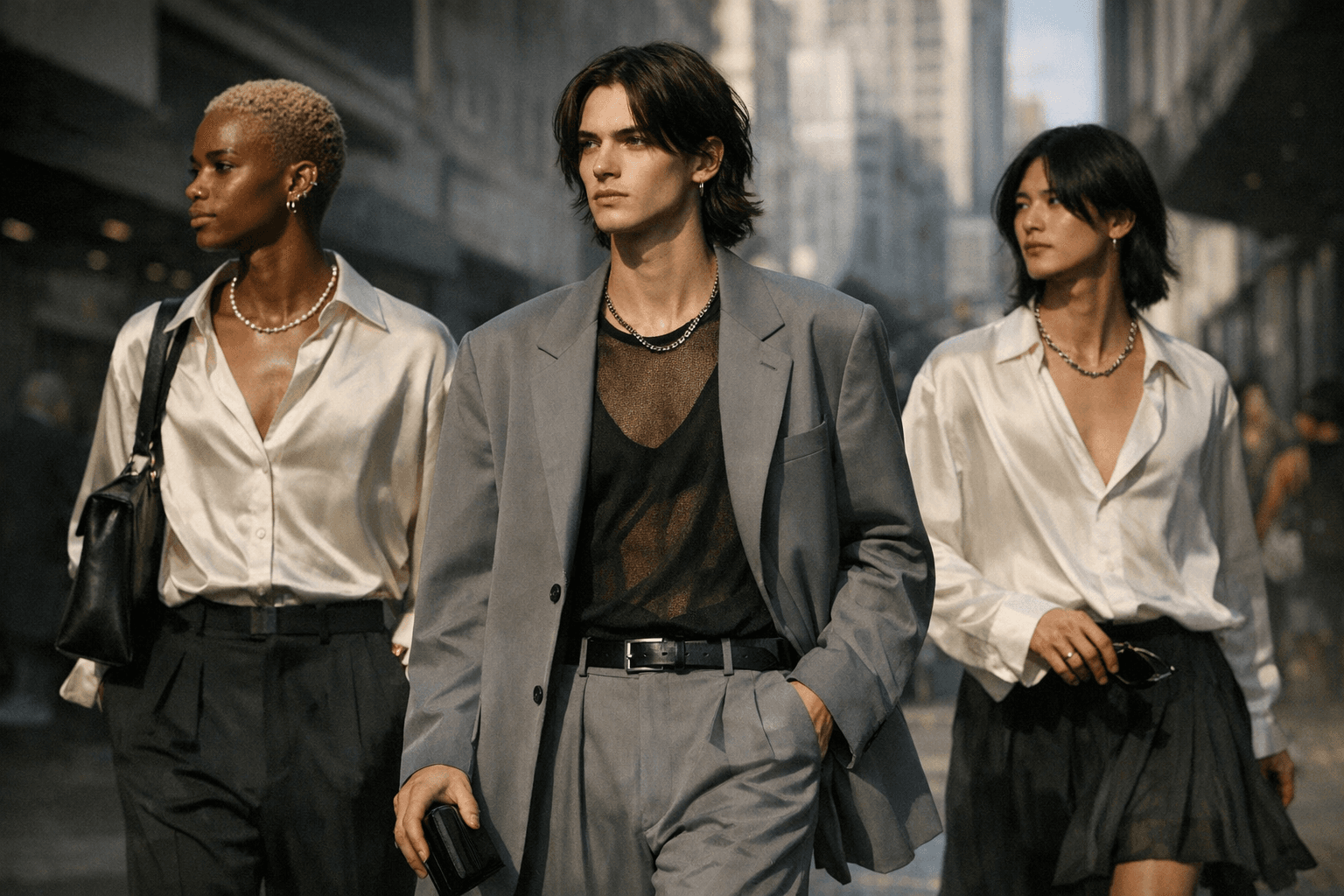
- Choose a blazer with a gentler shoulder and a longer drape rather than a tightly constructed corporate shell.
- Swap stiff shirting for silk, viscose or cotton with fluidity, especially in cream, ink, slate or muted jewel tones.
- Let trousers loosen at the leg, but keep the hem clean so the shape still looks edited.
- Add one piece of jewelry with weight, such as a chain, ring or earring, and keep the rest of the look restrained.
- Carry a bag with real presence, since Rocky’s red handbag proved that accessories can shift the mood of a whole outfit.
- Favor tactile fabrics, like tweed, brushed wool, fine knit and soft leather, because texture reads as luxury even when the silhouette is relaxed.
What to skip is just as important. Avoid overly costume-like touches that seem borrowed from a runway in bad faith. Skip anything that looks like irony. Skip overstyling, too, because the easiest way to lose credibility is to pile on too many signals at once. The goal is not to announce that you understand the trend. It is to make it look like this has always been your way of dressing.
The new professional wardrobe
Menswear romanticism, in its best form, is really a lesson in restraint. It trades heaviness for fluidity, stiffness for touch, and rules for judgment. Gen Z has already made it clear that gender-neutral clothing is not niche, and the market is moving with that demand. The men who will wear it best at work are not the ones chasing shock value. They are the ones who understand that a softer jacket, a richer cloth and a more open silhouette can still look entirely professional.
This article was produced by Prism’s automated news system from verified source data, official records, and press releases, then run through automated quality and moderation checks before publishing. The system is built and supervised by the people who set the standards it runs under. Read our full AI policy.
Did this article answer your question?